Get Full Government Meeting Transcripts, Videos, & Alerts Forever!
Get email alerts on the Economic Development Tif topic
No spam. Unsubscribe anytime.
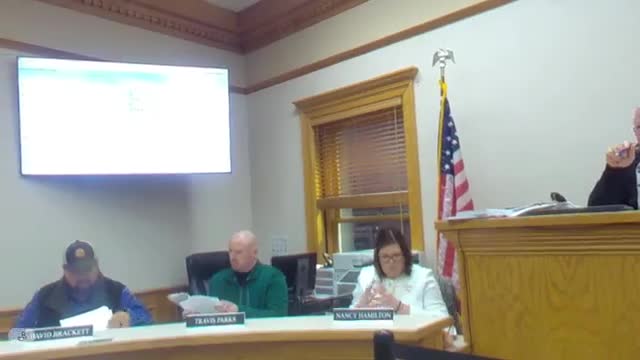
Roane County approves tax-increment allocation plan for Arano development after debate over utility costs and tax rules
Summary
Roane County commissioners voted to approve an economic impact (tax-increment) allocation plan for the Arano development after weeks of negotiation with Oak Ridge and questions about a roughly $15 million utility estimate and tax treatment for enriched uranium sales.
Roane County commissioners on Tuesday approved a tax-increment allocation plan intended to support the Arano (also referenced in the meeting as Murano/Rono) development in coordination with the City of Oak Ridge and the Oak Ridge Industrial Development Board.
The plan formalizes terms the county previously approved in a September term sheet and sets a framework for how incremental property tax receipts would be allocated among participating entities; the county attorney and Oak Ridge representatives said the plan itself does not yet bind the county to specific utility expenditures.
The proposal matters because it would help fund large utility and substation work the parties say is required to bring high-capacity power to the site. Commissioner Ron Berry pressed county and project attorneys on an estimated $15,000,000 utility figure cited in the document, saying: "I don't know that we know that number." Berry and others pressed whether the county would be required to match Oak Ridge or state contributions and how taxpayers would realize any return.
Mark Mamontoff, identified in the meeting as the attorney who helped draft the plan for the Oak Ridge Industrial Development Board, told commissioners the drafting intentionally avoids committing the county to borrow or spend a set dollar amount now. "This plan does not bind you to spend a specific amount of money on utilities," Mamontoff said, adding that any decision to borrow or to commit county funds would come back to the commission as a separate, later agreement.
Mamontoff and county staff described the plan as the next procedural step after the September term sheet and the Oak Ridge IDB vote; he said a development agreement (40–50 pages, not yet finalized) and a separate utility-infrastructure agreement will follow. Mamontoff and other speakers also said the infrastructure could serve multiple large users in the corridor — including prospects around an existing Horizon Center and the TrisoX site — and that projected needs could reach tens of megawatts.
Commissioners also asked whether local sales tax would apply to the product Arano would sell. Mamontoff said Tennessee tax treatment for enriched uranium and related transactions is unclear under current state law and that Arano's team was working with state officials and tax counsel on the question. "If there is sales tax on it, it would make it quite cost prohibitive," he said, while declining to promise a local sales-tax revenue stream to the county.
After discussion and requests for clearer language and future reporting, the commission carried the resolution approving the economic impact plan. County staff said they will circulate the forthcoming development agreement and that further approvals — including any borrowing authorizations or utility funding commitments — would come back to the commission for separate votes.
The county executive and Oak Ridge officials will continue negotiations; commissioners asked for explicit language requiring return to the commission before any borrowing or other binding financial commitment.
Next steps: county staff will circulate the draft development agreement when ready and schedule further discussion about how any required utility work would be apportioned and funded.