
Clay County tenants and pilots press commission over hangar rent hikes, FBO management at Midwest National Air Center
Get AI-powered insights, summaries, and transcripts
Subscribe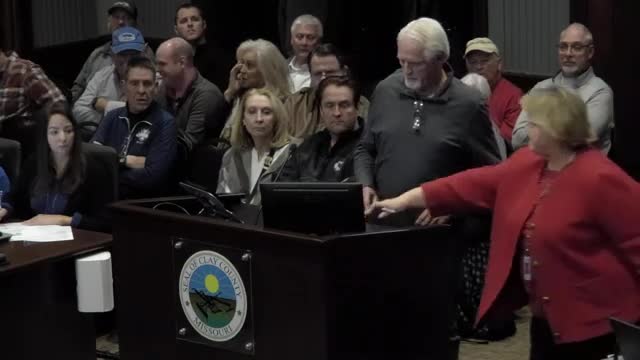
Summary
Dozens of pilots and hangar tenants told the Clay County Commission at a recent meeting that they are facing steep rent increases, new electrical surcharges and service shortfalls at Midwest National Air Center (GPH).
Dozens of pilots and hangar tenants told the Clay County Commission at a recent meeting that they are facing steep rent increases, new electrical surcharges and service shortfalls at Midwest National Air Center (GPH).
The testimony, delivered during the meeting’s public-comment period, included detailed complaints about rent hikes that speakers said ranged from roughly 22% to 23% after a newly added $25 monthly electrical fee, requests for a county review of fuel-minimum language in a recently passed resolution, and calls for more timely maintenance at airport facilities.
Speakers said the changes are pushing some tenants to consider leaving GPH for nearby airports with more services and lower costs.
“Where is the justification for 22 percent increase?” asked Mike Philpott, a Clay County resident and retired American Airlines captain. Philpott and other tenants said hangar rents and fuel prices at GPH are now close to or higher than fees at larger airports with more services, and questioned whether the level of service at Midwest National Air Center matches recent increases.
Other tenants gave more specific accounts of how fees and policies affect day-to-day operations. Jackie Thorstenson, a semi-retired air transport pilot, certified flight instructor and volunteer Aircraft Owners and Pilots Association airport support network representative, said recent changes made small nested hangar rents “23%” higher when the county’s electrical surcharge is added to an earlier 15% increase. Thorstenson asked for transparency on how the electrical fee is calculated and where any fund balance would be spent.
Jeff Schultz, vice president of Experimental Aircraft Association Chapter 612, told commissioners the resolution that establishes fuel minimums is likely to conflict with some aircraft owners’ fuel needs because many small aircraft use automotive-grade gasoline (Mogas) that is no longer available at GPH. “If you force me to buy a minimum amount of fuel, I have no way to really comply with that,” Schultz said.
Other tenants described maintenance delays at the airport. “I waited four months for my light bulb,” Jackie Thorstenson said, and several speakers said hangar roofs leak and seals on hangar doors are failing. Stuart Ostrander, whose written remarks were read aloud by another speaker, gave a granular example of costs: he wrote that his monthly hangar expenses rose from about $330 a year ago to roughly $380, plus a $25 electricity fee and a recent fuel charge that brought his total to about $569 per month.
Speakers asked the commission for two things: more transparent accounting of airport revenues and expenses, and better engagement between commissioners, the airport advisory board and tenants. Several said the airport advisory board has not met regularly and that its chair has been difficult to reach. “I would also like to see that anything to do with the Midwest National Air Center not go straight to the consent agenda,” Thorstenson said. “It should be placed on discussion…so that the airport advisory board has a chance to give you that brief.”
County officials responded that staff can assemble historical financial data and present it to the commission in a work session. The county administrator told commissioners: “The staff can put together information, historical going back for however many years the commission would like for us to do, to talk about revenues received, and expenditures to operate it…we can provide that information and give it to the commission and do a work session on it for some historical information and what that looks like and go from there.”
The commission and administrator also noted the airport’s operating model has changed over the years between county operation and private fixed-base operator (FBO) management; several tenants named the current FBO, Apex, in critical terms and said some of the operational changes began after the most recent contract change. Tenants said they felt “shakedown” pricing by the current operator and asked the county to enforce original contractual terms or consider other management options.
While commissioners did not take an immediate vote to change policy for the airport, they approved a consent-agenda resolution that will allow the county to apply for reimbursable grant funding for a hangar roof rehabilitation project at Midwest National Air Center. The consent agenda — which included the grant-application resolution — passed unanimously. The resolution was described in staff materials as an application “to apply for reimbursable grant funding between Modal and Clay County for the roof rehabilitation project at the Midwest National Air Center,” and was listed on the consent agenda as approved by a 6-0 vote.
Commissioners who spoke during and after public comment said they want more data before deciding next steps. Several commissioners explicitly asked staff to compile a multi-year profit-and-loss or revenue-trend summary for the airport, including tenant income and fuel sales, and to schedule a follow-up work session so commissioners and the airport advisory board can discuss options.
What’s next: County staff agreed to prepare historical financials and schedule a work session; tenants and the airport advisory board said they expect to brief the commission again. Meanwhile, the approved grant application for hangar roof rehabilitation—if reimbursable funding is awarded—would fund capital repairs tenants said are overdue.