Get Full Government Meeting Transcripts, Videos, & Alerts Forever!
Get email alerts on the Education School Chaplains topic
No spam. Unsubscribe anytime.
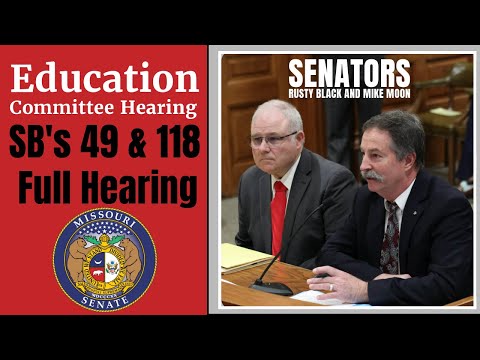
Missouri senators hear testimony on bills that would allow school chaplains in public schools
Summary
Supporters told a Missouri Senate committee that school chaplains could help address student and staff mental-health needs; opponents warned the bills lack guardrails and could raise Establishment Clause and coercion concerns. No vote was recorded at the hearing.
A Missouri Senate committee heard testimony on Senate Bill 49 and Senate Bill 118 that would authorize public school districts and public charter schools to employ or accept volunteer chaplains.
Senator Rusty Black, a sponsor, told the committee the proposals are voluntary and meant to provide students and staff with an additional, private source of support. “School chaplains offer an opportunity for students and really the faculty to have somebody that they can talk to that talks and listens … with real care,” said Senator Rusty Black, Senator, who said the position would be left to local school districts to adopt.
The bills, introduced by Senator Rusty Black and Senator Mike Moon, would allow districts to authorize paid or volunteer chaplains and — as presenters described it during the hearing — anticipate an 80‑hour training standard (witnesses said that training is part of chaplain certification used by some programs). Senator Mike Moon said the position could be paid at a district’s discretion and described chaplains as providing “emotional support” and “encouragement” to students and staff.
Supporters, including witnesses from the National School Chaplain Association, testified the program would fill gaps left by shortages of licensed counselors and wraparound services. Johnny Davis, chief development officer for the National School Chaplain Association, said the group supplies certified chaplains to schools internationally and cited outcome figures his organization attributes to chaplain programs, including lower teen pregnancy rates and higher graduation rates in districts that have used chaplains. Timothy Faber, a private citizen, told the committee chaplains provide “hope, comfort, and healing” and urged lawmakers to be “proactive” rather than wait for crisis.
Advocates and several witnesses described chaplaincy models drawn from the military, hospitals and corrections systems. Retired Army chaplain Peter Dismore and Fairview firefighter Patrick Miller said properly trained chaplains can offer crisis intervention, conflict resolution and extra adult oversight on campuses.
Opponents told the committee the bills, as written, lack critical guardrails. Andrea Heitfeld, an attorney with the Pacific Justice Institute, argued the bills are not inherently coercive and cited legal precedent upholding some chaplain programs, but other opponents disputed that reading. Brian Kaylor, lead of the Christian nonprofit Warden Way, said the legislation contains no minimum qualifications for who may serve as a chaplain and warned a district could hire someone he called a “street preacher.” "There's actually nothing in this legislation that would prevent a school district from hiring that street preacher to come in and be the school chaplain," Kaylor said.
Civil‑liberties and equity groups raised constitutional and equity concerns. Tory Schaefer of the ACLU of Missouri warned that licensed school counselors require graduate training and that uncertified chaplains could not substitute for that role. Dava Lee Brush of the Missouri Equity Education Partnership said districts with religiously diverse student bodies may not be able to provide chaplains reflective of students’ faith backgrounds and criticized potential use of public funds for religious roles.
Several witnesses emphasized the legal and practical implications of equal access. Dr. Gwyneth Woodhouse, who identified herself as a member of the Satanic Temple, said if the law permitted chaplaincies, her group would seek equal access to place its own chaplains in schools; she added, “I will be first in line to request that my school hire a minister of Satan from our Missouri congregation to provide chaplain support to my student.” Minister Virgil Ovid of the Satanic Temple made a similar point and said secular counseling resources would better serve students than religious chaplains.
The hearing included legal argument about the First Amendment. Andrea Heitfeld cited Marsh v. Chambers (1983) and the Supreme Court’s more recent Kennedy v. Bremerton (2022) decision to argue courts now focus on coercion and historical practice when evaluating establishment‑clause claims; she also referenced Santa Fe Independent School District v. Doe and Lee v. Weisman in describing the coercion standard. Opponents said the bills’ lack of definitions or enforcement mechanisms makes schools vulnerable to litigation and to practices that could amount to government‑sponsored religion.
Committee members asked how chaplains would be certified, whether faith leaders of diverse traditions could serve, whether chaplains could teach classes and what screening would occur. Witnesses said certification practices vary by program; proponents cited an 80‑hour training in some models and said districts would retain local control over implementing chaplaincies. Committee members noted existing state statute language in chapter 170 that bars public schools from endorsing or promoting a particular religion and said statutory language and local policy would need review if chaplain legislation moved forward.
No committee vote was recorded at the hearing. The chair recessed the session after taking multiple supporters’ and opponents’ testimony and indicated the committee would proceed to other bills on the agenda.
Ending: The committee hearing concluded without action; sponsors and witnesses said they would continue discussions and provide additional materials if the bills move forward.