Get Full Government Meeting Transcripts, Videos, & Alerts Forever!
Get email alerts on the School Nutrition topic
No spam. Unsubscribe anytime.
Lawmakers press department on school-meal funding, CEP participation and compensatory-aid impacts
Summary
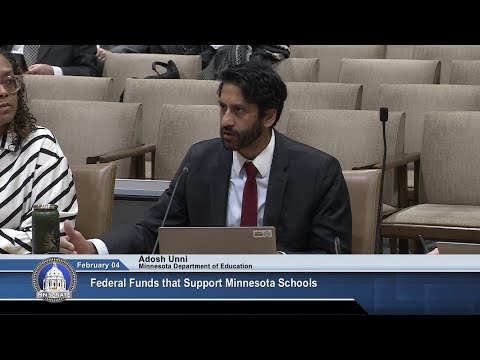
Committee members asked the Department of Education why some eligible Minnesota schools are not participating in the Community Eligibility Provision (CEP), whether that leaves federal dollars unclaimed, and how districts should collect household forms now that Minnesota law provides universal school meals.
Department officials told the committee that nutrition programs delivered through the U.S. Department of Agriculture provide one of the largest single pools of federal support for Minnesota schools and that district reimbursement is a monthly, per-meal process.
"Federal funds in 2024 totaled 431,000,000, the vast majority of which went to schools and sponsors," Darren Corte said, describing the national school lunch, school breakfast, Child and Adult Care Food Program and summer food programs. Sponsors submit monthly claims for reimbursable meals and Minnesota reimburses sponsors and draws federal money from USDA.
Senators pressed the Department of Education on the Community Eligibility Provision, which allows schools with sufficiently high identified-student percentages (ISPs) to provide free meals to all students without collecting household income applications. Corte explained qualifications (ISPs and direct-certification rates) and said that Minnesota law requires schools with an ISP above the statutory threshold to participate in CEP where the district also participates in the state free-meal program; some schools that might qualify are not participating because of facility or operational constraints or because they already operate effectively as all-free sites.
Committee members described a list of more than 60 schools they believe are not enrolled in CEP and asked whether that leaves federal funds on the table. Corte said the department will review the list and said that, in some cases, schools are already operating as free-meal sites so participation in CEP does not change their funding; in other cases, facility constraints or charter-school operational issues can explain non-participation.
Members also asked whether household application forms still matter after enactment of universal school meals. Department officials said schools still have incentives to collect applications (or use direct certification) because those counts affect federal reimbursements and state compensatory aid calculations. Duncan Corte said the department has sent communications to superintendents and school nutrition directors urging districts to collect forms where appropriate, and agreed to follow up with the committee on compensatory-aid impacts and on outreach to non‑CEP schools.
Lawmakers requested a departmental plan to identify eligible non‑CEP schools and to help districts complete forms or use direct-certification so available federal dollars are claimed. Department staff agreed to provide follow-up documentation and outreach information.