Get Full Government Meeting Transcripts, Videos, & Alerts Forever!
Get email alerts on the Agency Budget And Liquidity topic
No spam. Unsubscribe anytime.
Minnesota Housing presents base budget and warns agency liquidity constraints require careful management
Summary
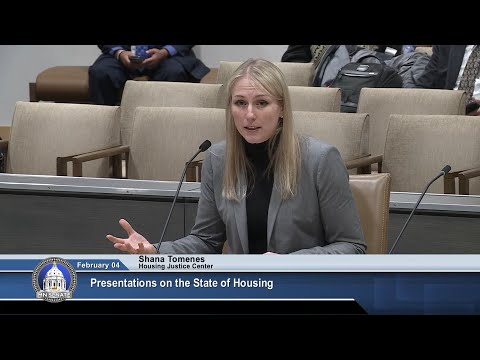
Commissioner Jennifer Ho and fiscal staff briefed the Senate committee on Minnesota Housing Finance Agency base funding for FY26‑27, shifts toward housing stability programs, and temporary liquidity pressures tied to deployed cash and market prepayment behavior.
Jennifer Ho, commissioner of Minnesota Housing, and Eric Olafson, the committee’s fiscal analyst, briefed senators on the agency’s FY26‑27 base budget and on short‑term liquidity dynamics.
Olafson outlined the committee’s jurisdiction (Minnesota Housing Finance Agency, housing infrastructure bonds) and noted the agency’s current biennial base of about $165.6 million for FY26‑27 after a large prior cycle of one‑time funding. He described metro sales tax transfers for rental assistance and debt service responsibilities tied to housing infrastructure bonds.
Nut graf: Commissioner Ho said the agency’s portfolio now emphasizes housing stability more than capital production because recent appropriations increased rental assistance and operating subsidies; the agency also faces cyclical liquidity effects from market changes in mortgage prepayment speed after earlier large deployments of available cash.
Ho explained that in recent years Minnesota Housing deployed large amounts of cash into loans and programs; higher interest rates and slower prepayment speeds mean loan payoffs that previously returned cash now occur more slowly, producing a mismatch between cash on hand and funding commitments. She called the situation “liquidity” pressure but emphasized it stems from prior success and market conditions rather than mismanagement. Ho said the agency is pausing certain discretionary lending activities (agency bank‑type deployments) that used internal capital, and would keep the legislature informed if any legislatively directed funds could not be used for their statutory purpose (she said that has not happened).
Committee members asked for more detail: several requested a program‑by‑program table showing requests vs. awards and the degree of oversubscription on RFPs and programs in the last funding round; the commissioner agreed to provide that information. Senators also asked about federal funding continuity and HUD payments; Ho said the agency is tracking federal cash flows and that HUD deposits arrived as expected in the near term but she is monitoring uncertain federal leadership and communications.
Ending: The agency will return with additional fiscal detail (oversubscription tables, liquidity explanations) and the committee signaled interest in legislative options to preserve program continuity and efficient administration amid a likely fiscal "cliff" after one‑time funds are exhausted.