Get Full Government Meeting Transcripts, Videos, & Alerts Forever!
Get email alerts on the Tenant Protections topic
No spam. Unsubscribe anytime.
Tenant advocates press reforms on repairs, evictions and fee disclosure; legal aid gaps highlighted
Summary
Homeline and the Housing Justice Center told the Senate housing committee that renters face repair delays, rising eviction filings and burdensome fees; both asked for stronger habitability enforcement, court process improvements and expanded legal help for renters.
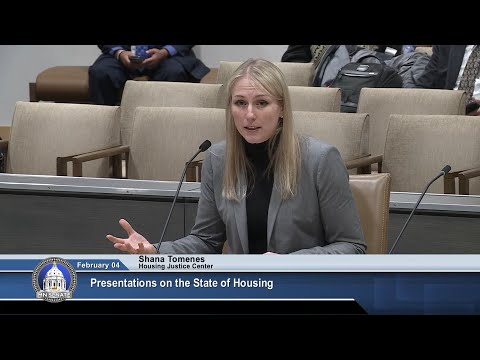
Eric Hauge, executive director of Homeline, and Shana Timenez, housing justice litigator at the Housing Justice Center, told the committee that Minnesota tenants are experiencing increasing instability as rents rise faster than incomes and eviction filings remain elevated in many counties.
Hauge described Homeline’s statewide hotline and outreach program and said calls and demand for help have increased — his office advised roughly 20,000 renter households per year in recent years, a 50% rise compared with pre‑pandemic levels. He listed the top caller issues: repairs, evictions (historically nonpayment of rent), security deposit disputes, and growing fee practices. Hauge said the legislature’s recent changes (14‑day pre‑eviction written notice, expanded repair statutes, move‑in/move‑out inspection protections) produced some improvements but recommended additional steps: stronger remedies to make habitability protections real deterrents, and protections for source of income.
Nut graf: Both organizations emphasized that laws are only effective if renters can enforce them — housing courts and agency enforcement are often inaccessible to low‑income tenants and manufactured‑home residents, and legal representation materially changes outcomes.
Timenez described the wide geographic reach of displacement and eviction risk, citing high county filings and multiple forms of hidden displacement such as non‑renewal of leases and deteriorating conditions. She said the state’s regulatory framework can be fragmented for manufactured housing — multiple agencies have partial jurisdiction — which complicates enforcement. Timenez also described a case where legal representation prevented eviction and enabled residents to press for ongoing repairs.
Ending: Advocates asked the committee to consider stronger habitability enforcement, expanded legal services funding, and targeted measures to reduce fee burdens and improve access to the renter credit and other tax‑based supports.