Get Full Government Meeting Transcripts, Videos, & Alerts Forever!
Get email alerts on the Aging Services topic
No spam. Unsubscribe anytime.
Commission on Aging asks Washington County commissioners for $250,000 boost amid staffing, mandate and guardianship strains
Summary
The Washington County Commission on Aging outlined service volumes and rising costs and asked the Board of County Commissioners to add $250,000 to its FY26 allocation; officials warned that federal and state mandates, staffing shortages and expanding guardianship caseloads threaten services without added funding.
The Washington County Commission on Aging asked the Washington County Board of County Commissioners for a $250,000 increase in its FY26 county allocation, saying federal and state funding delays, staffing shortages and new mandates are straining services for older adults and people with disabilities.
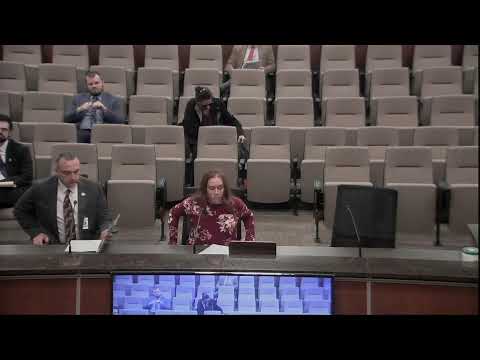
Amy Olak, CEO of the Washington County Commission on Aging, told the commissioners the agency served about 10,500 individuals across its programs in 2024 and provided 52,533 meals. "Our reimbursable funding model through the state and federal government creates cash flow challenges due to delays in the reimbursement process," Olak said, adding that the agency was awaiting more than $300,000 in payments after a state and federal reimbursement freeze. Ed Loeb, president of the commission's board, gave program totals during the presentation, noting the agency distributed $1,632,314 in benefits to older adults, caregivers and people with disabilities in 2024 and that more than $500,000 of that was related to Medicare Part D assistance.
Why it matters: Commissioners heard that local demand is rising while some grant funding is expiring and new state and federal requirements carry costs that the agency says are not fully funded. The Commission on Aging asked for $250,000 for FY26 and said that, even if approved, it will still need additional funding and grant support in coming years to address structural gaps.
Details and debate
Olak listed four main areas of concern: unstable and delayed reimbursements from state and federal sources; staffing shortages and turnover driven by low starting pay; new state mandates such as dementia care navigation; and rising regulatory and legal costs tied to guardianship work and compliance with revised federal rules under the Older Americans Act. "The expiration of the American Rescue Plan funds and the expected budget cuts further threaten service sustainability," Olak said.
Commission on Aging leaders gave detailed service figures: 90000 (sic) phone contacts handled through landlines and cell phones combined, 24/7 guardianship services to 29 court-appointed wards (the agency said it is funded to handle 20), ombudsman advocacy in 10 nursing homes and 19 assisted-living facilities with 82 complaints investigated, and the Maryland Access Point helping more than 4,500 clients with intake and eligibility. The agency said 230 volunteers supported programming and that fundraising and grants produced about $170,000 in 2024.
Leaders described the guardianship caseload as a particular pressure point: Olak said the program now carries 29 active wards with two more pending, far above the case range her office historically managed. Several wards require care outside Washington County because specialized services are not locally available, increasing travel and legal expenses. "This program includes court proceedings at which times require staff to testify, court documents, completion of medical forms, and the navigation of difficult multifaceted health issues of our wards," Olak said.
On mandates and funding, the agency told the commissioners that a state dementia care navigation mandate carries roughly $28,000 in state funding while the full program cost would be closer to $80,000. The agency also warned that the final rule for the Older Americans Act, which it said will take effect in October of 2025, will require additional policy, legal and administrative work.
Staffing and compensation
Olak said the agency's starting rate is $16 per hour and that multiple required state and federal certifications make staff especially attractive to other employers after substantial training. Commissioners and agency leaders discussed high turnover, recruitment difficulties and the training pipeline; Olak said the agency had approved a market pay adjustment but still remained below the regional fiftieth percentile on pay.
Commissioner discussion and next steps
Commissioners asked for clarification and more data on service counts and grant reporting. Olak and Ed Loeb offered to supply itemized, year-by-year client counts and the financial backup used for federal reporting. Commissioners agreed by consensus to a $1,000 sponsorship table from the commissioner's contingency fund for the Commission on Aging’s upcoming gala as a show of support; the board did not vote formally on the agency’s FY26 request at the meeting. Commissioner Wayne Kiefer, who is leaving the board, was thanked for his past advocacy on behalf of the commission.
Ending
Olak and Loeb emphasized that the requested $250,000 would not fully resolve the agency's funding gaps but said it would reduce near-term risk to services while the agency pursues grants and fundraising. Commissioners asked staff to follow up with more detailed budget breakdowns and unduplicated client counts so they could consider the request as part of the county's FY26 budget process.