Get Full Government Meeting Transcripts, Videos, & Alerts Forever!
Get email alerts on the Affordability Public Trust topic
No spam. Unsubscribe anytime.
Candidates say restoring public trust hinges on affordability, clearer outcomes
Summary
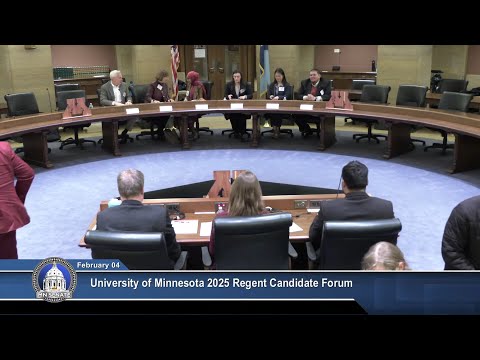
Regent candidates at the UMAA forum said the University of Minnesota should lead the conversation on higher education value by controlling costs, strengthening ties with the legislature and emphasizing measurable student outcomes.
Regent candidates at a University of Minnesota Alumni Association forum told attendees that restoring public trust in higher education requires a mix of affordability measures, clearer outcomes reporting and stronger partnerships with state legislators.
"I really do think that the perception of the declining value of a college education is the biggest challenge that we face for public higher education today," said Josh Leese, a regent candidate. He called for louder, more consistent public messaging about the university’s impact and for building partnerships with the legislature, K–12 systems and communities.
Several candidates emphasized tuition and student debt as central drivers of public concern. Dan Walter said, "For me, I think, the easiest way to let people understand the value of a degree is to, control the cost of a degree." Jeff Edinger suggested the board explore additional revenue avenues including targeted alumni giving and commercialization of research, and said the board should consider admitting additional nonresident students to the Twin Cities campus as a revenue strategy.
John Gibbs framed the university as "a beacon of enlightenment" that can model public engagement. Other candidates suggested the board should publish and promote metrics that matter to families — graduation rates, job placement and measures of return on investment — and that regents should press for greater transparency about how tuition and state dollars are used.
No formal board actions were taken at the forum; candidates offered views they would bring to the Board of Regents if elected. The exchange highlighted an area likely to shape future regent questions: how to balance a public research university’s budget while keeping college affordable for Minnesota families.