Get Full Government Meeting Transcripts, Videos, & Alerts Forever!
Get email alerts on the Solar Siting topic
No spam. Unsubscribe anytime.
DEEP urges local engagement, stops short of backing municipal takeover of small solar approvals
Summary
Connecticut’s Department of Energy and Environmental Protection told the Energy and Technology Committee it supports improved municipal engagement and data on nonresidential solar siting and tax impacts, but it does not back shifting approval authority for smaller projects away from local land‑use commissions.
The state Department of Energy and Environmental Protection told lawmakers it supports more municipal consultation and more analysis of tax and siting incentives for smaller solar projects — but stopped short of supporting new statewide approval powers for municipalities.
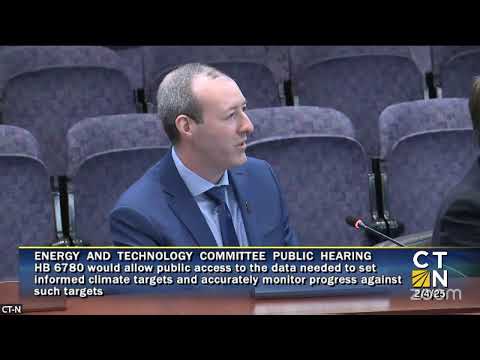
Katie Dykes, commissioner of DEEP, told the committee DEEP had provided written testimony supporting a study of “the tax implications of the non Residential Energy Solutions Program.” She also said, bluntly, that “DEEP respectfully is not in support of this bill,” referring to legislation that would change which municipal bodies can weigh in on non‑siting‑council solar projects.
Why it matters: municipalities, land‑use commissions and developers are clashing over where community and nonresidential arrays are placed. Lawmakers heard that some residents and local officials want stronger local control and clearer mitigation for environmental, forestry and stormwater impacts. DEEP said it had identified process improvements for siting council cases — for example, expanded pre‑application municipal consultation periods for transmission projects — while urging the committee to preserve local land‑use commissions’ existing roles for smaller projects not before the siting council.
DEEP officials pointed to several policy levers short of changing local approval authority. Eric Hammerling, director of DEEP’s Office of Environmental Review and Strategic Initiatives, said “there are lots of opportunities, in the siting council’s process for municipalities to be heard that I think they don't always take advantage of.” He and the commissioner also highlighted state efforts to encourage solar deployment on previously disturbed sites — landfills, brownfields and rooftops — rather than intact forest or prime farmland.
Lawmakers pressed DEEP about forest loss and stormwater. Commissioner Dykes described work her agency already does for siting council reviews, including technical comments on wetlands, endangered species and stormwater mitigation. She noted DEEP is working on a “Community Renewable Energy Siting Tool Collaborative” (CREST) to develop a GIS mapping tool that would help identify lower‑impact sites and to respond to a statutory requirement under Public Act 24‑31, section 5.
Several legislators and municipal officials told the committee they remain worried about community solar projects built in intact forest and on farmland because of conversion pressure, erosion and neighbors’ complaints. DEEP officials said for siting council petitions of 2 megawatts or greater there is already a requirement that petitioners obtain a letter from DEEP or the Department of Agriculture when core forest or prime farmland is present.
Ending note: DEEP offered to continue working with municipalities, developers and PURA to map preferred sites and develop best practices. The agency urged lawmakers to address both process improvements for siting council cases and stronger incentives to use disturbed lands rather than intact forests for solar.