Get Full Government Meeting Transcripts, Videos, & Alerts Forever!
Get email alerts on the Fema Reimbursement topic
No spam. Unsubscribe anytime.
Carter County disaster consultant reports $54 million in FEMA projects, $8 million obligated and volunteer hours collected
Summary
Emergency consultant Sonia Jones of Shouse LLC updated commissioners on debris, volunteer-hour tracking and FEMA reimbursements: Shouse billed about $318,000 to date, the county has $54 million of projects listed with FEMA and $8 million has been obligated through TEMA, and volunteers are being documented to reduce the county match.
Sonia Jones of Shouse LLC, the county’s disaster consultant, told the Carter County Board of Commissioners that the county currently has roughly $54 million in projects listed with FEMA and that about $8 million in obligations has been routed to the state for transfer back to the county.
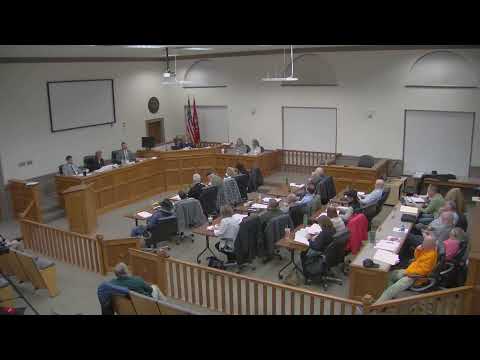
Jones gave a status update during a regularly scheduled meeting focused on flood recovery, describing current invoice and reimbursement work and answering commissioners’ questions about donated goods and volunteer-hours documentation. “Right now, to date, it is about $318,000,” Jones said when asked what Shouse LLC had charged so far; she said those costs fall under FEMA category C and are reimbursable at rates that are subject to FEMA and state rules.
Why it matters: The county’s ability to recoup federal disaster funds depends on thorough documentation of damages, payroll and donated labor or materials. Jones said volunteer hours and donated equipment and labor can reduce the county’s financial match and improve reimbursement amounts, but that FEMA sets how donations and volunteer labor are credited.
Key numbers and process details: Jones said she has documented roughly 34 separate FEMA projects so far and expects that number to grow. “We have $54,000,000 worth of projects listed with FEMA. We are looking to up that to a hundred million dollars worth of projects listed with FEMA probably within the next 30 to 60 days,” she told commissioners. She said $8,000,000 has been obligated to Carter County and is in the process of being transferred from the state (TEMA) to the county bank account.
Volunteer hours and donated goods: Jones said the county has been collecting volunteer-hour records and donated-equipment inventories from churches, nonprofits and towns. “I have a stack of about 4,500 pieces of paper of volunteers so far,” she told commissioners, explaining that FEMA will use “force account labor” and a value-per-hour calculation to credit volunteer time where it meets FEMA’s requirements. Jones added that donated materials are currently less straightforward in FEMA guidance and said the county will track donated equipment and volunteer work to reduce the county’s share of recovery costs.
Questions from commissioners focused on scale and timing. Commissioner Neal asked whether the county’s purchase orders are near $5 million; staff and Jones said outstanding purchase orders approach, but do not yet equal, that amount and that some costs will be covered by insurance, loans or outside funding depending on the project. Jones said some purchase orders will be closed if departments determine they will not use the funds.
NRCS and other programs: Jones singled out the NRCS Emergency Watershed Protection work and noted the NRCS contract would be time-sensitive if the commission accepted NRCS assistance (the commission later did accept NRCS assistance). Jones told commissioners that NRCS had completed initial streamwalks and eligibility determinations for debris and bank stabilization sites.
Timeline and next steps: Jones said FEMA reimbursements can take months to years, depending on the program and documentation needs, and that some large projects historically can still be unresolved years after a disaster. For NRCS funds, she said the state already has obligated some funds; for FEMA public assistance and other programs, the county will need to keep meticulous records and submit the required attachments, photos and policy documents.
Jones also advised the commission to continue collecting volunteer time logs and donation lists, and she said county staff will continue coordinating invoices, paperwork and project documentation for FEMA and state review.
Quotes: “The percentage that is set from FEMA is 75% of a federal share with the state picking up 12.5% and the county being responsible for 12.5% and that’s when the volunteer hours would come in,” Jones told the commission. She also said, “When the agreement gets to us in the next 10 days, that money’s already in the state of Tennessee,” referring to NRCS funding procedures.