Get Full Government Meeting Transcripts, Videos, & Alerts Forever!
Get email alerts on the Water Rates topic
No spam. Unsubscribe anytime.
Select Board approves 15% FY26 water rate increase, plans larger hikes in later years to cover capital
Summary
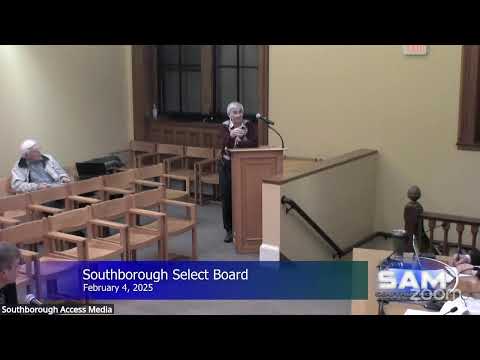
The Select Board on Feb. 4 approved a staff-backed rate package that raises FY26 water rates about 15% and phases larger increases in subsequent years to support planned water-main and tank work and to secure low-interest MWRA loans for capital projects.
Select Board members voted to adopt a staff-recommended water-rate plan that raises water charges for fiscal year 2026 and schedules further increases through FY30 to fund planned capital upgrades and take advantage of low-interest financing from the Massachusetts Water Resources Authority (MWRA).
The board approved “Option 2,” a multiyear plan staff said would limit the first-year hit to customers while restoring the enterprise fund’s reserves over the five-year horizon. Matt Abrahams, a consultant with the Abrahams Group, briefed the board and described the chosen plan as the “recommended” approach after running multiple scenarios.
Why it matters: the town’s water enterprise operates on user fees and must cover operating costs, indirect charges and a multiyear capital program that now includes a higher-than-expected scope of work. Staff told the board that recent changes to how indirect costs are allocated reduced the fixed-component (base) charge for FY26, while several capital priorities — including Lynnbrook Road main work, a loop between Presidential Drive and Fisher Road and tank maintenance — drove the need for higher usage-based fees. The board and staff emphasized the opportunity to use 0% MWRA loans to finance most of the near-term projects, if the town applies by the MWRA deadlines.
How the plan works: the Select Board and consultant presented two rate-path options. Option 2, which the board approved, sets a lower FY26 increase and larger annual increases afterward (staff modeled a 15% FY26 increase followed by higher increases in later years). Abrahams said the recommended option would reduce the projected FY26 deficit and put the enterprise fund on a path back toward the target reserve level over the five-year projection.
Council and staff discussion focused on: the quantum and timing of capital spending; the desirability of locking in MWRA 0% loans for the Lynnbrook and other projects; the degree to which tiered consumption charges target high-volume users; and the volatility that weather and consumption patterns introduce into revenue estimates. Abrahams and town finance staff noted that earlier assumptions about usage proved optimistic once the town completed a full year of billing under the current tier structure, which contributed to the tightened revenue picture.
Selected details cited at the meeting: Matt Abrahams said the town presents a multiyear view when setting rates so officials can see beyond the next fiscal year. He told the board, “we'd like to give you a multiyear look so you can see fiscal years beyond just the next fiscal year.” Town staff flagged three larger proposed capital projects in the five‑year plan: Lynnbrook Road main replacement (identified as an FY26 priority), a loop between Presidential Drive and Fisher Road, and maintenance of the tower tank. Staff also noted that the MWRA loan program offers 0% financing that the town can apply for in April, but the application requires an identified project and approved plan.
Customer impact: staff presented sample bill impacts for an “average residential user” (a household with a 5/8-inch meter). Under the approved Option 2, the consultant presented an approximate increase to the sample household bill of about $8 per quarter (roughly $32 per year) in FY26; the consultant and finance staff cautioned that larger increases are modeled in later years to keep the fund solvent and to cover capital costs.
Next steps: the board authorized staff to proceed with the FY26 rate schedule as modeled under Option 2, directed finance and DPW staff to continue advancing MWRA loan applications for the Lynnbrook and related projects, and asked staff to return with refined capital cost projections and with tier-level revenue breakdowns on demand. The board scheduled formal adoption and implementation timing to be handled per the town’s standard public-notice process.
Ending: Select Board members noted the importance of clear public messaging about how rates relate to capital needs and conservation, and asked staff to present outreach materials and per-tier revenue impacts in follow-up meetings.