Get Full Government Meeting Transcripts, Videos, & Alerts Forever!
Get email alerts on the Historic Preservation Burial Sites topic
No spam. Unsubscribe anytime.
Dorchester County keeps burial-site preservation board, grants one-year test after public outcry
Summary
After a public hearing with multiple residents urging continued county oversight of historic and private burial plots, Dorchester County Council voted to retain the Burial Site Preservation advisory board for a one-year trial rather than repeal the county ordinance outright.
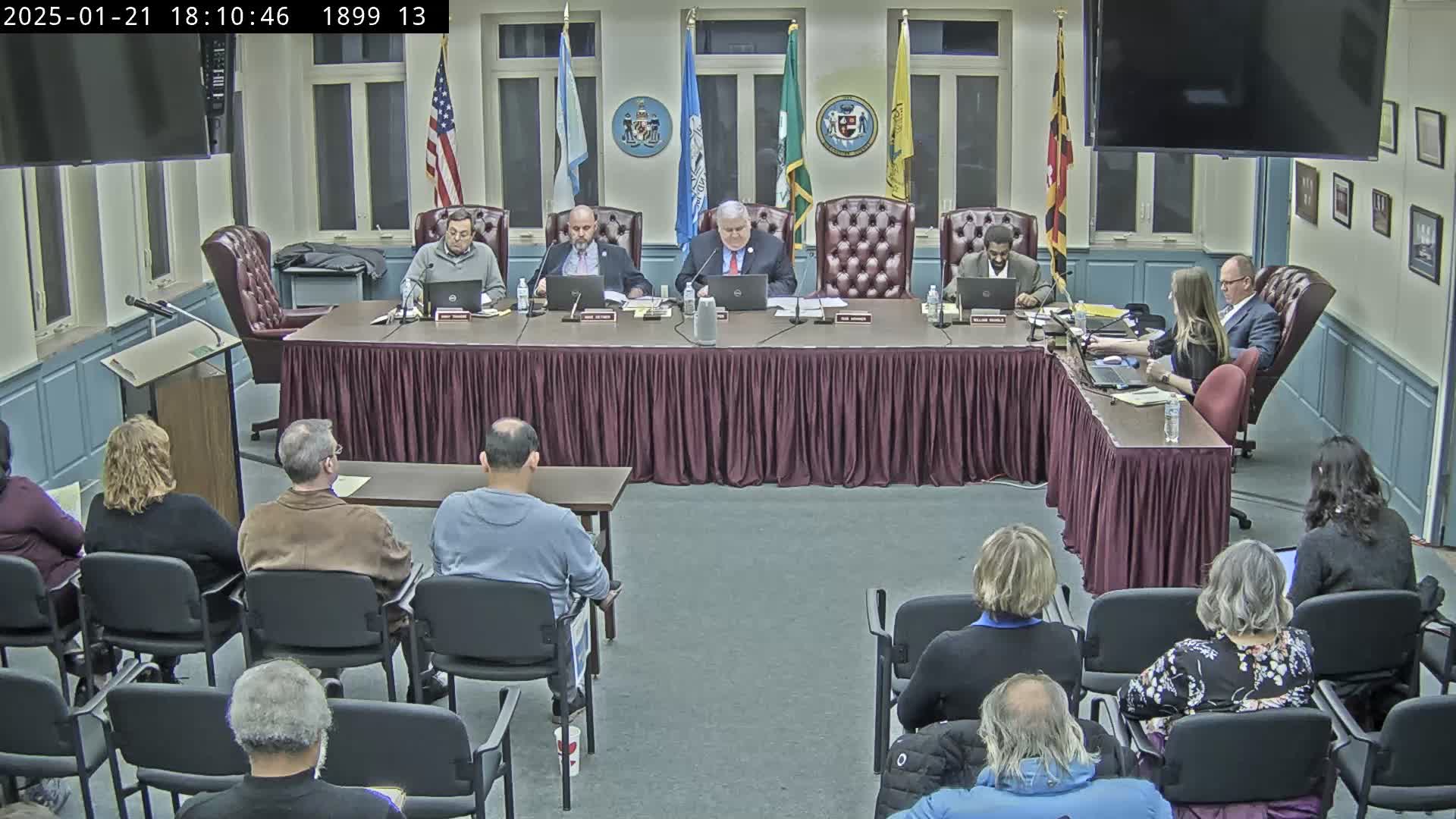
The Dorchester County Council voted Jan. 21 to retain its Burial Site Preservation advisory board for a one-year test period, rejecting a proposed repeal of the county ordinance that had created the board.
The proposal before the council would have repealed Chapter 63 of the Dorchester County Code, the countys burial-site preservation law. Miss Webb, a county staff member, told the council the board had low participation and that many enforcement functions overlap with the Maryland Historical Trust and state law. "There is already the Maryland Historic Trust as the enforcement entity for the state, and we are basically duplicating the effort," Webb said.
Residents and descendants of long-settled families urged the council not to eliminate the county mechanism for recording and responding to destruction of cemeteries. Dorothy Samanis, who identified herself as a long-term Dorchester County resident, said: "Dorchester County has been burying people since 1669." She described a private family cemetery that she said had been bulldozed during the pandemic and told the council that state agencies "do not have the teeth to act" without a county charging document.
Ashley Saminski, who said her family arrived with a royal land grant generations ago, warned the council: "If you let this go, we will be erased. Period." Deborah Woodin, a church trustee who cares for church cemeteries, asked whether the repeal would affect active church burial grounds; staff replied it would not change state burial law or maintenance already handled at the church level.
Council members debated the countys limited staff capacity and whether a county-affiliated board had become an impediment rather than an asset. "The affiliation with the county is holding an effort like this back," Councilman Detmer said, arguing that a volunteer or nonprofit group might be more nimble and that the county lacks funding and staff to support the board. Several council members acknowledged the publics concerns about limited local remedies in cases of cemetery destruction and the countys one-year statute of limitations for certain actions.
Rather than repeal the ordinance immediately, the council approved a motion to keep the Burial Site Preservation board under the county umbrella for a one-year trial (a "test period") to demonstrate effectiveness and produce deliverables for the council to review. The motion passed on roll call with Councilman Travers, Councilman Detmer and Councilman Nichols recorded as voting in favor; other council members also voiced support during the vote.
Under the motion, the council asked staff and the board to clarify the boards workplan, identify a staff point of contact, fill vacancies to achieve a quorum, and produce measurable outputs (mapping, outreach materials, and draft revisions to county code such as a longer statute of limitations) during the 12-month period. Speakers during the hearing suggested specific next steps the board could pursue immediately, including creating an intake/reporting form for burial-site complaints, education and outreach materials for municipalities and realtors, and a public webpage for reported cemetery locations.
Why it matters: Dorchester County contains hundreds of family and unmarked burial sites on private property and in unincorporated areas; residents and council members cited sea-level rise and private development as continuing risks. Maintaining a local, county-recognized process preserves a local entry point for complaints and recordkeeping even while state agencies provide technical guidance.
The council did not adopt immediate ordinance language changes at the meeting; instead it extended the boards status for one year and asked legal staff to draft potential code changes (including a proposed extension of the one-year limitation that residents said blocks prosecution in some historic-destruction cases).