Get Full Government Meeting Transcripts, Videos, & Alerts Forever!
Get email alerts on the Property Tax topic
No spam. Unsubscribe anytime.
Senate passes 50% homeowner property tax exemption after rejecting partial backfill
Summary
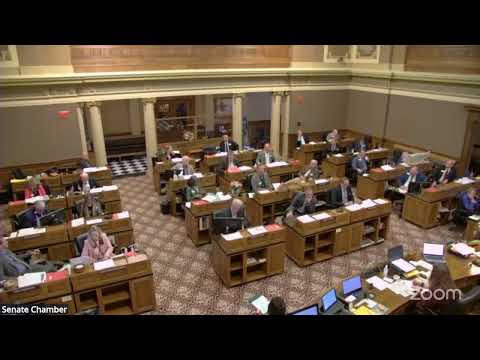
The Wyoming Senate passed Senate File 69 on Feb. 4, adopting an amendment to restore a 50% homeowner property tax reduction with a two‑year sunset after rejecting a proposal to keep relief at 25% with a partial backfill for counties.
CHEYENNE, Wyo. — The Wyoming Senate on Feb. 4 approved Senate File 69, a bill to reduce homeowner property tax liability, after the chamber rejected an amendment that would have limited the cut and provided a partial state backfill and instead adopted an amendment restoring a larger, no‑backfill cut.
The sponsor, Senator Jones, had offered a third‑reading amendment that would have kept the property tax relief at 25% and provided a 12.5% state reimbursement to county treasurers for lost revenue. “This amendment does leave the property tax relief at 25%. All it does is address the backfill to our communities, and it gives them a 12 and a half percent backfill,” Senator Jones said on the floor as she urged colleagues to consider local impacts.
Senator Nethercott moved an alternative amendment that returned the bill to its original form: a 50% reduction in the homeowner exemption with no state backfill and a two‑year sunset. “This restores Senate File 69 back to its original intent, which is a 50% reduction, no backfill, 2 year sunset,” Nethercott said before the Senate adopted that amendment by roll call.
Why it matters: Senators from rural counties warned that a large, across‑the‑board reduction would cut revenues that fund local services and schools; supporters said the relief was needed now for homeowners facing higher bills and inflationary pressures. Several speakers focused on the bill’s interaction with the state’s school funding and savings. Opponents said relying on the Legislative Stabilization Reserve Account or other state savings to replace local revenue would be unsustainable; supporters said a temporary reduction would provide meaningful relief for residents and that local governments and special districts would continue to be engaged on consequences.
Debate and amendments
The chamber considered multiple amendments before final passage. A motion by Senator Jones to adopt a middle‑of‑the‑road amendment (third‑reading amendment number 1) — which kept a 25% exemption and provided a 12.5% backfill — failed on a roll call (12 aye, 19 no). After further debate, Senator Nethercott’s amendment (third‑reading amendment number 2) to restore a 50% exemption, no backfill and a two‑year sunset passed on roll call (adopted by the Senate). A subsequent amendment (third‑reading amendment number 3), to allow property owners the option to pay the full pre‑exemption amount if they wished, was adopted by voice vote.
Supporters’ arguments
Senators who supported the larger cut argued that many homeowners, particularly seniors and residents on fixed incomes, needed immediate relief from rising property bills. “Historic property tax relief,” Senator Salazar said during debate, urging colleagues to support the bill for constituents who had repeatedly requested relief. Senator Scott said he believed the state could afford temporary relief if spending restraint continued: “I think we can well afford this tax,” he said, adding that careful fiscal management should follow.
Opponents’ arguments
Opponents stressed the bill’s statewide, one‑size‑fits‑all design and warned it would reduce revenues that largely fund schools and local services. Multiple senators noted that a majority of property tax revenue flows to school districts and the school foundation program; they argued that relying on reserves would erode long‑term fiscal stability and could force cuts to services in future years. Senator Rothfuss summarized that perspective, saying the proposal could “decrease the number of years where the LISRA can sustain our current level of funding.”
Final vote and next steps
After adoption of the Nethercott amendment and subsequent adoption of a technical amendment allowing taxpayers who choose to do so to pay the full pre‑exemption amount, the Senate recorded a final affirmative vote and passed Senate File 69. The bill now proceeds to the next steps in the legislative process. The Senate debate made clear lawmakers plan continued work with counties, school districts and special districts to track local impacts and to consider adjustments if shortfalls emerge.
Ending note
Senate File 69 carries a sunset provision tied to the adopted amendments; supporters described the change as temporary relief, and opponents said it required careful follow‑up. The Senate adjourned for a recess after completing the vote and other routine business.