Get Full Government Meeting Transcripts, Videos, & Alerts Forever!
Get email alerts on the Education topic
No spam. Unsubscribe anytime.
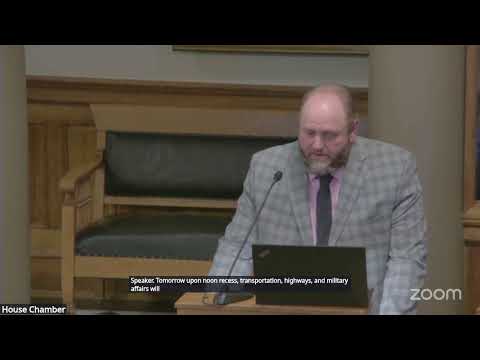
House passes expanded education savings accounts after lengthy debate and amendments
Summary
The Wyoming House passed House Bill 199, expanding the state's Education Savings Account program (branded in debate as a "Freedom Scholarship" plan), after multiple failed amendments that would have limited funding sources, phased in the law or tightened eligibility and accountability measures.
House Bill 199, the measure to expand Wyoming's Education Savings Account program, passed the House after extended debate and a series of amendment votes that failed or were rejected. The House voted 39-21 (two excused) to pass the bill after several days of floor discussion over funding, eligibility and accountability.
Supporters said the program expands parental choice and can be implemented without cutting core public school funding. Opponents argued the proposal diverts funds that are effectively part of school finance streams and raised constitutional and oversight concerns.
Representative Andrew, the bill sponsor, told colleagues the program is a public benefit and a vehicle to expand education options statewide. Representative Harshman warned of legal exposure and fiscal opacity, saying the bill —should ride like every other program and it should compete for general fund dollars just like every other program we pass into law.— Harshman and other members argued that routing federal mineral royalty revenues under an existing cap into the ESA program could reduce funds otherwise counted toward the school foundation program.
Floor amendments proposing (among other changes) that: funding come from the general fund instead of below-the-cap federal mineral royalties; eligibility be means-tested; the program start be delayed; or that statewide assessments be required, all failed to win final approval. A partial list of the notable amendment outcomes: - Third‑reading amendment 1 (would have shifted funding to the general fund and made the bill more explicit about costs): failed, roll call 17 aye, 42 no, 3 excused. - Third‑reading amendment 2 (means-testing to restore last year's income‑based model): failed on voice/division (not adopted on the floor). - Third‑reading amendment 3 (delay start date and address conflict-of-interest concerns): failed, roll call 20 aye, 39 no, 3 excused. - Third‑reading amendment 4 (adds an accountability clause referencing assessment of academic progress): adopted by division (membership recorded as adopted on the floor). - Subsequent amendments addressing preschool eligibility, assessment language and other program details were considered; several did not pass on final votes.
During debate Representative Clauston pushed for reinstating an income‑based eligibility model that the House passed last year but which the chief executive line‑item vetoed; Clauston argued that means‑testing would better protect public dollars and reduce litigation risk. Representative Williams and other supporters of amendment measures said measured steps and assessment requirements could improve public confidence; Representative Andrew and other majority supporters argued the broader universal approach is justified to encourage educational options.
In closing debate before final passage, supporters emphasized choice and program growth; opponents appealed to the state constitution and to the need for fiscal transparency and legislative prudence. The bill passed final House passage 39-21 (2 excused) and will move to the Senate for consideration.
Ending: House passage sets the measure on course to the Senate; because several amendments failed, sponsors and opponents signaled likely continued debate in the upper chamber and possible litigation over funding sources and constitutional questions.