Get Full Government Meeting Transcripts, Videos, & Alerts Forever!
Get email alerts on the Elections topic
No spam. Unsubscribe anytime.
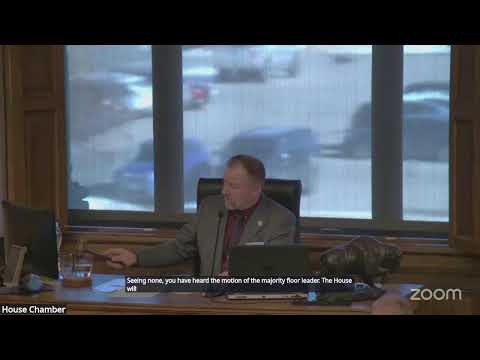
Wyoming House debates ballot drop boxes; amendment to set uniform rules fails, two clerk-requested fixes pass
Summary
Lawmakers debated House Bill 131, a proposal limiting ballot drop boxes. An amendment to add statewide technical and chain-of-custody requirements failed; two later amendments — one letting clerks notify voters who drop ballots in wrong municipal boxes and one allowing non-USPS carriers for ballots — passed.
House Bill 131, a proposal restricting county ballot drop boxes, drew extended debate in the Wyoming House of Representatives on Jan. 29, 2025, as members weighed election security against voter access. Representative Danial (Dan) Knapp sponsored the bill; Representative Eric Yin offered a substantive amendment aimed at specifying secure drop-box requirements.
The bill matters because it would change how voters in rural and remote areas can return absentee ballots. Representatives on both sides said they wanted to protect election integrity while avoiding unnecessary barriers to voting for residents who live far from county clerks’ offices.
Representative Eric Yin moved a detailed amendment that would have required clerks to notify the secretary of state of drop-box locations, bolt boxes to concrete slabs, limit lock access to clerks or designees, require daily collection, require ADA compliance and 24/7 video surveillance with recordings kept through certification. "This continues that ability while still keeping our elections secure," Representative Yin said on the House floor.
Supporters of Yin’s amendment said the measures would address chain-of-custody problems and offer consistent standards across counties. Representative Cori Connolly said her county clerk supported the amendment and that existing safeguards such as ballot tracking make the risk small. Opponents argued the amendment did not solve the underlying concerns and would create fresh vulnerabilities; Representative Kelly Harrelson said the amendment reintroduced a "soft spot" for election integrity.
After debate, Representative Yin’s amendment was put to the House and not adopted (voice vote; roll-call not specified in the transcript). Two later amendments brought forward at second reading did pass. Representative Store offered an amendment requested by county clerks to allow clerks to notify voters whose ballots were deposited in municipal business-filing boxes so the voter could seek a remedy under the spoiled ballot process; Representative Store said the change would prevent inadvertent disenfranchisement. Representative Geringer moved an amendment eliminating a statutory requirement that ballots be sent only through the U.S. Postal Service; he cited students and nonmilitary voters abroad who rely on alternative carriers. Both clerk-requested amendments were adopted.
No member identified a specific, documented case of drop-box fraud in Wyoming during the floor debate; members disagreed about whether the boxes originated during the COVID pandemic or had a longer history. Representative Provenza stated that drop boxes have been used for decades and are an access tool for remote voters. Representative Knapp and others pressed for uniform statewide rules to avoid inconsistent local practices.
The House ultimately read House Bill 131 for third reading without adopting Yin’s technical-security amendment but incorporating the clerk-requested clarifications that address voter notification and acceptable carriers.
Votes and formal outcomes recorded in the transcript for actions on the bill include: Yin’s amendment — not adopted (outcome not specified by roll-call in transcript); Store’s amendment — adopted; Geringer’s amendment — adopted. The bill was ordered to third reading with the adopted changes.
Ending: The debate highlighted recurring tensions in Wyoming over balancing rural voter access with uniform election procedures. Members said they plan to continue refining statutory language to protect chain of custody while avoiding new barriers to ballot return.