Get Full Government Meeting Transcripts, Videos, & Alerts Forever!
Get email alerts on the Food Safety Agriculture topic
No spam. Unsubscribe anytime.
House committee backs ban on lab‑grown "cultivated" meat; sponsors cite health and farm protections
Summary
The House Committee of the Whole recommended passage of HB168, a bill that would prohibit the production or sale in Wyoming of meat produced entirely by cell culture in a laboratory.
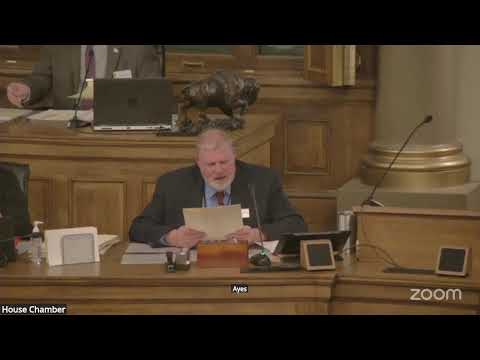
The Wyoming House Committee of the Whole recommended passage of House Bill 168 on Jan. 30, 2025. The bill would prohibit production, sale or use of meat that is “entirely developed in a laboratory using animal cells” — commonly described in testimony as “cultivated,” “synthetic,” or “lab‑grown” meat.
Sponsor Representative Mike Eklund said the bill is grounded in concern about safety and testing: cultivation processes are new, he told colleagues, and he doesn’t want Wyoming citizens, or school lunch programs, to serve an untested product without proof of long‑term safety. “I brought it meaning to bring a health and safety concern that I have,” Eklund said. Supporters also framed the measure as protection for the state’s livestock producers and rural economy; several representatives said existing agricultural products are “wholesome” and should not be displaced.
Opponents urged caution about a full prohibition and asked whether labeling or other regulatory approaches might suffice. Representative Kelly suggested prohibiting laboratory use in school lunch programs and requiring clear labeling as an alternative. Supporters replied that the market is nascent and that they prefer other states to serve as testing grounds rather than Wyoming.
Committee action: HB168 was reported do pass. Debate focused on health and safety testing, market impacts for ranchers, and whether a regulatory approach (labeling, clear product standards) would be preferable to an outright ban. The committee adopted the bill as drafted with support from a broad cross‑section of rural legislators.
Next steps: HB168 will advance for second reading on the House floor; lawmakers said they are open to working with stakeholders on precise language if the bill moves forward.