Get Full Government Meeting Transcripts, Videos, & Alerts Forever!
Get email alerts on the Medical Practice Regulation topic
No spam. Unsubscribe anytime.
House committee backs bill protecting clinicians who prescribe FDA‑approved drugs for off‑label uses, drawing controversy
Summary
House Committee of the Whole recommended passage of HB164 to protect prescribers and pharmacists dispensing FDA‑approved drugs for off‑label indications, while excluding controlled substances, abortions and gender‑transition prescriptions for minors; critics said the bill could override employer policies and create legal ambiguities.
The Wyoming House Committee of the Whole recommended passage of House Bill 164, a measure that would expressly allow prescribers and pharmacists to provide FDA‑approved prescription drugs for off‑label indications and limit professional or disciplinary action solely for using an approved drug for an unapproved indication. The committee reported the bill do pass (committee vote recorded 30‑21).
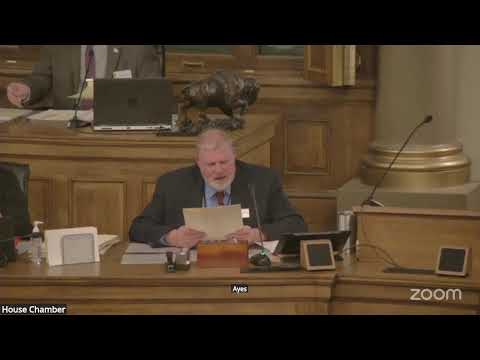
Representative Gary Brown, the bill sponsor, described the measure as protecting prescribers who prescribe FDA‑approved drugs for uses that are not the drug’s originally approved indication. “A prescriber may lawfully prescribe a United States Food and Drug Administration approved prescription drug for off‑label indications,” Brown read, saying the bill also authorizes pharmacists to dispense such prescriptions within their scope of practice.
The bill contains explicit exceptions. It does not apply to substances listed as Schedule I or II controlled substances, nor to prescriptions intended to induce abortion or to treatments that transition a minor’s biological sex. Supporters said the measure would protect clinicians who described patient‑by‑patient decisions during the COVID‑19 pandemic and other times when physicians pursued treatments outside the narrow label.
Opponents raised multiple concerns. Representative Tom Chestnut offered an amendment to strike the clause that would bar off‑label prescriptions used to induce abortion; he argued the language is vague and does not make clear whose “intent” would be judged — the manufacturer’s, the prescriber’s or the patient’s — and that some drugs have legitimate non‑abortion uses. Representative Claxton proposed removing employer and hospital‑privilege restrictions that would prevent hospitals and private practice owners from setting policies; that amendment failed in committee. Critics also argued the bill could inhibit medical boards and hospitals from enforcing safety and malpractice standards, and that its “notwithstanding any other law” phrasing risked pre‑empting malpractice liability and employer discipline.
Supporters said the intent was to preserve the clinician‑patient relationship and shield physicians from employment actions for medically justifiable off‑label care. Opponents said the measure needs clearer guardrails to avoid unintended consequences (for example, using powerful sedatives or other high‑risk drugs off‑label without adequate oversight).
Committee action: HB164 recommended do pass by Committee of the Whole; recorded committee tally 30‑21. Debate in committee focused on balancing clinician autonomy against employer and patient safety controls. The bill includes a severability clause and a savings provision tied to pending litigation concerning chemical abortion law.