Get Full Government Meeting Transcripts, Videos, & Alerts Forever!
Get email alerts on the State Legislation topic
No spam. Unsubscribe anytime.
Wyoming Committee of the Whole advances a slate of bills; long debate on women’s privacy, ballots and bears
Summary
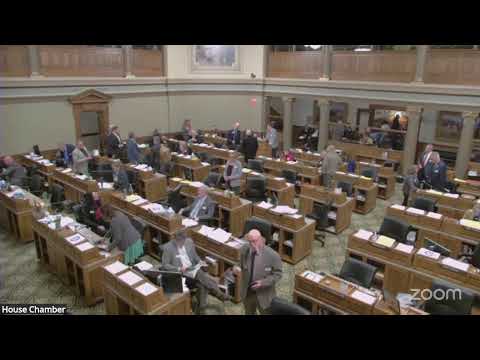
The Wyoming House Committee of the Whole met Feb. 4 in Cheyenne and voted to advance a package of bills to the House floor while lengthy debate unfolded on several high‑profile measures including women’s privacy in public spaces, election ballot formats and wildlife management.
The Wyoming House Committee of the Whole met Feb. 4 in Cheyenne and voted to advance a package of bills to the House floor while lengthy debate unfolded on several high-profile measures including women’s privacy in public spaces, election ballot formats and wildlife management.
House members passed or recommended passage for more than a dozen bills, moved several standing-committee and committee‑of‑the‑whole amendments, and indefinitely postponed one contentious measure after a roll-call division.
The most sustained debates included House Bill 72, a measure that would set statewide limits on who may enter sex‑designated restrooms, locker rooms and sleeping quarters in public facilities and schools; House Bill 245, a bill that would make paper ballots the default for in‑person voting while preserving accessible voting machines; and House Bill 186, a proposal to re‑introduce a free bear coupon on resident elk licenses that drew a lengthy, sharply divided exchange and ultimately failed on a roll call.
Child custody and registered offenders Representative Pendergraft, sponsor of House Bill 83, told the committee the bill is “a very simple bill about a very complex issue.” The measure would add language to the child‑custody statute so that a conviction requiring registration as a sex‑offender becomes a factor judges must consider. Members amended the bill to replace a conclusive presumption with a “rebuttable presumption” and to make the measure effective immediately. The committee reported the bill favorably.
Women’s privacy in public spaces Representative Lolli described House Bill 72 as ensuring “women and girls are safe and respected in places where privacy is essential.” The bill, as presented, would prohibit a person from entering changing areas, restrooms or sleeping quarters designated for males or females unless the person is a member of that sex, with enumerated exceptions (single‑use facilities, employees performing duties when unoccupied, emergency assistance and caregiving, among others). The sponsor and several questioners discussed how the measure would be applied in schools (different rules for educational facilities, longer statute‑of‑limitations for claims), and the committee adopted two amendments clarifying school‑official access to locker rooms, and adding caregivers and caregiving assistance to the statutory exceptions. Several members raised concerns about enforceability, single‑stall availability at small schools, and local logistics; proponents said the bill is intended to prioritize privacy and give institutions clearer authority and safe policies.
Elections and ballots Representative Knapp described House Bill 245 as “basically a pen and paper bill.” The bill would make paper ballots the default in Wyoming while preserving accessible voting machines for voters who need them. The sponsor and other lawmakers discussed chain‑of‑custody and auditability of certain touchscreen systems that print barcode receipts; the committee adopted an amendment to incorporate Help America Vote Act (HAVA) accessibility requirements so voters with disabilities can still use machines. Supporters said the proposal addresses auditability and proprietary source‑code concerns; opponents warned of increased costs for counties and voter‑education hurdles. The committee reported the bill favorably.
Snowmobile program funding Chairman Byron, sponsor of House Bill 4, told members the bill raises resident snowmobile registration from $35 to $50, creates a nonresident category and raises commercial grooming user fees (the sponsor cited a move from $105 to $150). He said the state snowmobile program grooms roughly 90,000 miles annually, that the program was running a budget shortfall, and that user groups who testified at interim meetings supported the increase. The committee adopted the bill and reported it favorably.
Bear coupon and federal law dispute (failed) Representative Orf brought House Bill 186 to reinstate a historic practice: attaching a bear coupon to a resident full‑price elk license, which would allow a hunter who encounters a bear during the elk season to take it. The bill drew an extended, sharply divided debate. Supporters framed the measure as a tool to assert state sovereignty over wildlife management and to relieve pressure from growing bear populations in certain areas; opponents and some hunting‑community witnesses warned it could put hunters at legal risk if federal law (Endangered Species Act protections or inter‑jurisdictional rules) conflicts with state direction. The bill failed on a roll call after a standing division. The roll call result was 26 aye, 32 no, 4 excused; the measure was indefinitely postponed.
Treatment of animals House Bill 275, a measure to add criminal penalties for cruel or unduly suffering‑causing treatment of wildlife and to allow licensing penalties in extreme cases, prompted discussion about enforceability, trapping carve‑outs and cultural expectations for ethical takes. The committee adopted a standing‑committee amendment that reduced an original felony penalty to a misdemeanor and clarified enforcement authority; the bill was reported favorably.
Other bills advanced The Committee of the Whole also reported favorably a set of bills that received shorter floor explanations or committee presentations: House Bill 235 (career and technical education equipment and supplies; creates a categorical grant to ensure funds are used for materials, supplies and equipment), House Bill 200 (parent rights and school notification clarifications, including notice at least five days before assemblies addressing sexual orientation/gender identity or diversity/equity/inclusion), House Bill 202 (fast‑track building permits for permitted uses, with exceptions for rezoning/variances), House Bill 181 (pre‑paid funeral contract investments and bonding; allows irrevocable pre‑need trusts and updates disclosure and trust rules), House Bill 273 (protections and legal remedies for pregnancy centers), House Bill 85 (local approval for simulcasting/off‑track betting, with standing amendments clarifying local control and repealing a 100‑mile rule), and House Bill 123 (adverse possession: tolling the statutory period while a landowner has paid taxes, and fee/attorney‑fee allocation when adverse‑possession claims are unsuccessful). Those measures were reported as passed out of the Committee of the Whole and move to later House action.
Votes at a glance (Committee of the Whole recommendation or action) - HB 83 (Pendergraft) — child custody / registered offender consideration: Committee recommendation — do pass (standing committee amendment adopted). - HB 72 (Lolli) — Women’s Privacy in Public Spaces: Committee recommendation — do pass (standing committee and Committee of the Whole amendments adopted). - HB 235 (Andrew) — CTE equipment and supplies: Committee recommendation — do pass (referred and reported; standing committee amendment adopted). - HB 200 (Webb) — Parent rights / school notifications: Committee recommendation — do pass (substitute adopted as standing committee amendment). - HB 245 (Knapp) — Pen and paper ballots default: Committee recommendation — do pass (Committee of the Whole amendment to include HAVA accessibility adopted). - HB 202 (Feiler) — Fast‑track permits for permitted zoning uses: Committee recommendation — do pass (Committee of the Whole amendment adopted to clarify variance/conditional uses). - HB 273 (Rodriguez Williams) — Pregnancy center protections (CARE Act): Committee recommendation — do pass. - HB 85 (Byron) — Local approval for simulcasting (off‑track wagering): Committee recommendation — do pass (standing committee amendment addressing definitions and repealing 100‑mile rule adopted). - HB 181 (Larson Lloyd) — Pre‑paid funeral contract investment and bonding changes: Committee recommendation — do pass (standing committee amendment adopted). - HB 4 (Byron) — Snowmobile registration and user fees: Committee recommendation — do pass. - HB 205 (Strauch) — Wyoming State Fair department (reorganization/streamline): Committee recommendation — do pass. - HJR 1 (Capital Finance) — Amend act of admission for earnings language: Committee recommendation — do pass. - HB 275 (Byron) — Treatment of animals (anti‑cruelty in hunting context): Committee recommendation — do pass (standing committee amendment adopted lowering penalty; reported). - HJR 3 (Sherwood) — Support for rural schools (resolution): Committee recommendation — do pass. - HB 123 (Nyman) — Adverse possession / tax payment defense: Committee recommendation — do pass (standing committee amendment allocating attorney fees to unsuccessful plaintiff in adverse‑possession claims). - HB 186 (Voorhees/Wharf) — Bear coupon on elk licenses: FAILED in the Committee of the Whole (standing committee amendment not adopted; Committee of the Whole amendment adopted then bill lost on roll call 26–32–4 excused; indefinitely postponed).
What to watch next Several measures reported from the Committee of the Whole will appear later on House second or third reading. The bear coupon debate is likely to reappear in other forms or in continued policy conversations about state‑federal wildlife authority. The paper‑ballot default and women’s‑privacy bills drew strong operational and legal questions that could prompt second‑reading clarifications. Several committee amendments instructed sponsors to draft clarifying language for second reading (for example, HB 72’s caregiving and coach‑access language and HB 202’s timing exceptions for federal/state review).
Meeting context and participation The session day was long (several hours of floor time), with sustained public and member interest on multiple policy fronts. Dozens of legislators asked substantive questions during debate; multiple committee and Committee‑of‑the‑Whole amendments were adopted to narrow, clarify or limit the scope of bills before the House floor.
Ending Bills reported favorably by the Committee of the Whole will next proceed through the House calendar and the body’s second and third readings; one high‑profile proposal on bears was indefinitely postponed after the roll‑call defeat. Members signaled follow‑up work on implementation details and second‑reading amendments for multiple measures.