Get Full Government Meeting Transcripts, Videos, & Alerts Forever!
Get email alerts on the Education Esa topic
No spam. Unsubscribe anytime.
House debates Wyoming Freedom Scholarship Act amid split over accountability and funding level
Summary
Lawmakers spent more than an hour debating House Bill 199, the "Wyoming Freedom Scholarship Act," which would create an education savings account program. The House voted down several amendments that would change automatic inflation adjustments and testing requirements, adopted a certification amendment, and ordered the bill to third reading.
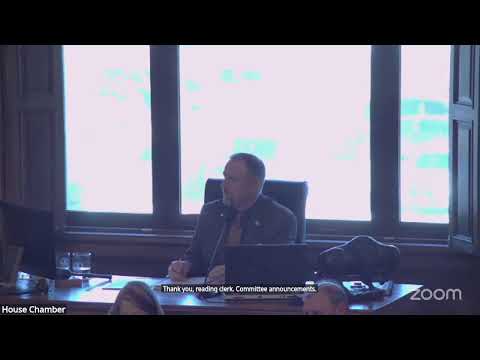
The Wyoming House of Representatives spent an extended floor session debating House Bill 199, the Wyoming Freedom Scholarship Act, an education savings account (ESA) measure that would provide state funds to families for private or home-based education.
Supporters framed the bill as expanding school choice; opponents pressed for stricter accountability. On votes during second reading, the House rejected measures to remove or alter the bill's automatic inflation adjustment and a proposed amendment to add standardized assessments, adopted an amendment to require vendor certification, and deferred final passage to a later floor session by ordering the bill to third reading.
Why it matters: The bill would direct public money to education options outside the public-school system. Members debated both practical and constitutional questions — how large the per-student award should be, whether the state must certify providers, and whether recipients should be required to take standardized assessments to track learning outcomes — and those choices will shape how widely and under what conditions families may use ESA funds.
Representative Sherwood, who offered the first amendment at second reading, characterized the choice over statutory inflation adjustments as a matter for lawmakers rather than an automatic executive action: "This is a policy decision and a conversation for the body to have." Sherwood said removing automatic adjustments would preserve the Legislature's appropriations authority.
Representative Harshman moved a separate amendment that sought to lower the ESA payment; the House rejected that amendment following a division vote (23 in favor, 38 opposed). Representative Williams offered and won an amendment to restore certification of educational vendors, describing the change as ensuring that "private providers are following what is currently in the law for them to follow." Williams's amendment was adopted.
Debate over assessment and accountability was the session's most contested issue. Representative Jarvis argued in favor of requiring assessments, saying that taxpayer funds should come with measures to confirm whether children are being educated: "I am 100% for school choice. I am not for government handouts with no accountability." Representative Williams and other supporters of removing mandatory testing said assessment requirements would force private and home educators to "teach to the test" and reduce parental control over curriculum.
Representative Nicholas, speaking for proponents of larger ESA amounts, warned that lowering the proposed payment would "cut a lot of people out of this program," while opponents including Representative Wauschitt favored a more gradual rollout. Members also discussed federal special-education obligations: one speaker noted that children with special needs would continue to be subject to IDEA requirements.
On procedural motions, Representative Sherwood moved amendment number 1 (inflation adjustment language); that amendment was not adopted. Representative Harshman moved amendment number 2 (lowering the amount); that amendment failed by division (23-38). Representative Williams's amendment number 3 (vendor certification) was adopted. Representative Williams's amendment number 4 (returning assessments to the bill) failed in a roll-call vote (25 aye, 36 no, 1 excused). Representative Nicholas withdrew amendment number 5. After the several votes, the House voted to read the bill a third time at a later date.
The House did not complete final passage of HB199 during the session covered in this transcript; lawmakers sent the measure forward for third reading. Next steps will include the scheduled third-reading floor action, where final passage or further amendments could occur.