Get Full Government Meeting Transcripts, Videos, & Alerts Forever!
Get email alerts on the Criminal Appeals topic
No spam. Unsubscribe anytime.
Panel hears murder‑conviction appeal focusing on jury selection, castle‑law and provocation
Summary
The appeals panel considered multiple grounds in an appeal of a second‑degree murder conviction, including juror bias at trial, castle‑law instructions, and whether the trial court improperly denied a motion to reduce the verdict to voluntary manslaughter.
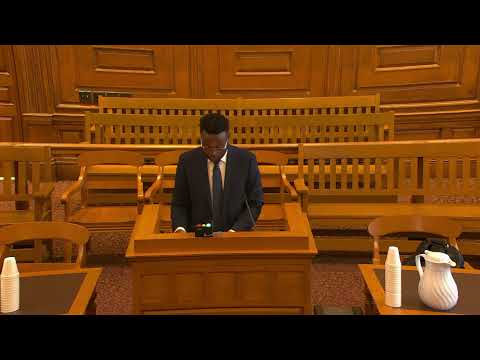
Counsel for James Andrews argued before the Massachusetts Appeals Court that multiple trial errors require relief after a second‑degree murder conviction, including seating of a juror with prejudicial views, improper treatment of a castle‑law/self‑defense theory, and inflammatory prosecutorial argument.
Attorney (name on transcript) asked the panel to find the juror’s initial remarks — that the juror “would rather see someone testify if they believe they’re innocent” and that charges tend to make a person look guilty — were disqualifying and that the trial court should have excused the juror for cause. Counsel said the case was close on the manslaughter/reduction question and that juror bias required a new trial.
On the castle‑law and provocation arguments, appellate counsel told the court the decedent entered the defendant’s sleeping area before sunrise, tore down a privacy curtain and destroyed the defendant’s laptop with a metal baton; counsel said those undisputed facts supported a castle‑law instruction or at least mitigation to voluntary manslaughter given the brief interval between provocation and killing. The Commonwealth replied that the record did not support a claim of unlawful entry by an invitee or a reasonable provocation that would justify mitigation, and that the killing likely occurred in a common hallway rather than inside the defendant’s sleeping area.
Counsel also challenged closing and opening statements as exceeding appropriate bounds and urged the court to consider the decedent’s drug levels and defendant’s history as part of mitigation. The panel asked targeted questions about where the killing occurred, whether the laptop was on the defendant’s person, and what evidence supported a claim of reasonable provocation. The court took the arguments under advisement.