Get Full Government Meeting Transcripts, Videos, & Alerts Forever!
Get email alerts on the Probation Revocation topic
No spam. Unsubscribe anytime.
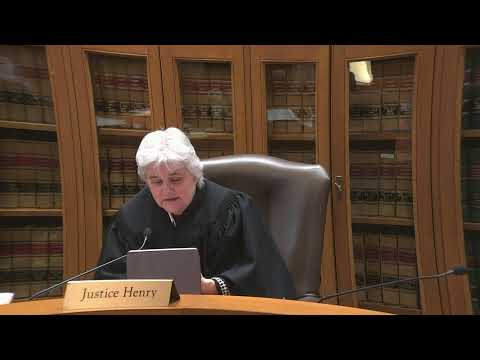
Appeals court reviews probation revocation and sentence in Commonwealth v. Hunt
Summary
Appellate arguments focused on whether the trial judge had sufficient evidence to find multiple probation violations, whether some violations were moot after subsequent pleas, whether hearsay and credibility findings supported revocation, and whether the sentence exceeded guidelines or was influenced by improper factors.
The Appeals Court heard argument in Commonwealth v. Michael Hunt on whether the trial court properly revoked probation and imposed a 9-to-11-year sentence. Attorney Edward Elliott, representing Hunt, argued multiple points of error and urged the panel to correct what he described as an injustice stemming from the final probation-revocation hearing.
Elliott told the court the Commonwealth relied on weak or conflicting evidence for several alleged probation violations. He said the key contested violation—alleged contact with minors—depended on inconsistent hearsay and conflicting accounts about who asked two minor girls for directions. Elliott argued intent and willfulness were required for a probation violation under Bruno O'Leary precedent and said the record left unresolved whether Hunt, as passenger or driver, intentionally violated a no-contact order.
The Commonwealth's attorney, Andrew Covington, urged affirmance. He said two alleged violations involving a witness identified as "AG" were moot because the defendant later pleaded guilty to a related charge but that other asserted violations remained properly proven by a preponderance of evidence. Covington argued the trial judge did not abuse discretion, the sentence was within statutory bounds, and recusal was unwarranted.
The panel questioned whether some of the alleged violations were mooted by subsequent pleas and whether the probation officer’s inconsistent enforcement over eight years undercut the prosecution’s claims. They also probed whether the sentencing judge relied impermissibly on post-hoc or uncharged conduct or misapplied new statutory guidance. The Commonwealth pointed to the defendant's record, including prior convictions and prior commitment under a dangerousness statute, when supporting the sentence.
Why it matters: the appeal raises standard-of-proof issues in revocation proceedings, the scope of permissible hearsay in probation hearings, and the limits of appellate review of sentencing decisions. The case was submitted for decision after argument (docket no. 2023-P1481).