Get Full Government Meeting Transcripts, Videos, & Alerts Forever!
Get email alerts on the Criminal Firearms Appeal topic
No spam. Unsubscribe anytime.
Appeals court hears challenge to rifle and knowledge findings in Commonwealth v. Ferreira Artur
Summary
Attorneys argued whether evidence and jury instructions supported convictions for possessing a rifle and related charges, focusing on when the defendant knew about the gun, whether the weapon met the statutory definition of a rifle, and whether a jury instruction on intoxication or a Guardado error requires reversal or a new trial.
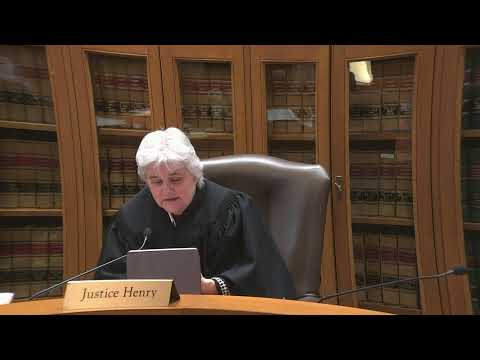
The Massachusetts Appeals Court heard oral argument in Commonwealth v. Ferreira Artur about whether trial evidence and jury instructions were sufficient to support several weapons-related convictions.
Defense attorney Hayne Barnwell told the three-judge panel that the Commonwealth left “major gaps of proof,” arguing there was no testimony from the first officers who arrived and that later officers found the defendant already seated with a blanket around him. Barnwell said there was no direct proof about when a nearby bag was opened or whether Ferreira Artur knew there was a firearm in it before officers illuminated the area with a flashlight.
Barnwell also argued the Commonwealth failed to prove the weapon had a rifle bore, a legal element distinguishing rifles from shotguns. He noted the detective did not testify that he had examined the barrel bore and said jurors could not determine a rifled bore “just looking at the gun.” Barnwell urged the court to find insufficient evidence, or alternatively to reverse based on an alleged Guardado instructional error and order a new trial.
On behalf of the Commonwealth, Alyssa Hatfield argued the detective’s testimony and the judge’s instructions together provided enough for the jury to infer a rifled bore and to find the defendant knowingly possessed the firearm. Hatfield said the expert witness described differences between shotguns and rifles, defined bore as “the inside portion of the barrel from the muzzle to the chamber,” and the judge twice instructed the jury that the gun must meet the legal definition of a rifle.
Hatfield also argued the jury could credit the defendant’s admitted statement that he handled the gun and that magazines found on the defendant supported the ammunition charge. On the Guardado-related claim about a firearms-identification (FID) card, the Commonwealth said a harmless-error analysis supported affirmance because other record evidence showed the defendant admitted he lacked a license.
The panel asked questions about when the officers first arrived, what was visible in low light, whether jurors could identify a bore without specialized tools, and whether the intoxication instruction and split verdicts raised a substantial risk of a miscarriage of justice. The case was submitted for decision (docket no. 2024-P235).
Why it matters: the court’s ruling will affect how lower courts and prosecutors prove the technical elements that distinguish firearms by bore and how courts treat evidence about a defendant’s knowledge when officers arrive at a dark scene.