Get Full Government Meeting Transcripts, Videos, & Alerts Forever!
Get email alerts on the Forensics topic
No spam. Unsubscribe anytime.
Lawmakers consider clarifying forensic genealogy rules after counties interpreted 'reasonable investigative leads' differently
Summary
Delegate Moon told the House Judiciary Committee that House Bill 301 would clarify Maryland law governing forensic genetic genealogy used in serious cold-case investigations; prosecutors said the bill removes ambiguity about when genealogical testing is allowed and would speed certain analyses without changing existing privacy safeguards.
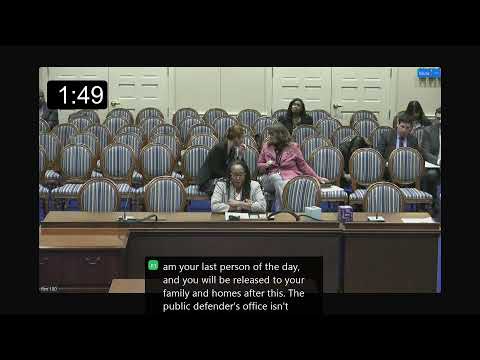
The House Judiciary Committee considered House Bill 301, a measure to clarify Maryland's rules for using forensic genetic genealogy in criminal investigations. Sponsors said different local agencies have interpreted a statutory requirement that investigators exhaust "reasonable investigative leads" before seeking genealogical testing in inconsistent ways.
Delegate Ben Mo'on (transcript: "Delegate Moon") told the committee the bill is designed to make the law plain for law enforcement and reduce unnecessary litigation over whether a case qualifies. "If we've already narrowed the use of this technology to the most serious of crimes, do we really need this last requirement?" he asked, describing county variation in practice.
Detective Steve Smugareski of the Montgomery County Police Department, who has used forensic genealogy to close cold cases, said the bill would reduce confusion and help preserve DNA evidence by allowing parallel processing and timely SNP testing. He told the committee that court authorization and other safeguards in current law would remain in place and that clarifying the "reasonable investigative leads" provision would narrow opportunities for inconsistent judicial interpretation.
Committee members asked whether the bill would change which crimes qualify and whether it would affect active investigations; sponsors said the intent is clarity not expansion. No vote was taken at the hearing; the bill's backers said they would supply the committee with drafting edits and examples to ensure it matches law-enforcement practice while preserving judicial oversight via the existing warrant and evidentiary safeguards.