Get Full Government Meeting Transcripts, Videos, & Alerts Forever!
Get email alerts on the Small Business Façade Incentives topic
No spam. Unsubscribe anytime.
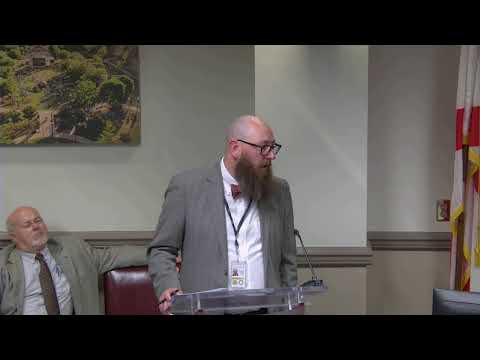
Tuscaloosa council staff briefed on unwieldy process to allocate $300,000 façade/incentive funds
Summary
Councilors and staff discussed a proposed process to allocate roughly $300,000 in small-business/property owner incentive funds across about 34 applications, including per-owner limits that could cut the applicant pool and guidance on prioritizing adjacent storefront projects.
Councilors on the Tuscaloosa City Council heard a detailed briefing from staff about a proposed process to distribute roughly $300,000 in façade/incentive funds among about 34 applications, and discussed procedural choices intended to narrow the applicant pool and speed decisions.
City staff described the packet of applications and a summary sheet intended to help the council review requests. Staff noted each application may request up to $25,000 and that some property owners submitted multiple applications; the packet is color-coded to show where more than one application is tied to the same property owner.
“Team has put together a nice handy reference guide,” Brandon, a city staff member, told the council, describing a summary sheet that lists dollar amounts, districts, and the doing-business-as names for applicants. He said both paper and digital copies of full applications are available in City Hall.
The nut of the discussion centered on how the council should interpret a program rule that limits awards per property owner. Several councilors said enforcing a single-application-per-property-owner rule would reduce the pool by an estimated 15–25 percent, easing the committee’s review. “If you were only allowed to 1 apiece that’d be 4 and that means you would knock off … 20%,” Brandon said while scanning the packet.
Councilor Busby urged practical approaches to prioritize projects by geography and impact, suggesting that adjacent storefront improvements could deliver more visible benefit. Staff agreed applications vary in completeness, with stronger submissions including cost estimates and architectural items. Staff emphasized that an award would generally be reimbursable: the applicant would perform the work and later submit receipts for reimbursement under a development-agreement style process.
Councilors repeatedly raised concerns about the potential complexity of making dozens of discretionary adjustments during a single committee meeting. One councilor said: “If 7 people are gonna be voting not only on 34 different choices, but within each of those 34 different choices, you have the option of moving changing amounts too. That's gonna be a very unwieldy process.” Staff recommended councilors prepare a ranked list of their preferred projects ahead of the committee meeting to speed consensus.
Staff advised that the Community Development committee will begin the review on Feb. 18 and could reduce the number of items for full council by applying the property-owner limit and by eliminating incomplete or weak applications. The staff presentation indicated there is no additional budget beyond the one-time pool; any applications not funded would remain unfunded unless new money becomes available.
The briefing closed with staff reiterating the open-public-meetings and public-notice procedures used for the process and with a reminder that applicants are not required to attend the committee meeting but will be notified that review begins on Feb. 18.
Looking ahead, councilors asked staff to prioritize clarity around the per-owner limit and suggested weighing geographic clustering and application completeness when recommending awards to the full council.