Get Full Government Meeting Transcripts, Videos, & Alerts Forever!
Get email alerts on the Housing And Community Development topic
No spam. Unsubscribe anytime.
County official outlines how Greenfield can use CDBG urban-county funds
Summary
County housing program manager Darby Marshall explained the Urban County Community Development Block Grant rules, estimated Greenfield allocations and allowed uses, and asked city leaders for project priorities.
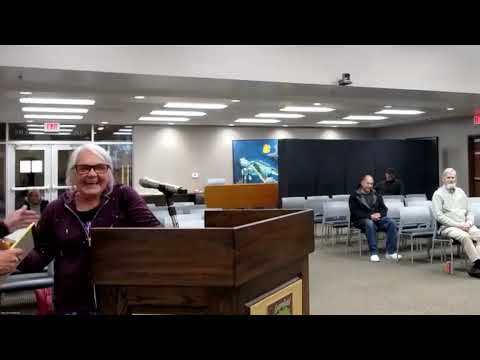
Darby Marshall, the county’s housing program manager, told the Greenfield City Council that the Urban County Community Development Block Grant (CDBG) program gives participating cities a recurring federal funding stream that must be spent on HUD-eligible activities and meet one of three national objectives.
Marshall said the Urban County is part of HUD’s entitlement program and that Greenfield’s share would be roughly $250,000 per year under current formulas; over three years he estimated about $548,000 would be available for the city to program (public services are handled separately at the county level). “As an entitlement, it’s exactly what it sounds like. We get a guaranteed grant every year to spend for CDBG eligible activities,” Marshall said.
The presentation explained how the county allocates its entitlement pot: up to 15% may be used for public services, up to 20% for general administration, and the remainder for affordable housing, infrastructure and community facilities. Marshall reviewed typical eligible activities, including ADA improvements, housing rehabilitation and down-payment assistance, economic development tied to low- and moderate-income job beneficiaries, and consultation and fair-housing services. He said urgent disaster-response allocations are separate and handled through special CDBG disaster funds.
Marshall gave examples of past local uses of CDBG funds, including ADA upgrades at Patriot Park, a joint purchase of a fire engine, youth programming through the Boys & Girls Clubs, expansion of Meals on Wheels service, support for GRID Alternatives’ rooftop solar program, and legal services for seniors. He said the county funds tenant–landlord mediation as a required fair-housing activity and pointed officials to a hotline (+1-800-ECHO) for residents seeking assistance.
Council members asked whether streetscape and downtown rehab projects or employer-based job programs could be supported. Marshall said streetscape and street improvement projects could qualify as an area benefit. Economic development is possible but requires income verification of job beneficiaries. He also said the county could partner on supporting off-site infrastructure needed by affordable housing developments, if the city backs the project.
Marshall closed by asking the council to work with city staff to identify project priorities—economic development, public facilities, housing rehab or other needs—so the county can confirm eligibility and timing. “What I don’t want to do is approve a project that then we have to come back and go, ‘Oh, HUD said that’s not allowed and you have to repay us,’” he said.