Get Full Government Meeting Transcripts, Videos, & Alerts Forever!
Get email alerts on the K 12 School Finance topic
No spam. Unsubscribe anytime.
Burke County schools report midyear finances as county frees decades‑old restricted capital funds
Summary
Burke County Public Schools reported midyear revenues above projections and the end of a decades‑old restriction on a county sales‑tax capital fund, a change county officials say shifts $4 million-plus toward operating needs after special legislation and litigation long limited local flexibility.
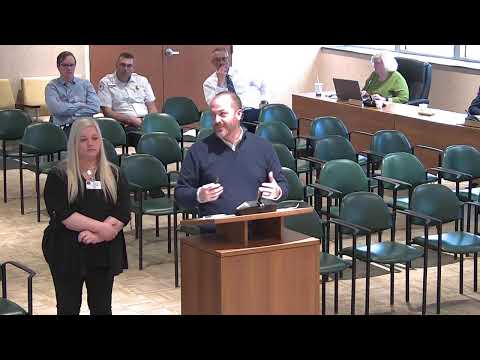
Burke County Public Schools presented midyear financial results to the Burke County Board of Commissioners on Tuesday, and school and county officials described stronger‑than‑expected revenues, the expiration of COVID relief funds and a recent local legislative change that freed previously restricted capital sales‑tax dollars for broader use.
The midyear report, delivered by Keith Lawson, finance officer for Burke County Public Schools, showed state revenues up about 4.5 percent year‑over‑year and federal revenues down roughly 57 percent because one‑time federal COVID relief (ESSER) funds have expired. Special revenue lines — including Medicaid support for exceptional children and a renewed GEAR UP grant channeled through Appalachian State University — were substantially higher than a year ago.
Lawson said the district’s midyear use of fund balance totaled $343,114, against a budgeted full‑year draw of about $489,000, and that the schools were operating “a little stronger than anticipated.” He told commissioners the district is at near‑full staffing after the post‑COVID hiring period, and that prior ESSER funding, which had supported one‑time needs, has ended.
Why it matters: County manager Brian Eppley and Lawson told the board that a long‑standing, county‑only sales‑tax arrangement from the 1980s had effectively constrained how some capital dollars were used. Eppley said special legislation enacted in 1983 and 1985 restricted roughly 1.5 cents of local sales tax to school capital projects; litigation in 2005 and 2008 complicated interpretation. County and school officials said recent local action and legislative fixes removed the restriction and effectively moved funds that had been accumulating in a capital account into more flexible use for operations and capital as determined locally.
Eppley told the board the change increased available local funding and helped move the county’s per‑pupil support up. He described a prior imbalance in which roughly $16.6 million in one account increased to about $20.3 million after the statutory adjustment and local actions — money that had been unavailable for operating needs under the old restriction. Eppley said the board prioritized classroom size, teacher supplements and increased school funding in the last two years, producing a roughly 25 percent increase in local support that improved Burke County’s statewide funding ranking.
Commissioner questions focused on staffing commitments after one‑time federal funds ended and on the county’s rank in per‑pupil funding. Lawson said Burke County did not create recurring positions paid solely by ESSER funds and that lingering ESSER‑funded positions (four school nurses) ended in September 2024. Lawson agreed to provide updated per‑pupil ranking information to the board.
Lawson also outlined local revenue uses: regular instructional services, instructional support (maintenance and facilities), payments to charter and neighboring LEAs for students who attend outside Burke County for safety reasons, and a projected modest use of fund balance for the fiscal year.
The board did not take formal action on the presentation; the item will remain on the regular agenda for the commissioners’ next meeting.
A closing note: Lawson said the district remains in a healthy short‑term financial position but does not expect to cut its planned use of fund balance in half this year, a goal he usually tries to meet.