Get Full Government Meeting Transcripts, Videos, & Alerts Forever!
Get email alerts on the K12 Education Computer Science topic
No spam. Unsubscribe anytime.
School district launched K–5 STEAM roadmap in 2018 to widen computer‑science pipeline, students say
Summary
Staff described a K–5 STEAM and Innovation Roadmap started in 2018 to expand equitable access to STEAM and computer science. Students reported starting with middle‑school robotics and progressing to AP computer science; staff said high‑school teachers report higher incoming skill levels and emphasized sustainability.
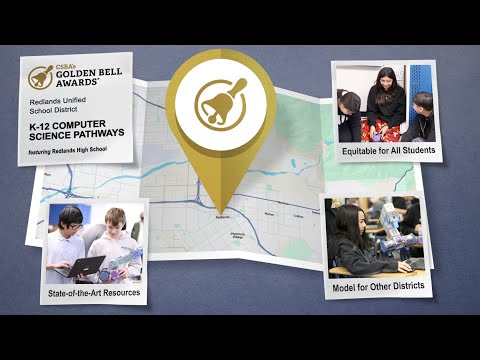
A staff member said the district began an effort in 2018 to create an intentional, equitable pathway into science, technology, engineering, arts and math (STEAM) and computer science across all schools and grade levels.
“This began actually in 2018. At the time we had pockets of cool programs at the school district but nothing really developed and intentional and something that in an equitable way reached across every school, every grade level, and every student,” the staff member said. “One of the things that we did was to create a K‑five STEAM and Innovation Roadmap.”
The roadmap, the staff member said, is intended to start students on STEAM exposure in early grades, carry momentum through middle school and prepare students for higher‑level coursework in high school. “So now you take all of this excitement, knowledge, momentum at your early grades and then you move on into your middle grades,” the staff member said. “You kind of take that baton and build upon the excitement and interest in the middle grades and then you move on into the upper grades where you can really see the interest, understanding of computer science growing and expanding for your high school kids.”
Students who spoke during the discussion described how early exposure shaped their course choices. A student who identified themselves as attending RHS said they were introduced to robotics in middle school and that experience led them to enroll in computer science courses in high school. “I started around middle school. In middle school, I was introduced to like a program where we did robotics and like learning how to move the robot and stuff like that,” the student said. “So then when I went to RHS here in high school, I wanted to continue coding, so I started with computer science CP with mister Honestly liked that class a lot because it was a great introduction, and it also went a little advanced at the end so that you would like it's a great jump board for more classes such as when I took AP computer science a.”
Other student comments emphasized cognitive and problem‑solving benefits from early coding opportunities. “If you do not have access to this, you might not develop problem solving skills, and you might not, like, develop the important brain structures to understand things,” one student said. Another added, “I think coding is a lot about logic. So you have to think about problems and how you can efficiently go through them. So I think it's important because you have a much more malleable mind when you're younger. It just helps with your problem solving skills.”
The staff member told the meeting that conversations with high‑school educators indicate students are arriving better prepared, a shift that has changed instruction at the secondary level. “When we have a conversation with our high school educators, they're saying the quality of the kid is increasing. In fact, it's changed the way they teach and what they have to teach and how rigorous they have to teach because the kids are coming in with these skills already embedded,” the staff member said. The staff member added that sustaining the program beyond current efforts remains a priority: “I think my greatest hope is sustainability. We set out for something that will live far beyond our efforts based on the foundation and groundwork and excitement and energy that we've built for all these years.”
No formal actions, votes or specific funding allocations were recorded in the transcript for this item.