Get Full Government Meeting Transcripts, Videos, & Alerts Forever!
Get email alerts on the Manufactured Housing topic
No spam. Unsubscribe anytime.
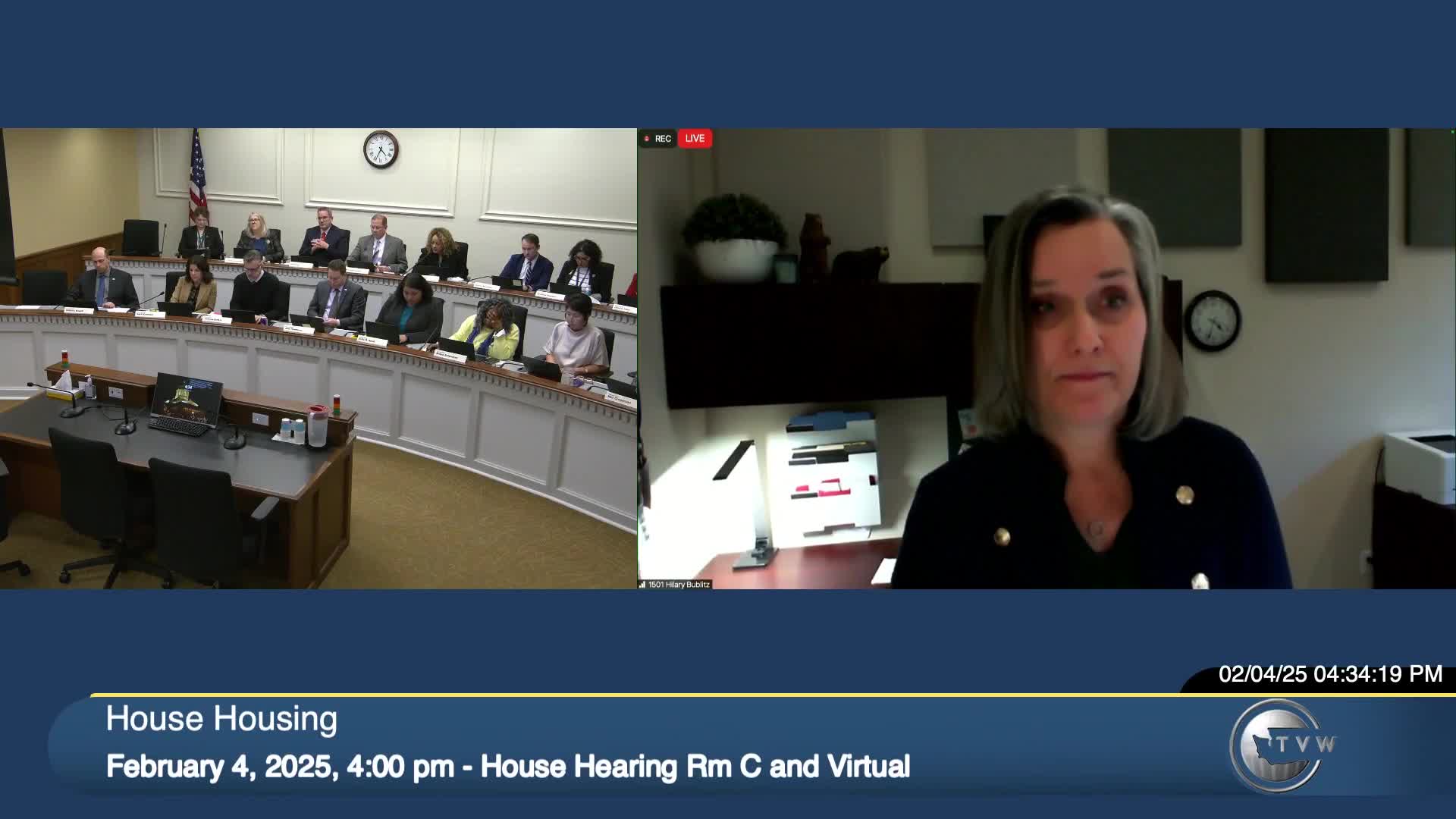
Manufactured-housing measure draws split testimony over narrow senior relief and rent stabilization trade-offs
Summary
Supporters urged House Bill 1365 to extend a property-tax-style benefit or rent relief to seniors in manufactured-home communities; opponents and tenant advocates said the draft is a limited band-aid that would help few homeowners and distract from broader rent-stabilization solutions.
House Bill 1365 prompted competing testimony over whether a targeted benefit for seniors living in manufactured-housing communities would protect vulnerable homeowners or simply provide a small subsidy that fails to address rising lot rents.
Brad Tower of Commonwealth Real Estate Services described the policy rationale by reference to RCW 84.36.383, the state property-tax exemption for some senior citizens and people with disabilities. Tower said the statute freezes property valuation for qualifying owners and suggested an administrative mechanism could extend similar support to seniors who own their manufactured home but not the underlying land.
Proponents included Kevin Vandeweg, who described the measure as a practical way to deliver benefits to seniors living on leased land. Landlord- and provider-group witnesses endorsed the bill as an administrative fix that could protect some older owners from tax-driven rent spikes.
Several manufactured-home residents and advocates opposed the bill as written. William Booth, a resident of a 55-plus manufactured-home community in SeaTac, said a $200 monthly benefit on top of lot rents that can be $1,600 is insufficient. “A $200 a month off that 95% rental increase is not help at all,” Booth testified. Melinda O’Hara, who described being homeless for nine months after lot-rent increases, said the bill’s $200 cap and a provision she read as “up to possibly 50% of the lot rent” would help some but still fall short for many.
Ishbelle Dickens, a volunteer with the Association of Manufactured Homeowners (AMHO), estimated the bill’s $2 million appropriation would reach only about 800 of roughly 70,000 manufactured homeowners in the state, and urged support for broader rent-stabilization measures instead. Carolyn Hardy and Sharon Peavey, AMHO leaders, also testified that rent stabilization would serve a much larger group and that the bill could be a distraction from comprehensive solutions.
Committee members asked technical questions about administration and tax-shift effects. Tower acknowledged that property-tax exemptions shift tax burdens to other taxpayers and said the proposed change is targeted to seniors 60 and older with demonstrated income need. Ted Kelleher of the Department of Commerce said Commerce does not currently issue rental assistance directly and that implementing programs not already in place would require new staff and administrative costs.
No formal committee vote was recorded in the transcript provided. The hearing record shows a clear split: industry and some owners supported narrowly targeted relief for seniors, while resident advocates and statewide manufactured-home organizations urged broader statutory rent-stabilization measures and raised concerns about the scale and targeting of this bill.