Get Full Government Meeting Transcripts, Videos, & Alerts Forever!
Get email alerts on the Shipping Fuel Pollution topic
No spam. Unsubscribe anytime.
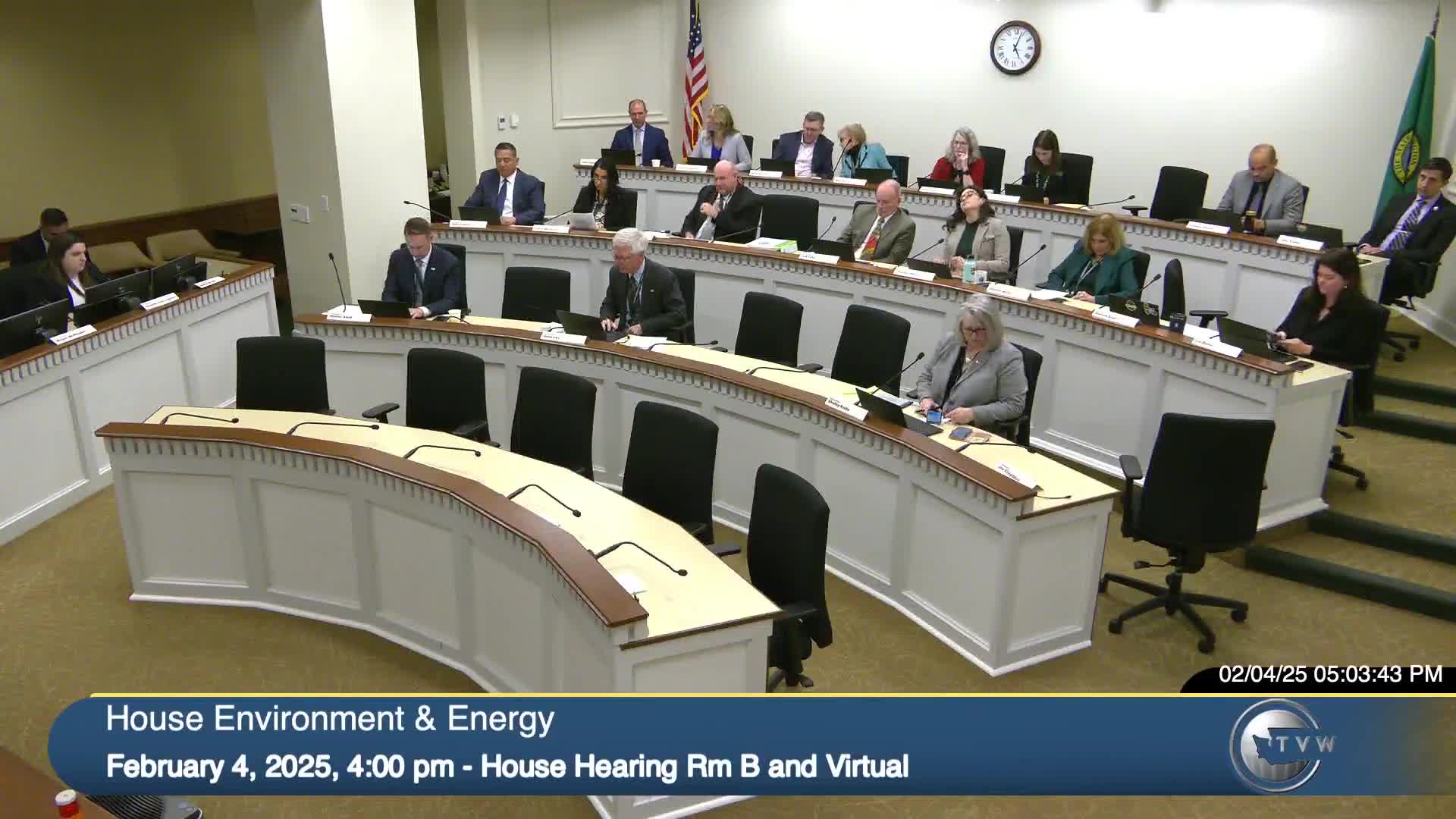
Environmental groups, tribes and industry clash over HB 16 52’s low-sulfur fuel and scrubber limits
Summary
The House Committee on Environment and Energy heard broad and technical testimony on HB 16 52, which would require ocean-going vessels to use 0.1% sulfur fuel and prohibit scrubbers that discharge wash water into state waters.
The House Committee on Environment and Energy heard extensive public testimony for and against House Bill 16 52, which would require ocean-going vessels to use marine fuels with a maximum sulfur content of 0.1% by weight starting Jan. 1, 2028 and would prohibit the use of open-loop exhaust gas cleaning systems (scrubbers) that discharge wash water into state waters.
Marcy Keever, policy director at Friends of the Earth, testified in support and said scrubber wash water is “incredibly toxic” and harms marine life in Puget Sound. “Ship fuel is some of the dirtiest fuel on the planet,” Keever said, urging the state to close the scrubber loophole and adopt a California-style 0.1% sulfur standard without allowing scrubber-based compliance.
Testimony in favor also came from community and tribal representatives. Jay Julius of the Lummi Nation described treaty obligations and local dependence on healthy fisheries, asking legislators to “support this legislation.” Commercial fishers including Bridal Flynn and members of the Washington Reef Net Association testified that ocean pollution undermines fisheries and local economies.
Public-health and scientific witnesses urged the committee to act. Dr. Ann Marie Dooley of Washington Physicians for Social Responsibility said air pollution from marine engines contributes to heart and lung disease and imposes large health care costs; Dr. Deborah Giles of Wild Orca described studies showing scrubber wash water contains polycyclic aromatic hydrocarbons and other contaminants that can harm copepods and bioaccumulate through the food web.
Opponents included representatives of the shipping and cruise industries, ports and terminal operators. Jacqueline Moore of the Pacific Merchant Shipping Association and Donald Brown of Cruise Lines International Association argued the bill raises federal preemption concerns and could block use of lawful equivalent technologies. Industry witnesses warned that banning scrubbers without comprehensive risk assessment could increase greenhouse-gas emissions if ships switch to other fuels or if alternative fuels are precluded.
Port and industry witnesses also noted practical barriers: port electrification and shore-power infrastructure are limited, and retrofitting vessels or adapting fuel supplies can take years and significant investment. John Flanagan of the Port of Seattle and Sean Egan of the Northwest Seaport Alliance highlighted trade and infrastructure implications and urged more study and coordination.
Department of Ecology staff provided technical input, recommending several technical amendments to clarify exemptions for public safety and certain public vessels and to correct deposit instructions for fee revenue. Ecology estimated it would need additional staffing and resources to implement rapid, 24/7 reporting or enforcement functions tied to the bill.
The hearing record includes scientific, economic and policy evidence on both sides but the transcript does not show a committee vote on HB 16 52 in the provided excerpt.
Ending: The bill drew substantial testimony from environmental, tribal, public-health and industry stakeholders; the committee will consider testimony and technical input before any further action.