Get Full Government Meeting Transcripts, Videos, & Alerts Forever!
Get email alerts on the Housing Governance topic
No spam. Unsubscribe anytime.
Bill would require associations to answer owner inquiries or forfeit attorney-fee recovery, witnesses say
Summary
Supporters and association-industry representatives debated House Bill 1501, which would give homeowners in common-interest communities a limited right to have boards respond to written inquiries; opponents warned the measure could be weaponized and impose unbudgeted costs on associations.
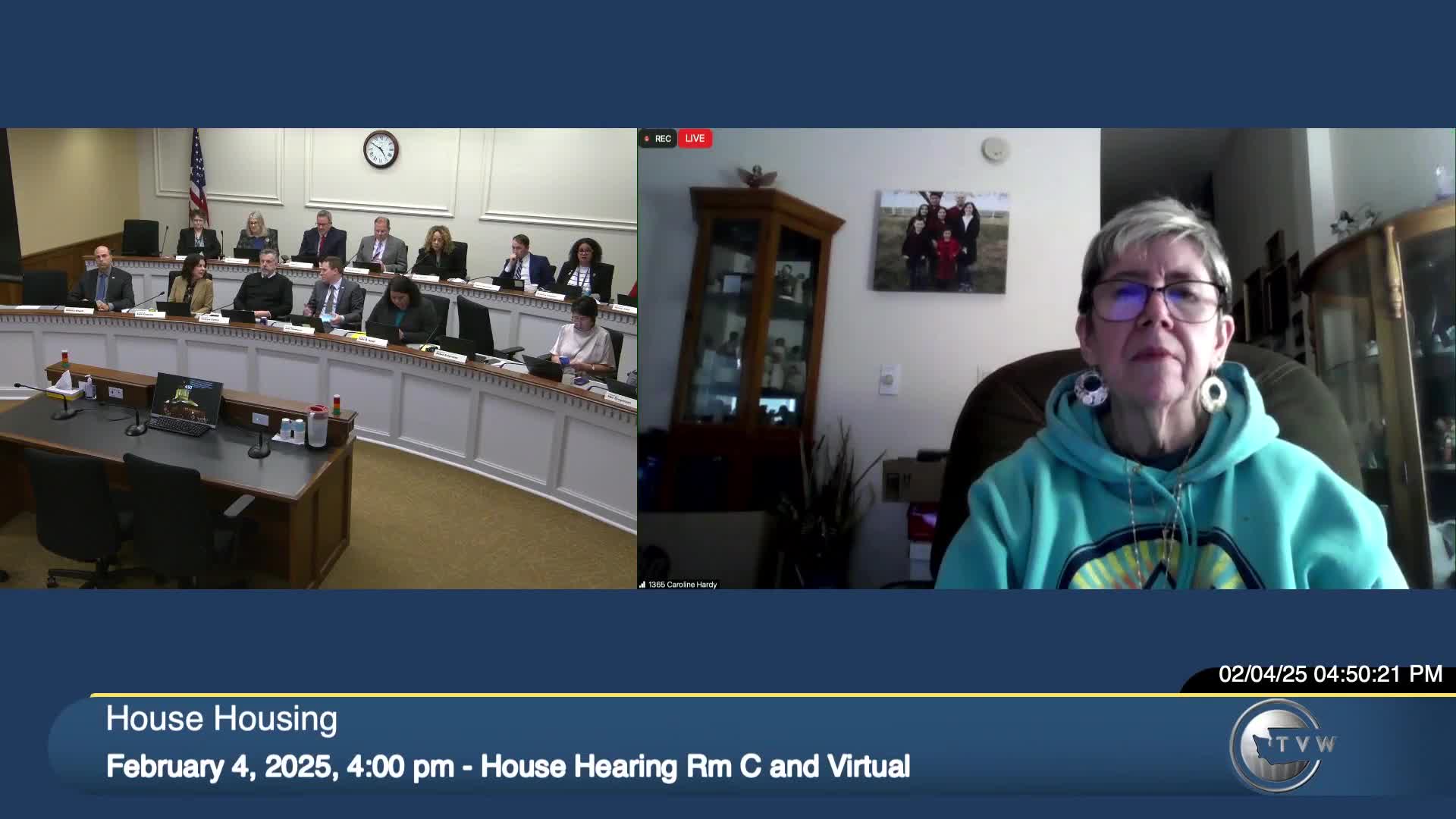
House Bill 1501 would create a narrow enforcement incentive for homeowners to obtain answers from homeowners associations by limiting an association’s ability to recover attorney fees in any later dispute if it failed to respond, witnesses told the Washington State House Committee on Housing.
Steve Horvath, testifying for HOA United, said the bill’s intent is to encourage “good governance” by giving owners a route to get substantive replies to questions that affect their money. “The only thing that happens is if what you asked becomes a dispute, the association won’t be able to recover their attorney’s fees,” Horvath said. He added that the sponsor is Representative Reid.
The bill also drew opposition from members of the Community Associations Institute’s Washington chapter. Theresa Torgerson said the bill “empowers an individual owner to impose a financial burden on an association to spend money on professional opinions that are required to answer homeowner questions.” She noted the draft limits owners to one inquiry per month but does not restrict subject matter or the number of questions within that inquiry and warned of possible “weaponization” of the provision by bad actors.
Joel Gilman, a condominium owner, said his experience with his association’s lawyer informed his support for the bill: “The board doesn’t owe us any explanations of anything. What I like about this bill is that ... you do have a right as a homeowner ... to put questions to your board of governance and get answers.”
Hillary Bublitz, also representing the Washington chapter of CAI, urged lawmakers to consider nonlegislative alternatives to improve board communications. “WSCAI offers free board member training sessions throughout the state,” she said, asking the committee to weigh training and education before imposing statutory duties that may be the exception rather than the norm.
Committee members did not take formal action during the hearing. The discussion centered on whether the state should provide a statutory backstop to encourage timely, substantive responses from associations or whether the requirement would force associations to absorb unplanned professional costs.
Supporters characterized HB 1501 as a “carrot and stick” measure that encourages responsiveness while stopping short of imposing a civil penalty; opponents asked for further drafting and stakeholder discussion, particularly on scope limits and safeguards against abuse. The committee closed the hearing on HB 1501 and moved on to other bills on the agenda.
The transcript records multiple public- and industry-witness exchanges on the bill; no vote or committee amendment was recorded in the hearing segment provided.