Get Full Government Meeting Transcripts, Videos, & Alerts Forever!
Get email alerts on the Renewable Energy Ordinance topic
No spam. Unsubscribe anytime.
Ringgold town representatives and county staff agree to revise solar and wind ordinance language after county flags state preemption concerns
Summary
Marathon County staff and town of Ringgold representatives discussed a proposed wind and solar ordinance; county counsel and staff identified provisions that could conflict with Public Service Commission jurisdiction and recommended working together to adjust language before forwarding to the county board.
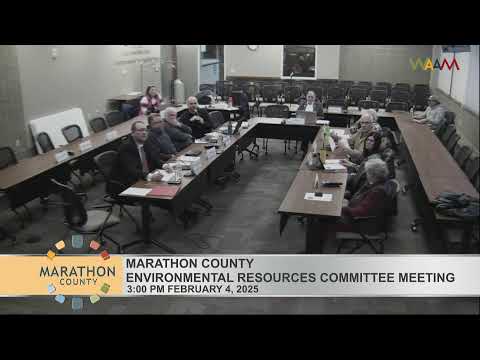
Representatives from the Town of Ringgold and Cedar Corporation presented a proposed ordinance amendment on solar and wind energy systems Feb. 4 to the Marathon County Environmental Resources Committee. County staff and the county’s corporation counsel identified sections that could be more restrictive than state law and asked the town and its consultant to work with staff to revise the language.
Chad, a CPZ staff member, told the committee the draft ordinance includes permitting and developer-agreement provisions that could be inconsistent with the Public Service Commission’s jurisdiction over large-scale systems. County corporation counsel (Mike) said he shared the staff’s concerns. Michael Dombek, Ringgold planning and zoning chairman, and Eric from Cedar Corporation explained the town’s intent: to state local preferences and to put developers on notice about the town’s expectations even where the PSC has permitting authority.
Eric of Cedar Corporation said the town’s approach is intended to provide guidance to developers and noted two possible fixes he and the town would consider: stronger statutory acknowledgments of PSC jurisdiction or changing language from “require” to softer terms such as “recommend.” He added that Cedar Corp and the town were willing to work with county staff and counsel to find acceptable wording.
The committee did not vote on the ordinance. Chair Longenhahn suggested county staff (Chad and Mike) continue to work with the town’s representatives (Michael and Eric) to craft language consistent with state law before the County Board review. No formal action was taken, and committee members said they would prefer the ordinance to be clearly consistent with Public Service Commission requirements prior to forwarding it.
The discussion record shows the committee’s legal and policy concerns focus on two issues: permitting of systems under PSC review (large-scale projects) and the town’s use of developer agreements as mandatory requirements. County staff recommended edits and further review to ensure the town’s ordinance does not improperly restrict projects under PSC jurisdiction.
The committee asked staff and the town to return with revised language so the item can move forward to the county board if acceptable.