Get Full Government Meeting Transcripts, Videos, & Alerts Forever!
Get email alerts on the Twia Funding Crisis topic
No spam. Unsubscribe anytime.
TWIA warns of precarious funding after Hurricane Beryl; Fair Plan growth highlights insurer pullback statewide
Summary
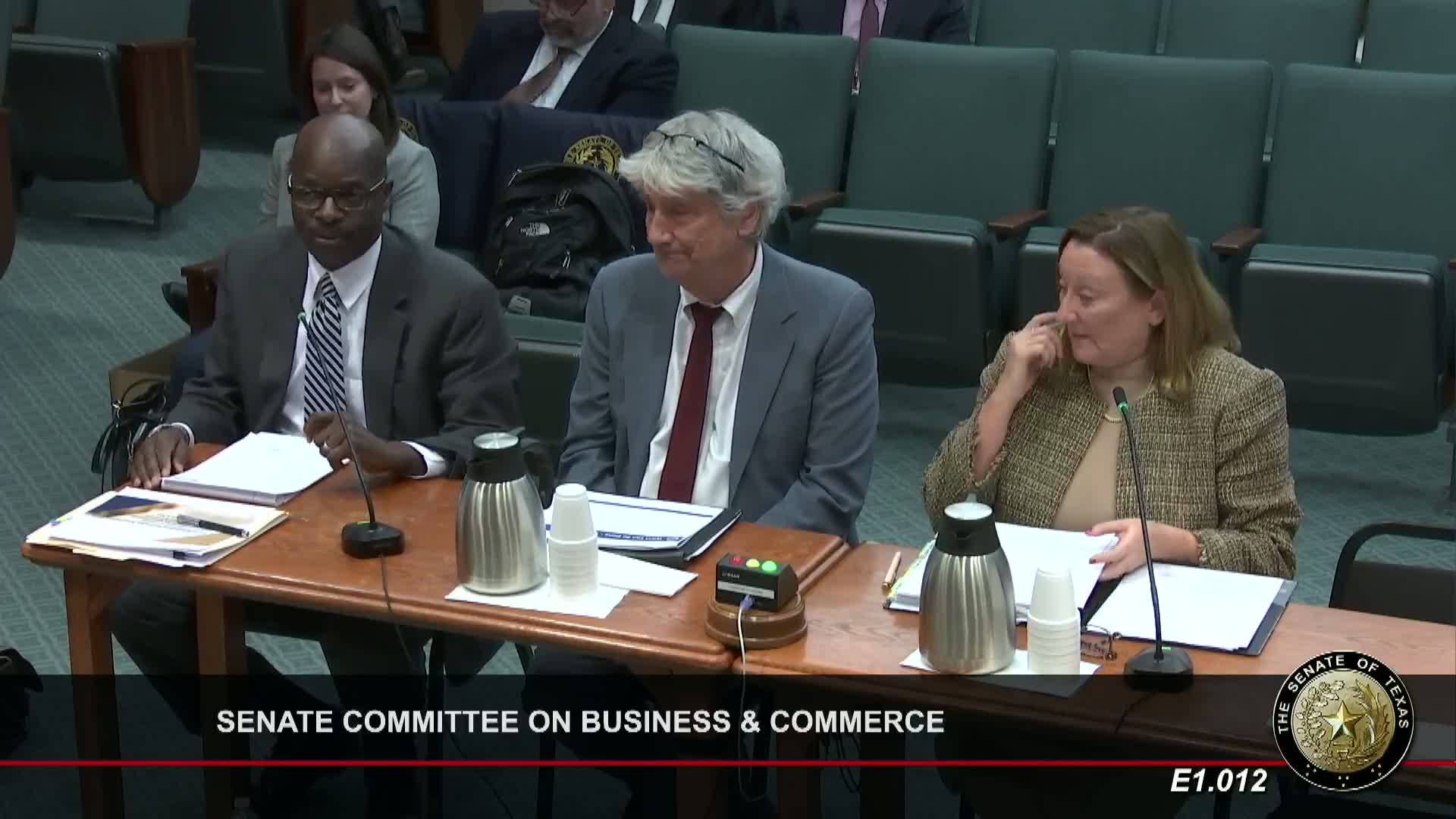
David Durden, general manager of the Texas Windstorm Insurance Association (TWIA), told the Senate Business and Commerce Committee that the association’s catastrophe reserve trust fund was largely depleted after Hurricane Beryl and that TWIA faces a precarious funding outlook ahead of the 2025 hurricane season.
David Durden, general manager of the Texas Windstorm Insurance Association (TWIA), told the Senate Business and Commerce Committee that the association’s catastrophe reserve trust fund (CRTF) was largely depleted after Hurricane Beryl and that TWIA faces a precarious funding outlook ahead of the 2025 hurricane season.
“TWIA is in a precarious financial position, and we need your help,” Durden told the committee. He said Beryl generated more than 32,000 claims and that TWIA’s latest estimate of bureau claims payments from that event is about $480 million. Durden said the CRTF held roughly $450 million before Beryl and that TWIA’s exposure—the total insured value of properties on TWIA’s book—now exceeds $112 billion.
Durden explained TWIA’s layered funding structure: the CRTF (the association’s savings account), authority to issue up to $500 million in public securities (used when the CRTF is insufficient), member assessments on private insurers, and then reinsurance purchased on the open market. He testified that TWIA’s 2024 reinsurance spend approached 54% of earned premium and that 2025 reinsurance could reach roughly 60%, crowding out the association’s ability to build reserves through retained earnings.
TWIA’s board filed for a 10% rate increase in August 2024; Commissioner of Insurance Cassie Brown said she disapproved that filing in October. Brown told senators she had taken public comment and was sensitive to coastal residents’ recovery costs and the Legislature’s upcoming session when she reviewed the filing. “I cautioned TWIA to potentially look for other avenues to cut expenses before asking policyholders to pay an additional rate,” Brown said.
Durden and other witnesses also briefed the committee on the Texas Fair Plan Association, which has grown rapidly as private-market carriers have tightened issuance of homeowners coverage in many counties. TWIA and the Fair Plan are residual-market mechanisms that step in when private carriers decline coverage; Durden said the Fair Plan’s policy counts and exposure have increased substantially since 2021 and that TWIA now writes roughly half the wind-and-hail market in the 14 coastal counties.
Why it matters: TWIA and the Fair Plan protect coastal and high-risk property owners when private carriers withdraw. But depleted reserves, high reinsurance costs and rapid policy growth create a risk that the associations will need bond financing or surcharges that ultimately affect many Texans’ insurance bills.
What lawmakers discussed: Senators and witnesses discussed options including state-supported guarantees or collateral to lower bond interest costs, adjusting the member assessment formula, premium‑tax relief for TWIA, and structural changes to how the association sets probable maximum loss for reinsurance purchases.
Ending: Lawmakers signaled interest in looking for legislative remedies in this session to shore up TWIA’s funding, reduce reliance on high-cost reinsurance, and improve transparency around market exits and the Fair Plan’s growth.