Get Full Government Meeting Transcripts, Videos, & Alerts Forever!
Get email alerts on the Idd Services topic
No spam. Unsubscribe anytime.
Families and providers tell Senate finance committee community IDD services are in crisis; call for higher wages and more oversight
Summary
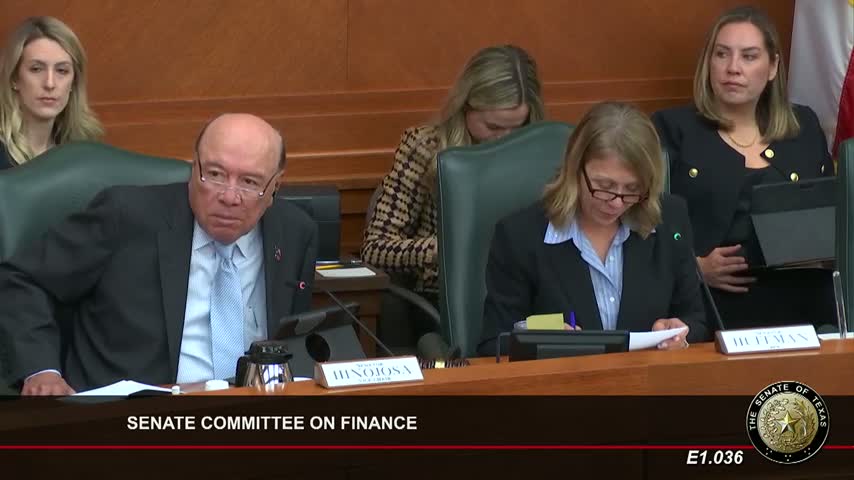
At a Senate Finance Committee hearing on Article 2 (health and human services), parents, providers and advocacy groups told lawmakers Texas’ home- and community-based services for people with intellectual and developmental disabilities are in crisis and urged higher pay for direct-support professionals and stronger oversight of group homes.
At a Senate Finance Committee hearing on Article 2 (health and human services), parents, providers and advocacy groups outlined what they called a crisis in Texas’ community IDD system, pressing lawmakers to raise direct-support professional (DSP) wages, restore case-management funding and impose stronger oversight of group-home providers.
“Direct care attendants provide specialized compassionate care and become lifelines to our family,” Joanne Hufstedler said, recounting how she scrambled to find a safe placement for her brother after a local facility announced it could not continue caring for him. Hufstedler urged lawmakers to “ensure direct care workers receive fair wages.”
Several witnesses described repeated provider failures, staff shortages and safety incidents. Stacy Combas, former chair of the Texas Commission on Special Education Funding, asked the committee to require itemized financial statements from HCS group-home providers and to adopt “group home resident protection parity” with state-supported living centers. Raz Tuval’s mother, Leah Tuval, described multiple assaults on her adult son while he lived in a group home and said investigations produced little or no accountability.
Advocates and providers uniformly tied the problems to low Medicaid reimbursement and attendant pay. Multiple witnesses said current community provider DSP wages are roughly $10.60 an hour; some providers and families urged a target wage of $17 an hour or higher. Leigh Dunson, a longtime provider executive, said her organization already pays $13.50 hourly yet faces 60 percent turnover and about 20 open DSP positions, and warned that a proposed increase to $12 would not close the gap.
Providers described operational shortfalls beyond wages: unpaid or unreported costs, rising insurance and vehicle expenses, and an erosion of administrative capacity such as provider-based case management. Jennifer Dodd, whose son moved from a group home into an SSLC, called for annual provider accounting so families could track how public funds are used. Jason Berry, an HCS and host-home provider, said nursing and monitoring requirements tied to host-home placements have generated additional unreimbursed costs.
Local IDD authorities, advocacy groups and family members asked the Legislature for a package of changes, including: higher DSP wages, restoration of case-management and indirect cost funding, tighter provider accountability and transparency, stronger investigative capacity for abuse and neglect complaints, and clearer pathways for some people to access state-supported living centers (SSLCs) when clinically appropriate.
The committee heard extensive personal testimony tying funding shortfalls to unsafe conditions: Susan Johnson, a mother of an adult in HCS group homes, described staff working “over 100 hours a week” and asked legislators to “have boots on the ground” with better pay and funded case management. Bill Combest, a taxpayer and stepfather to a son with IDD, argued for stronger financial disclosure from private providers so legislators and the public can confirm that appropriated dollars reach frontline workers.
Committee members repeatedly asked witnesses for concrete solutions and data; witnesses flagged several policy approaches, including parity of protections with SSLCs, statutory or budget-driven transparency requirements, and a broader waiver or long-term transformation plan for IDD services.
Ending: Witnesses urged immediate legislative action in the budget to stabilize staffing and provider operations before more homes close and more families enter crisis. The committee recessed to take the Senate floor session but signaled continued attention to the issue when it returns to Article 2 budget items.