Get Full Government Meeting Transcripts, Videos, & Alerts Forever!
Get email alerts on the Affordable Housing topic
No spam. Unsubscribe anytime.
City committee approves transfer legislation to enable affordable senior housing at 4242 Lorraine Ave.
Summary
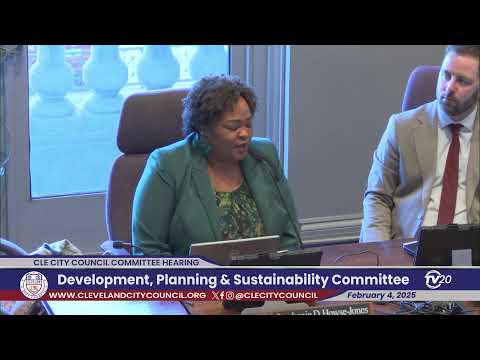
Cleveland committee members approved legislation to allow the city to enter a development agreement and transfer site control for 4242 Lorraine Ave., the former McCafferty Health Center, clearing a step so a developer can apply for low-income housing tax credits.
Cleveland committee members approved legislation to allow the city to enter a development agreement and transfer site control for 4242 Lorraine Ave., the city-owned property that houses the former McCafferty Health Center. The action, taken in committee on the presentation day, is intended to clear a procedural step so the selected developer can demonstrate site control for competitive low-income housing tax credit applications.
The Department of Community Development presented the proposal and said the city issued a 2024 request for qualifications to attract a development partner to construct affordable housing and ground-floor social service or nonprofit space at the site in the Ohio City neighborhood, Ward 3. “Housing is health,” the presentation quoted the Department of Public Health director, and the CD speaker said the project aims to keep housing costs under 30% of household income for targeted residents.
Jeff Mills, director of development for Penrose, said the team — including Ohio City Inc. as co-developer — is proposing roughly 72 units of largely studio and one-bedroom apartments targeted to households with incomes between 30% and 70% of area median income. Mills said the developer intends to apply for 9% low-income housing tax credits in February, a competitive program; he added that the transfer legislation is needed to show site control for that application. Mills said the team is tracking a February 26 financial closing (contingent on tax-credit award) and a construction completion target in mid-2027.
Council members and neighborhood partners emphasized affordability and neighborhood access. Councilman Joe McCormack (Ward 3) recounted long-standing local concern about the site and urged preserving affordability: “As long as I’m on council, this is going to be affordable housing,” he said. Councilwoman Spencer said the 30–70% AMI targeting addressed a common concern that developments listing 80% AMI can still leave households cost-burdened. Trudy (Community Development staff) confirmed community engagement work with neighborhood groups including May Dugan, the Spanish American Committee and West Side Catholic Center and that a community benefits agreement (CBA) will be triggered when the developer applies for city funding.
The presentation said the Department of Public Health currently occupies roughly 25% of the existing building; public-health services will relocate nearby and the majority of the building has been vacant. The Department of Community Development said a previous facility study concluded renovating the existing structure would cost more than new construction because the building’s layout is functionally obsolete.
Ordinance number 42-2025 was reported as “approved” in committee. The transcript and presentation did not include a roll-call vote tally in the committee record shown, and final council adoption or any subsequent conditions were not specified in the committee remarks.