Get Full Government Meeting Transcripts, Videos, & Alerts Forever!
Get email alerts on the Fund Balance Policy topic
No spam. Unsubscribe anytime.
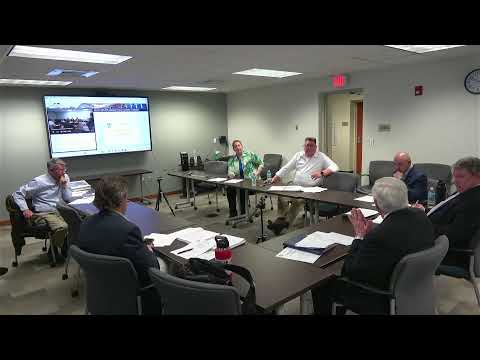
Goochland audit and finance committee recommends lowering assigned fund-balance target to 35%
Summary
The Audit & Finance Committee reviewed the county's available fund balance policy, discussed impacts of recent revenue and spending changes, and voted to recommend a 30–40% band with a 35% target to the Board of Supervisors.
The Audit and Finance Committee of the Goochland County Board of Supervisors recommended lowering the county's assigned fund-balance policy from the current 60% threshold to a 30–40% range with a 35% target and asked staff to bring that recommendation to the full Board of Supervisors for action.
The committee's review, presented by committee staff, examined the policy set in December 2023 that established a 60% available fund-balance target (assigned plus unassigned fund balance measured as a percentage of the next year's budget). "We first put it in front of the board of supervisors ... which set a threshold of 60% for the reserves," said Mr. Parker, a county staff member who led the discussion. He told the committee the higher threshold had been set to demonstrate conservatism to bond raters but that consultants later advised the 60% level was not required to maintain the county's top credit rating.
Why it matters: committee members said the 60% threshold limited the county's flexibility to use fund balance for capital improvement projects (CIP) and other one-time needs, while staff and advisers said Goochland's overall reserve position and other conservative policies already support a strong credit profile. The participants debated the tradeoff between keeping large reserves for emergencies and using some of those funds for projects such as Fire Station 7 and school roof repairs.
Committee discussion and numbers
Committee members and staff traced how the county reached the current shortfall relative to the 60% policy. Mr. Parker told the committee that after lowering the personal property tax rate (from 3.75% to 2.99%, as previously adopted) and transferring about $4.5 million from reserves to unbudgeted CIP projects, the county was well below the 60% mark. Based on FY 2024 closing figures cited in the discussion, staff said the county was approximately $12.7 million short of the 60% target using FY 2024 results and FY 2025 budget bases.
Steve Lyle, a county staff member working on projections, said updated FY 2024 results and projected revenues significantly improved the near-term outlook: he projected roughly $15.7 million in operating surplus for FY 2024 (driven in part by approximately $4.0 million in one-time building-permit fees tied to development commonly described in the meeting as "Amazon" fees, and roughly $3.0 million more than budgeted in personal property revenue). After funding CIP and other items, Lyle projected about $8.2 million would flow into fund balance and that the earlier $12.7 million shortfall would be reduced to roughly $5.0 million that would need to be addressed in the FY 2026 budget unless other actions were taken.
Members offered a range of target levels during debate. Some said 45% might preserve conservatism while freeing flexibility; others favored a 30–35% range as sufficient and more in line with peer counties. One supervisor said, "I'd hate to see us decide as a county to just continually go and meet that target because then, I don't feel like we're being fiscally responsible with our spending and our budget." Another member argued for thinking in raw dollar needs for foreseeable CIP projects rather than an arbitrary percentage band.
Committee action and next steps
After discussion the committee voted to exit the workshop and adopt a recommendation for the full board. The committee "will recommend a 30 to 40% range with a 35% target" to the Board of Supervisors, and staff said they would include the recommendation in the packet for the March board meeting.
The staff direction included producing budget scenarios to show the fiscal impacts of keeping the 60% policy versus lower targets and presenting options ranging from revenue changes to expenditure cuts to reach any chosen target. Lyle said the staff would model the options, including a one-cent tax increase, a one-cent tax decrease, and a plan to reach compliance with the higher threshold, so supervisors can see dollar impacts in spreadsheets.
Other business and public comment
At the start of the meeting the committee held its organizational items and approved minutes from the Dec. 3, 2024, meeting. Public comment included a District 4 speaker who urged that one-time building-permit fee receipts be used for one-time expenses near the area producing the fees.
The committee scheduled follow-up work with staff on the budget scenarios and will present the committee recommendation to the Board of Supervisors at the next packet-ready board meeting.