Get Full Government Meeting Transcripts, Videos, & Alerts Forever!
Get email alerts on the Public Health Rodent Control topic
No spam. Unsubscribe anytime.
Revere officials outline trash rules, free extermination visits and education to curb rat complaints
Summary
Public-health officials told the Revere City Council that rising rodent complaints reflect human behavior and environmental factors and reviewed the city’s trash ordinance, free private‑property extermination waiver, commercial rules and enforcement steps.
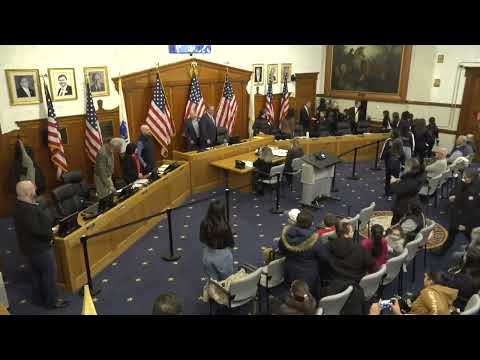
Revere public‑health and inspectional staff told the City Council on Feb. 3 that higher numbers of rodent complaints in recent years are tied to human behavior, local environment and contract performance, and outlined a mix of enforcement, education and extermination services the city uses.
The presentation was led by Lauren Bach, director of public health, and Mike Wells, director of inspectional services. Bach said the city measures rodent trends in part by calls to 311 and that 2024 saw an increase of about 468 rodent‑related calls compared with prior years. “We can focus on rodent control, not necessarily elimination,” Bach said, explaining that Norway rats reproduce rapidly and thrive where food and shelter are available.
Why it matters: Councilors said they are seeing more sightings in neighborhoods and wanted specifics on what the city is doing beyond enforcement. Officials emphasized that individual behavior — improper trash storage, bird feeders, overflowing dumpsters and exterior clutter — creates food and shelter that sustain rat populations and that enforcement alone cannot fully solve neighborhood problems.
City programs and rules - Trash ordinance (adopted 2019): city‑issued blue carts only; lids must be closed; no trash on the ground. A fine may be issued for violations; the standard fine cited in the presentation is $25, with higher fines for repeated or severe violations and for commercial/dumpster cases. - Residential inspections: two full‑time code inspectors patrol neighborhoods each morning; a dedicated commercial/dumpster inspector performs daily checks on large properties. - Private‑property waiver program: homeowners of buildings with six units or fewer can sign a waiver to receive up to six free visits by a contracted exterminator per year; waivers must be renewed every two years. The program began in 2018; staff reported 486 waivers signed in 2024 and said increased outreach and re‑signing rules in recent years explain some of the rise in numbers. - Commercial requirements: food and retail establishments must keep integrated pest management (IPM) records; food establishments are inspected at least every 30 days and must provide monthly pest‑control service reports. Dumpsters and large residential buildings are subject to higher fines (inspectors said fines can reach up to $250 for severe dumpster violations). - Contracts and contractors: B and B Pest and M.D. Weaver were named as main contractors; staff said 2024 contract problems prompted changes in 2025 contracting.
Questions and clarifications Council members pressed staff on several operational details. Mike Wells said most surrounding municipalities use a mix of education, enforcement and contract pest control; he and Louie, a B and B Pest technician, said bait boxes and anticoagulant rodenticides remain the most broadly reliable tools at city scale while noting limits and environmental tradeoffs. Louie said the product used is a second‑generation anticoagulant in low doses and that, in his view, the risk to raptors is low because a raptor would have to consume many poisoned rats to register a toxic level.
On enforcement: Wells said inspectors can void fines when residents provide clear video evidence (for example, showing another person placed trash on a property), and that every violation may be appealed within 21 days; appeals are decided by a hearings officer. Staff also noted that the city added a full‑time dumpster inspector in the most recent budget and has increased enforcement of overflowing or broken dumpsters.
Operational limits and timing Staff cautioned that the waiver program is not immediate‑response service: contracted exterminators schedule Revere visits on specific days and some properties may need more frequent commercial services than the city program provides. They also noted that some properties require higher‑level professional remediation that goes beyond the six free visits and that neighborhood hotspots often reflect problems on adjoining properties or absentee landlords.
What the city will do next Bach and Wells said the city will continue 311 triage, targeted neighborhood heat‑mapping where complaints concentrate, ongoing trash inspections and IPM compliance for commercial sites, and increased resident education (flyers, Revere TV and web outreach at revere.org/rodents). Staff distributed informational flyers at the council meeting and encouraged residents to sign waivers online or call 311.
Council reaction and public comments Councilors thanked staff and urged continued outreach; several described recent neighborhood sightings and asked for follow‑up on specific problem properties. Residents in public comment echoed gratitude for the program and asked for more granular responses in particularly affected blocks.
Ending: Staff said they will refine the waiver process, continue contract oversight and increase education to try to reduce repeat violations and neighborhood hotspots.