Get Full Government Meeting Transcripts, Videos, & Alerts Forever!
Get email alerts on the Solar Siting Planning topic
No spam. Unsubscribe anytime.
Senate rejects measure to create regional solar planning targets after hours of debate
Summary
SB 11‑90, a bill to establish regional energy plans and a state technical assistance center for solar siting, failed in the Senate, 19‑20, after lengthy debate over local authority and rural impacts.
The Virginia Senate voted down SB 11‑90 on Feb. 3, 2025, after extended floor debate over local land‑use authority and how to meet the Commonwealth’s growing electricity demand. The final vote was 19 in favor and 20 opposed; the measure did not pass.
Senator Deeds (Charlottesville), the bill’s sponsor, described it as a planning package that would link local, regional and state decision‑making on energy siting. The bill would have created a Virginia Clean Energy Technical Assistance Center hosted by a public‑university consortium; required regional energy plans produced by planning district commissions; and asked localities to update comprehensive plans to reflect regional production and efficiency targets informed by the Virginia Energy Plan.
Backers said the measure provides technical assistance to small local governments that lack the planning staff and expertise to process large‑scale solar and storage applications. Senator Sarovail (Eastern Fairfax) said the bill “creates a board that gives localities the technical assistance so they can process the application,” and that it does not mandate zoning changes or direct placement of projects.
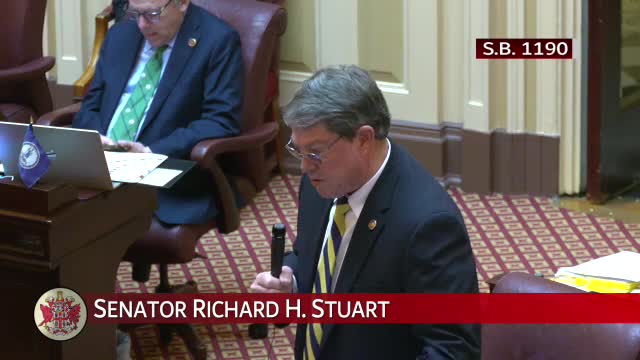
Opponents, including Senators McDougall (Hanover), Stewart (King George) and others, said the bill would shift the burden of meeting the Commonwealth’s renewable capacity to rural localities where land is cheaper and more available. They warned that regional targets could be used to overturn local denials and argued the approach could force farmland and forestland into utility‑scale solar development. Senator McDougall said local governments know their communities best and should not be subordinated to a state or regional planning board.
Supporters noted the growth in demand from data centers and other users and said coordinated planning is needed to avoid unnecessary transmission build‑out and disputes. “We have people over‑zoning for development, and we ask the legislature to pay for the road infrastructure,” the sponsor said; “when localities engage in that kind of behavior, the legislature starts to take interest in it.”
After the floor debate, the Senate recorded a final vote of 19‑20 and the bill failed to pass. Sponsors said further work and local engagement are likely to continue.
Ending: Advocates and critics signaled the debate would continue in future sessions; the bill’s defeat leaves current local authority intact while the state continues seeking ways to coordinate renewable siting.