Get Full Government Meeting Transcripts, Videos, & Alerts Forever!
Get email alerts on the Rulemaking Review topic
No spam. Unsubscribe anytime.
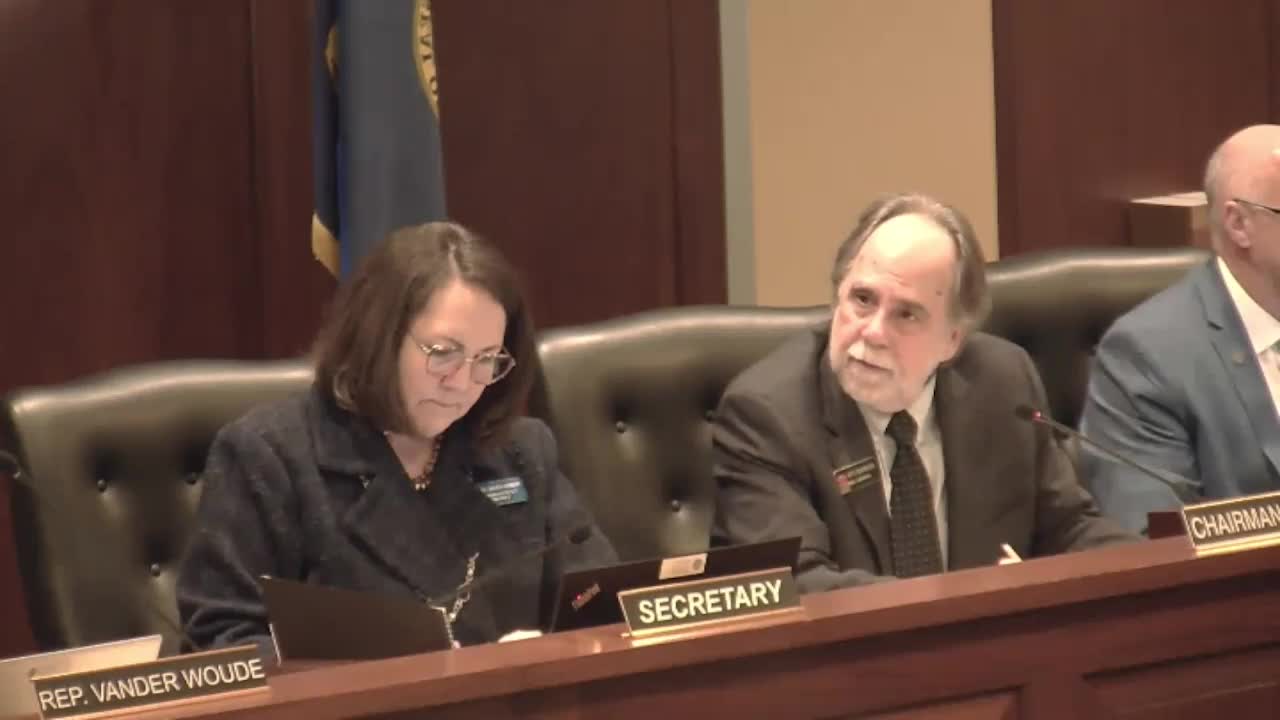
House Environment, Energy and Technology Committee presses agencies on rule changes, PFAS monitoring and permit timelines
Summary
The House Environment, Energy and Technology Committee reviewed a package of agency rule dockets and pressed agency staff for plain‑language summaries, fiscal-impact details and plans for PFAS monitoring and permitting timelines ahead of formal presentations next week.
The House Environment, Energy and Technology Committee reviewed a package of environmental rule dockets and pressed state agency staff to explain what the changes would mean for cleanup, drinking water testing and permitting processes.
Committee Chair Mr. Chairman opened the meeting by apologizing for earlier confusion and asked members to focus on substance rather than the editorial redline, saying, "I wanna first apologize for the lack of clarity that I had the last meeting." The committee then moved through a list of rule dockets and raised questions about relocation of regulatory text, newly added open‑burning language, PFAS (per‑ and polyfluoroalkyl substances) monitoring, consolidated fee schedules and fiscal impact statements.
Why it matters: the dockets under review touch on site remediation, drinking water and wastewater rules, contested‑case procedures and fee structures that affect municipalities, small businesses and rural residents. Members repeatedly asked agencies to provide plain‑language summaries and annotated markups explaining why language was moved or deleted so legislators and local officials can evaluate downstream effects.
Key substance and committee concerns
• Petroleum cleanup and code relocations: Members discussed docket 5801242401 (and related entries) that move petroleum‑cleanup provisions into different IDAPA sections. Several members said the changes appeared to be organizational — relocating definitions or provisions — rather than substantive, but asked presenters to confirm. Representative Egbert said the move appeared to place text where it “better aligned,” while others warned that moving a section without reviewing its new neighbors could create unintended conflicts.
• Open‑burning addition: Representative Furman flagged an apparent addition in the dockets (page 28, section 600) that introduces new open‑burning language. Members asked whether the provision was newly added or moved from elsewhere and noted the practical implications for rural residents who routinely burn yard waste or have recreational fires.
• Contested‑case and records rules: Docket 5801232401 was described as consolidating contested‑case rules and references to IDAPA 62‑0101 for protection and disclosure of records. The committee noted these are procedural rules that affect how contested regulatory decisions are handled.
• Wastewater, septic and fee consolidation: Members reviewed dockets that consolidate fee schedules and move fee language into a single chapter (several references to 5801142401 and related docket entries). Representative Tanner summarized that the consolidation reorders fees for permits, inspections and licenses and raises questions about whether fee lists are being removed from other chapters. Representative Bandawada urged consideration of a permitting “shot clock” — a statutory timeframe for agencies to act on paid permit applications — noting pending legislation addressing that issue.
• PFAS and drinking water primacy: Committee members singled out hazardous‑waste and drinking‑water dockets (including 58‑0105‑2401 and 581082401) for inclusion of PFAS language. Representative Ayward said, "PFAS... is known as a forever chemical because it doesn't break down easily in the environment," and members emphasized the need for monitoring resources. The committee also noted a statement in the materials that the state has two years to seek primacy (state enforcement responsibility) for certain federal drinking‑water requirements and said they will ask agencies to clarify that timeline and testing plans.
Procedural and informational requests
Members repeatedly asked agencies to provide: (1) plain‑language summaries of what each docket does, (2) annotated markups explaining the rationale for moves or deletions, (3) fiscal‑impact detail including enforcement and monitoring costs, and (4) lists of submitted public comments and whether negotiated rulemaking occurred. Representative Burgoyne specifically requested summaries of the volume and substance of written comments so the committee can better assess stakeholder engagement.
Scheduling and next steps
The chair said agency presenters will appear over two days (roughly three experts per day) and the committee will not vote on the rules during the initial presentations. Members were encouraged to contact local public‑works directors and health districts to gather practical perspectives ahead of agency testimony. The committee set presentations for next week, with additional discussion to follow.
Votes at a glance
• Approval of minutes from Jan. 14, 2025 — Motion to approve made by Representative Furman; outcome: approved (voice vote).