Get Full Government Meeting Transcripts, Videos, & Alerts Forever!
Get email alerts on the Education topic
No spam. Unsubscribe anytime.
House Education Committee hears proposal to keep 46-credit minimum, add 1-credit digital literacy requirement
Summary
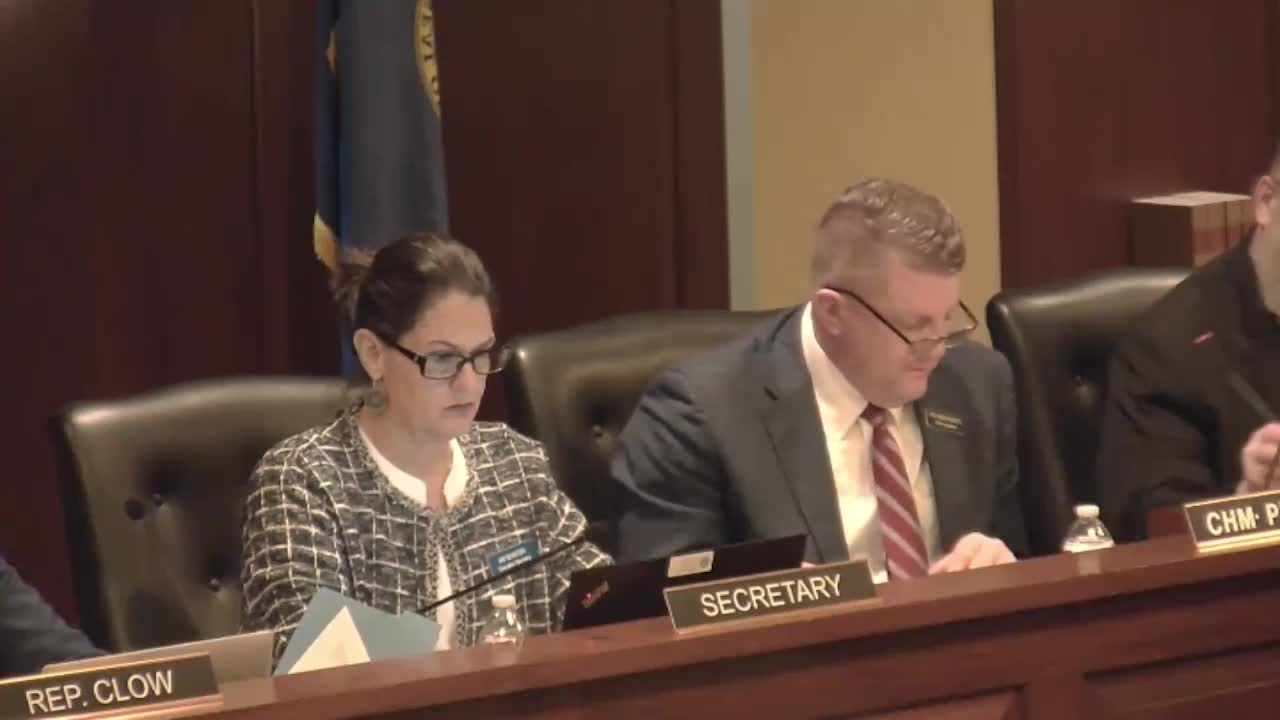
BOISE — The House Education Committee reviewed proposed updates to statewide high school graduation rules Wednesday, including a new one-credit digital literacy requirement, expanded credit flexibility, and a redesign of the senior project into a "future readiness" project that would take effect for the Class of 2028.
BOISE — The House Education Committee reviewed proposed updates to statewide high school graduation rules Wednesday, including a new one-credit digital literacy requirement, expanded credit flexibility to apply work-based and CTE learning to core credits, and a redesign of the senior project into a "future readiness" project that would take effect for the Class of 2028.
Greg Wilson, chief of staff at the State Department of Education, told the committee the state "requires an overall 46 credits. That's the state minimum requirement, and that's 29 core academic requirements and 17 elective requirements." He said the department's draft changes aim to preserve that 46-credit total while modernizing what counts as core coursework.
"Our workforce, our student, our parent needs have changed dramatically in the last 10 or 15 years, and so we wanted graduation requirements that reflected what we expect students to know and do in 2025 and beyond," Wilson said. The department's four headline recommendations are: greater flexibility for meeting core academic requirements, making digital literacy a core academic requirement, creating localized pathways districts must publish, and replacing the existing senior project with a future readiness project.
On communications and language arts, the draft rules remove a standalone one-credit communications requirement and instead direct districts to integrate communications concepts and skills across courses or continue to offer standalone speech as an elective. Wilson said the change reflects that "there were no standalone standards for communications" and that many districts already deliver speech differently or rely on the Idaho Digital Learning Academy; he said about one-third of students take communications through that online provider.
The draft adds a one-credit digital literacy course the department defines to include "fundamental computer science concepts such as algorithms, coding, artificial intelligence, Internet safety and social media best practices, and then citizenship in a digital world, including communications through digital means and navigating online news and information critically while behaving responsibly and ethically." Wilson said the department would require the course for students graduating after Jan. 1, 2028, and provide a three-year implementation runway so districts and charter schools can prepare.
Wilson described credit flexibility language that would allow districts and charter schools to award core academic credit for work-based learning, apprenticeships or CTE courses so long as the district can crosswalk those experiences to the state content standards. He also said the pending rules would allow certain engineering and computer science courses aligned to state standards to count as mathematics, with the caveat that a single course cannot be counted simultaneously as both a mathematics and a science credit.
On the future readiness project, Wilson said the updated requirement — which would replace the existing senior project for the Class of 2028 and later graduates — "must include an experiential component, such as a work based, service based, research based, or portfolio based experience in which a student demonstrates the acquisition of the board adopted college and career competencies." He said the department will provide templates and technical assistance and expects some districts to implement early while others will use the three-year runway.
Committee members pressed on several points. Representative Mathias asked how many public comments the department received on the changes; Wilson said formal negotiated-rule comments were limited — "there might have been 7 or 8 total comments" — though the department also conducted broader outreach and met with the Idaho Speech and Drama Teachers Association. Representative Nelson urged retaining or increasing instruction in face-to-face communication, saying, "kids today are so into their ... texting ... Technology is almost replaced face to face," and called oral communication a critical life skill. Representative Tanner and other members reported constituent concern about making speech and debate optional.
Several legislators asked about teacher endorsements and the state's plan for ensuring qualified instructors for digital literacy. Wilson said he did not have endorsement breakdowns on hand but said holders of a standard instructional certificate with certain endorsements or a public charter school certificate "would qualify to teach digital literacy" and that the department intends to provide professional development, clear standards and course parameters to preserve rigor and quality.
Wilson stressed that many districts already exceed the state's 46-credit minimum — citing West Bonner School District (57 credits for the class of 2025) and Xavier Charter School (52 credits) — and that local districts would retain authority to require standalone speech or additional credits if they choose.
Votes at a glance: At the start of the meeting the committee approved minutes from Jan. 16 and Jan. 20 on a voice vote after Representative Tanner moved to approve them; the motion "carried," and no roll-call tally was recorded in the transcript.
The department emphasized the proposed changes are pending rule-making items and that some items in the pending rule set (including a special education manual adoption discussed separately) were filed as temporary rules to ensure continuity for the coming school year. The committee did not take final action on the pending rules during this informational session; members were advised to file further questions for the department ahead of any future action.
The committee's discussion also included examples districts are already using for experiential or pathway work, including multi-year projects, internships, apprenticeships and college- or career-oriented course sequences. Wilson said the department will assist districts in developing and posting a minimum of two localized pathways that identify core and elective credits, assessments and other opportunities aligned to common postsecondary goals such as four-year college, military readiness, apprenticeships or direct entry to trades.
The meeting continued with questions about implementation, special education materials and where members could find redline versions and meeting minutes from negotiated-rulemaking. Wilson told the committee the department would provide available outreach records, attendance lists and a redline of the updated special education manual on request. The committee did not vote on the rules during this session.