Get Full Government Meeting Transcripts, Videos, & Alerts Forever!
Get email alerts on the Unemployment Fraud topic
No spam. Unsubscribe anytime.
Committee introduces RS to tighten unemployment-fraud definitions and penalties
Summary
Lawmakers introduced RS 31824 to define "knowingly" and "willfully," increase penalties for repeat unemployment fraud, add identity-theft provisions, and create a restitution mechanism for victims; the Department of Labor estimates modest first-year savings to the unemployment trust fund.
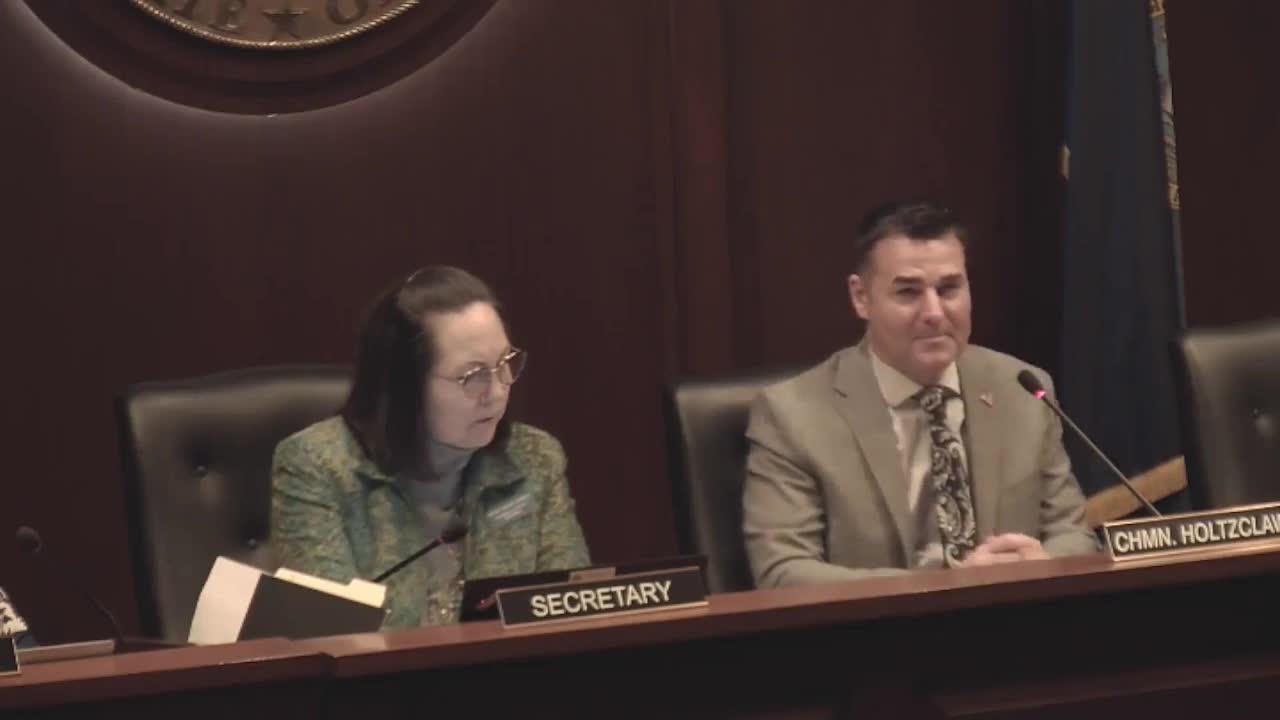
Representative Laurie McCann introduced RS 31824 on behalf of the Idaho Department of Labor, a proposal lawmakers said clarifies fraud-related definitions, increases penalties for repeat offenders and adds an identity-theft restitution provision.
"This bill will define knowingly and willfully and will incorporate any of these definitions correctly throughout the entire statute," McCann said. Department staff and the director answered committee questions during the RS briefing. Director Janie Rivera told the committee that the proposed definitions are already used in statute and rule and that the bill would move those definitions into a consistent place in the chapter. "Knowingly is already in statute ... Willfully is currently defined in rule, and we are taking the definition from rule and moving it into statute," Rivera said.
Key elements described by the sponsor and Department of Labor staff: - The bill clarifies the terms "knowingly" and "willfully" and applies them across the chapter. Rivera explained that "willfully" will apply primarily to statements while "knowingly" has broader application. - The proposal increases disqualification periods for repeat fraud: sponsors described a one-year disqualification for each fraud, rising by an additional year for repeat incidents (e.g., one year for a first fraud, two years for a second, three years for a third) and noted that overpayment repayment and penalties affect eligibility to receive benefits again. - The bill distinguishes misdemeanor and felony classifications based on thresholds similar to other code sections (the sponsor used theft statutes as an example where amounts under $1,000 are misdemeanors and over $1,000 are felonies). - The bill defines identity theft in the unemployment context and allows restitution of $1,000 to be paid to victims by a person committing identity-theft-based fraud. The sponsor said the U.S. Department of Labor has encouraged states to add protections for victims of identity theft.
The Department of Labor provided a fiscal estimate: the department anticipates about $152,000 in savings to the unemployment trust fund in the first year and about $112,000 in subsequent years because claimants with repeated frauds would remain ineligible for future benefits, according to the sponsor's summary.
Committee members raised questions about due process and the appeals pathway. Director Rivera described the department's existing distinction between fraud and non-fraud overpayments and outlined the administrative appeals process: an initial appeal to the department's appeals bureau, a subsequent appeal to the Industrial Commission, and a final appeal to the state Supreme Court. Rivera and sponsors said the department intends the penalty schedule to target repeat and intentional bad actors while allowing adjudication and appeals for disputed cases.
The committee voted to introduce RS 31824 by motion; the motion passed by voice vote and the RS will proceed to public hearing for further consideration.