Get Full Government Meeting Transcripts, Videos, & Alerts Forever!
Get email alerts on the Economic Development topic
No spam. Unsubscribe anytime.
Finance committee hears NCICG briefing on regional economic development, grants and broadband options
Summary
The LaSalle County Finance Committee heard a presentation from the North Central Illinois Council of Governments (NCICG) on the region’s Economic Development District, recent grant activity and broadband funding options; committee members pressed for clearer project lists and centralized county coordination.
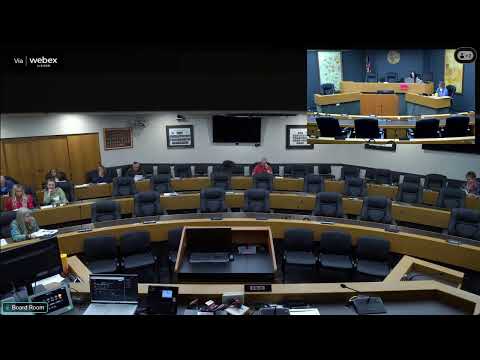
The LaSalle County Finance Committee on Feb. 4 heard a presentation from Kevin, a representative of the North Central Illinois Council of Governments (NCICG), about the region’s Economic Development District, recent grant applications and steps the county can take to pursue federal and state funding.
Kevin told the committee the Economic Development District (EDD) was designated by the U.S. Economic Development Administration in February 2005 and that NCICG began receiving EDA funding in February 2006. He said the EDD requires a local match — generally a 50/50 match — that helps pay for staff who support economic development activities across the region. Kevin said the district’s current comprehensive economic development strategy covers 2022–2027 and that NCICG helps communities with projects ranging from incubators and road improvements to college facilities: “Over the last few years, we’ve done 4 different Economic Development Administration grant projects,” he said, citing work on an incubator in Streeter, Stephenson Road improvements, Peru’s deep-tunnel work and a new agricultural building at Illinois Valley Community College.
Why it matters: LaSalle County pays membership dues for regional services and maintains a county line item for grant matches; committee members raised concerns about whether that investment is producing direct benefits for the county and asked for clearer, project-specific outreach from NCICG. Committee members also discussed large, time-sensitive broadband funding programs that could affect many county residents and asked how the county should coordinate with vendors and regional partners.
Details from the presentation and committee discussion
- NCICG support and recent activity: Kevin said EDA-funded COVID recovery work allowed NCICG to hire two full-time staff to help smaller communities with recovery, ARPA reporting and grant questions. He said NCICG also applied for a natural-hazard-mitigation-plan update for the county (awaiting state and FEMA decisions) and applied for, but did not receive, a grant intended to help people exiting incarceration.
- Fees and billing: Kevin said NCICG charges a modest application fee and that administrative fees for post-award work may be charged and, in some programs, can be included in the grant budget. He estimated typical application-level costs “probably anywhere from $1,000 to $3,000,” and said the application fee is the same whether or not a grant is approved; separate administration fees would apply if NCICG handled grant administration.
- Broadband funding and strategy: Committee members and Kevin discussed the Broadband Breakthrough program and other federal and state broadband funds. Kevin said NCICG maintains a broadband plan/strategy assessment on its website that vendors and applicants can use and that NCICG can provide letters of support. County members said they do not want the county to own and operate fiber infrastructure and would prefer third-party ISPs to build and operate networks; Kevin said NCICG can support either approach with data and letters as requested.
- How NCICG expects to work with the county: Kevin repeatedly told the committee NCICG needs specific project lists or a central county contact to identify funding opportunities that match county priorities. He said NCICG distributes notices of funding opportunities via Constant Contact and invited county departments and board members to share project lists so NCICG can monitor relevant grants.
Committee response and next steps
Committee members said they were unsure whether they were getting full value for the county membership and asked for more proactive outreach and a clearer process for departments to forward projects. County finance staff said the budget includes a matching-grant line (identified by staff as under account 44) and that the 2025 budget set aside $90,000 for matching funds. Committee members discussed creating a central point of contact at the county to coordinate grant requests and faster internal review procedures to meet short NOFO timelines.
Votes and formal actions recorded during the meeting included approval of a remote attendee, approval of prior minutes and approval of the bill list; the committee also voted to move into executive session on a collective-bargaining matter (see below for details). The committee asked NCICG to update its contact list and to share Constant Contact notices with county staff and board members.
Direct quotes
“We just appreciate your continued support,” Kevin said while describing regional projects supported by EDA funding. He also summarized NCICG’s philosophy: “Rising tides raise all ships.”
Ending
Committee members directed staff to consider a central county contact and asked NCICG to continue sending notices and to coordinate with individual department heads when specific projects are identified. Several members said they will return to the finance committee with suggested project lists for NCICG to monitor.