Get Full Government Meeting Transcripts, Videos, & Alerts Forever!
Get email alerts on the Student Outcomes topic
No spam. Unsubscribe anytime.
Molalla River SD 35 reports gains on internal scorecard; reading still a multi-year focus
Summary
District leaders presented a new multi‑year scorecard showing clear gains in math and upper‑grade on‑track credit rates, while elementary reading remains the focus of a three‑year improvement plan.
District staff told the Molalla River SD 35 board during a work session that the district’s internal scorecard shows strong short‑term gains in math and senior credit attainment but that elementary reading remains a multi‑year priority.
The presentation explained why the report matters: the district is using a “stoplight” scorecard and targeted interventions to track early indicators that staff say will precede changes in state accountability measures.
District presenters described a three‑year plan for literacy. Principal (Speaker 1) said the district is pursuing high‑dosage after‑school tutoring, selecting students based on assessment data, and running 10‑week tutoring cycles. "We're having after school high dosage tutoring. We've selected kids based off of data, and we're engaged in a — is it a 10 week session? — yeah. 10 week sessions," the principal said.
On mathematics, a staff member (Speaker 4) said the district’s K–5 I‑Ready results rose from 12% of students meeting or exceeding grade level in 2023–24 to 54% on a fall‑to‑fall measure: "With some really good teaching and some great instruction... we are now at 54%." The presenter cautioned that those are internal leading indicators and not the state report card: another staff speaker (Speaker 3) clarified, "These data are not part of the state report card. These are internal leading indicator data."
At the secondary level, presenters showed improved senior on‑track credit percentages. The board heard that an early six‑week snapshot put seniors at about 89.9% on track but a more recent full‑trimester analysis raised that to about 93.7%. The district attributed that rise to targeted counselor support, the addition of a freshman counselor and a student success coach who conducts outreach and helps students enroll and stay connected.
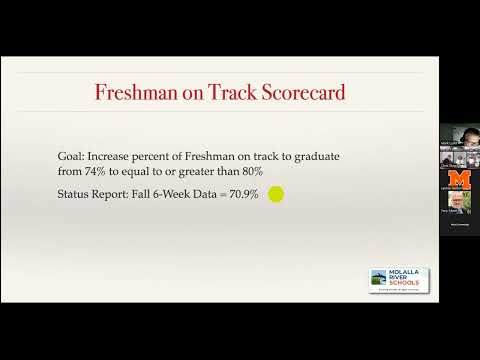
Freshman credit attainment also showed sharp improvement. A presenter reported freshman students increased from 70.9% earning two or more credits at an early point in the year to 94.7% by the end of the first trimester. The presenters credited focused interventions, teacher outreach and during‑term monitoring rather than waiting until grading periods concluded.
Board members asked about the relationship between these internal indicators and state reporting; staff repeatedly emphasized the distinction and noted that the state publishes final accountability figures later and that some student movements (unenrollment without re‑enrollment elsewhere) can complicate state‑level graduation tallies.
District staff also flagged areas for continued work: the student pillar will move next year from reading emphasis to a year focused on writing, then to data‑driven professional learning communities in year three. Presenters said attendance and instructional strategies that transfer between literacy and other subjects are key to sustaining gains.
Board members were invited to provide feedback on the scorecard format; staff said they will return in July with a stoplight summary and a summative look at the year.
Ending: The board paused the work session for a brief break and then continued with facilities and resources updates later in the meeting.