Get Full Government Meeting Transcripts, Videos, & Alerts Forever!
Get email alerts on the Guardianship topic
No spam. Unsubscribe anytime.
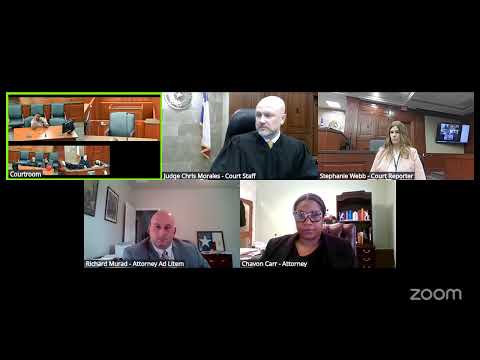
Court appoints limited guardian for Fort Bend man with schizophrenia, adds driving restrictions
Summary
Fort Bend County Court at Law No. 1 appointed Samuel Lazarus as limited guardian of the person for Daniel Okidu, citing medical evidence of partial incapacity due to schizophrenia and bipolar disorder. The court added specific driving restrictions and set bond and attorney fees.
Fort Bend County Court at Law No. 1 appointed Samuel Lazarus as guardian of the person for Daniel Okidu after finding by clear and convincing evidence that Okidu is partially incapacitated due to schizophrenia and bipolar disorder. The court approved a limited guardianship focused on medical decision‑making and residence decisions, and set bond at $50.
The court considered a physician certificate of medical examination dated Dec. 17, 2024, supporting a finding of partial incapacity. Pastor Samuel Lazarus (the applicant) told the court he is Daniel’s uncle, that Daniel resides with his parents in Fort Bend County, and that Daniel had previously consented to the proposed guardianship in discussions with family and medical professionals. Defense counsel told the court his client rescinded prior consent in the last 48 hours and opposed the appointment; counsel placed that objection on the record.
The judge appointed Lazarus as guardian of the person and ordered additional restrictions on Daniel’s driver's license. On the record the judge required that the license be restricted to intrastate travel only, with a maximum speed of 45 miles per hour and a radius limit of 10 miles from the ward’s residence; the court directed counsel to add the corresponding Texas Department of Public Safety restriction codes in the signed order. The judge explained the court’s concern about allowing a ward to continue to drive without conditions when the medical evidence indicates an inability to manage aspects of care.
The court discharged defense counsel from ad litem duties, awarded an ad litem fee of $650, and directed counsel for the guardian to prepare the formal order with the driving‑restriction codes and submit it to the court for signature.
Why it matters: The order restricts an individual's liberty to make certain personal decisions (residence, medical care) and specifically restricts driving privileges for safety reasons. The appointment gives the guardian authority to arrange medical care and assist with public benefits. Defense counsel's recorded objection indicates the ward does not fully agree and underscores that these orders can be contested on appeal or via subsequent hearings if circumstances change.
Follow-up tasks recorded on the record included filing the signed order, notifying DPS of restriction codes, and counsel preparing the final order for the judge’s signature.