Get Full Government Meeting Transcripts, Videos, & Alerts Forever!
Get email alerts on the Isu Budget And Accountability topic
No spam. Unsubscribe anytime.
Idaho State University officials tell JFAC they will return disputed forensic‑lab funds and strengthen oversight
Summary
ISU President Rob Wagner told the Joint Finance‑Appropriations Committee that the university will return funds tied to a proposed Eastern Idaho forensic pathology lab, accept responsibility for improved tracking of legislative appropriations and pursue internal controls after a review and a pending audit.
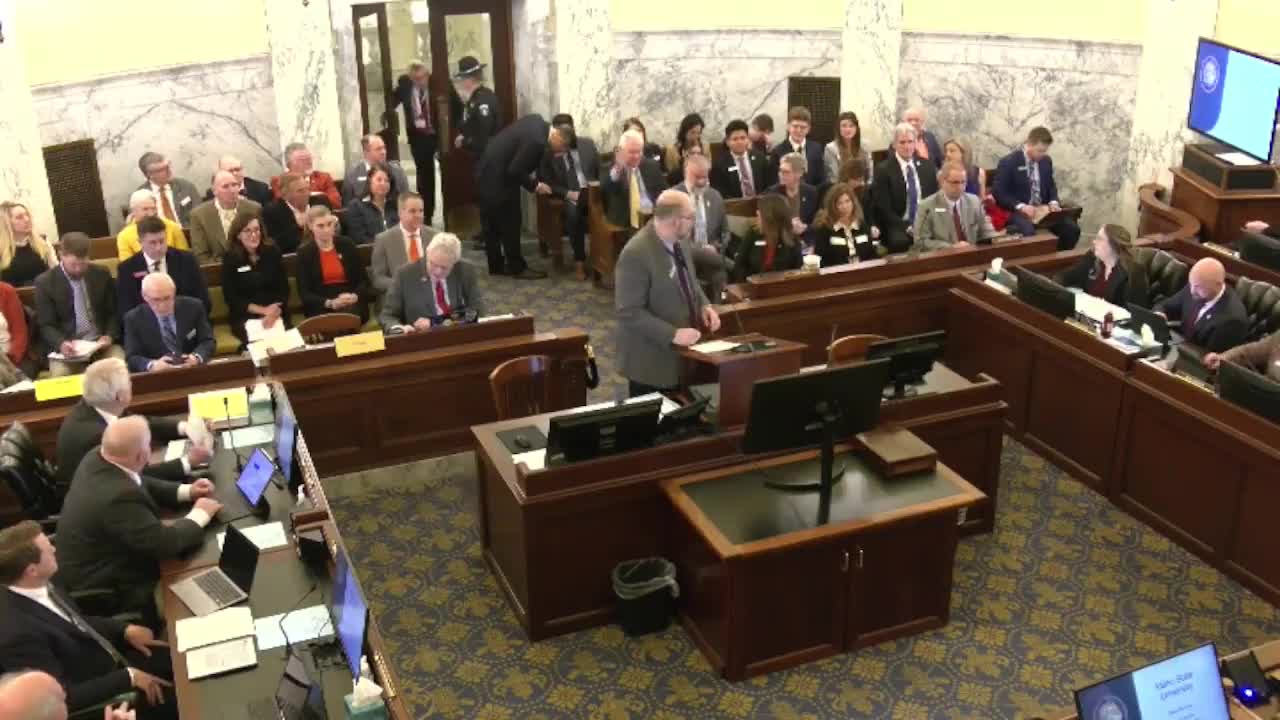
Idaho State University President Rob Wagner told the Joint Finance‑Appropriations Committee on Jan. 29 that ISU will return funds connected to a proposed Eastern Idaho forensic pathology laboratory and put stronger internal controls in place to ensure future legislative intent is followed.
The announcement came after Kevin Campbell, a Budget and Policy Analyst with the Legislative Services Office, presented ISU’s FY2026 budget overview, including tuition and fee balances and multi‑year appropriation trends. Campbell noted a technical issue in the budget book that misstates beginning tuition fund balances but confirmed “ISU has not overdrawn its bank account.”
Wagner described the original plan as a partnership between ISU and a county to house the forensic pathology facility on ISU’s Pocatello campus, with the lab providing training opportunities for health‑science students. He said the university became aware in late 2023 that the county no longer favored an on‑campus facility and that remaining funds were later transferred to the county under a memorandum of understanding.
“Idaho State University must do better,” Wagner told the committee. “We need to track those funds. We need to follow and make sure that the funds are being used appropriately.” He said the university will implement procedures to “identify ownership of legislative funds and accountability” and acknowledged that legislative intent is law.
Representative Ron Nate (note: transcript reference Representative Manwaring) and other committee members pressed Wagner for specifics about the university’s review. Wagner said ISU had contracted a consultant during earlier planning, that multiple parties communicated about the project, and that the university concluded it should have retained and invoiced funds rather than transferring them without closer oversight. He said the university has already begun steps to track appropriations more clearly and that staff prepared a public report; an audit has been requested and is underway.
Policy and budget details presented by Campbell included enrollment and expenditure breakdowns: ISU serves more than 12,000 students, with personnel accounting for about 74.8% of expenditures, operating costs about 21.2%, and capital outlay about 3.9%. For FY2026 ISU requested $907,300 in operational capacity enhancement, $233,700 in endowment fund adjustment, and $988,100 for the enrollment workload adjustment.
Committee members also questioned Wagner about student success and organizational changes on campus. Wagner said ISU closed a Diversity Resource Center and a Gender Resource Center effective Nov. 15, 2024, and moved the two affected FTEs—one to student involvement and one to the office of equal opportunity (Title IX) reporting to the president—to emphasize academic completion and a new Bengal Success Center available across ISU’s campuses.
Wagner said ISU remains interested in partnering with state and local entities to address regional needs, including forensic services, public safety and health‑care workforce shortages. He said the university would return the disputed forensic lab funds to the state and work with the Legislature on any future proposals.
The committee did not take formal action during the hearing; members requested the audit and additional follow‑up information.