Get Full Government Meeting Transcripts, Videos, & Alerts Forever!
Get email alerts on the Medical Education Residencies topic
No spam. Unsubscribe anytime.
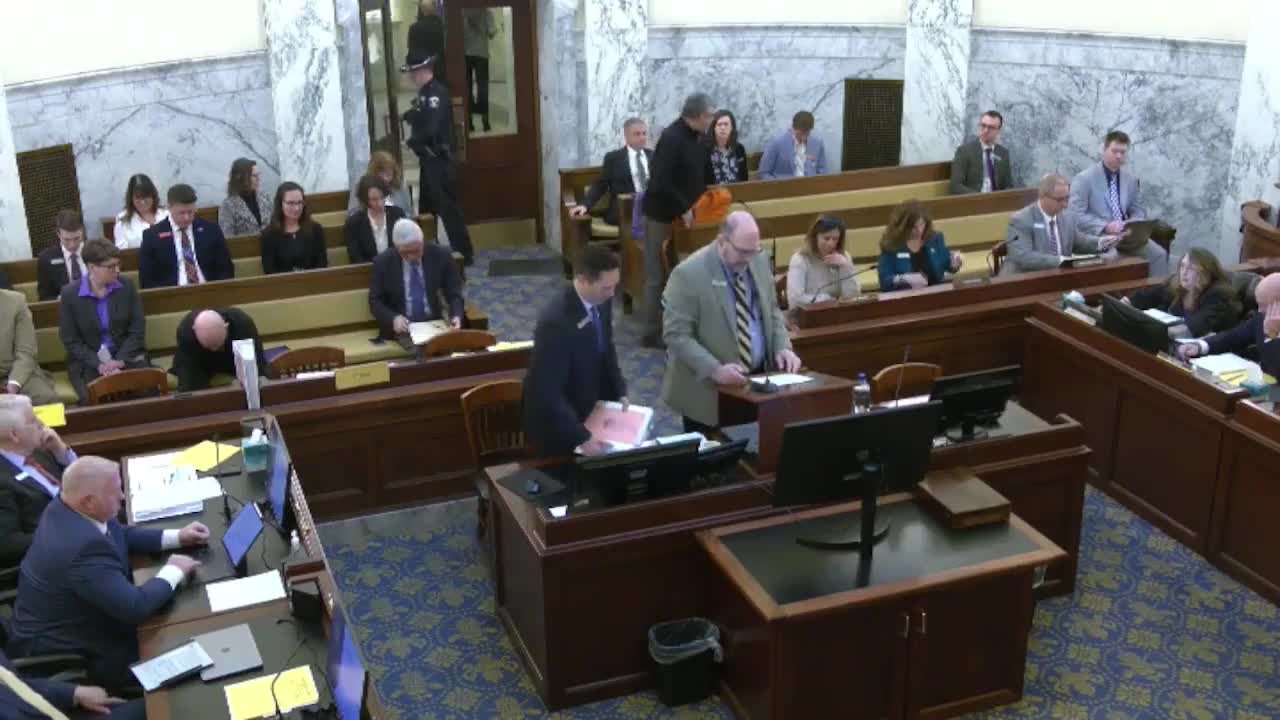
Legislative panel reviews expansion of medical residencies; residents cited as immediate care capacity
Summary
The Joint Finance Appropriations Committee on Monday reviewed requests to continue and expand medical residency slots across Idaho, including psychiatry at Eastern Idaho, internal medicine in Boise and multiple family medicine programs statewide.
The Joint Finance Appropriations Committee on Monday reviewed requests to continue and expand medical residency slots across Idaho, including psychiatry at Eastern Idaho, internal medicine in Boise and multiple family medicine programs statewide.
Kevin Campbell, budget analyst with the Legislative Services Office, told the committee residencies are typically funded through three‑party partnerships that cover resident salaries, training costs and supervising‑physician payments. He said the estimated state share per resident is about $210,000 per year and that residency programs have consistently spent their appropriations to pay sponsoring hospitals for resident positions.
Doctors leading the programs told the committee residents provide significant clinical capacity while they train and increase the likelihood that physicians remain in Idaho after completion. “It takes 3 and a half months to get into me,” Dr. Matthew Larson, psychiatry program director at Eastern Idaho Medical Residency, said when describing outpatient access; he added that psychiatry wait times and psychologist testing waits illustrated the workforce gap the residencies aim to close.
Eastern Idaho Medical Residency (EIMR) representatives said the program is funded through a three‑way partnership and that the state’s portion covered trustee and benefit payments in FY2024; Campbell’s slide noted $2,765,000 in 2024 expenditures for EIMR trustee payments. EIMR described a plan to add psychiatric residency slots (the committee packet referenced a FY2026 request of $240,000 to fund four additional psychiatry positions) and said new psychiatry residents will increase the number of practicing clinicians in eastern Idaho during training.
Boise Internal Medicine program officials reported they currently employ 41 residents and fellows and that 100% of their appropriation historically goes to trustee and benefit payments to sponsoring hospitals. Family medicine residency representatives described a statewide set of programs that now total about 130 residents; the family medicine portfolio includes a mix of institution‑employed residents and some state‑employed positions. Family Medicine Residency (FMR) materials in the packet asked for a multiyear expansion that would add six residents and one fellowship in Nampa (the packet listed roughly $420,000 ongoing for that request) and additional residents in Eastern Idaho.
Program directors emphasized two points that recur in legislative analysis: residents are clinicians while in training, providing immediate increases in capacity at hospitals and clinics, and graduates trained in Idaho are statistically more likely to stay. Dr. Larson said the psychiatry program will not see full graduate retention data until later cohorts finish, but that training more psychiatrists in Idaho immediately increases local clinical availability. Dr. Mo Hagman, program director for Boise Internal Medicine, said programs would likely need to reduce seats if state funding were withdrawn: “Without state funding … we would have to reduce the number of physicians we’re training,” he told the committee.
Committee members asked about measurement and comparatives. Analysts noted Idaho’s residency expansion is part of a multi‑year plan that increased residency slots substantially over several years. Residency leaders said Idaho’s three‑way funding model (sponsoring institution, health system partner and state contribution) helped stand up new programs and that the state’s investment materially increased the number of residency positions available in recent years.
Concluding remarks from residency directors asked the committee to continue support for the multi‑year expansion plan. “When I look at my own med student loans … funding people on the part that gets them to stay in Idaho and work in Idaho does make a big difference,” Dr. Matthew Larson said in his closing comments.
No formal votes were recorded in the hearing; the committee asked analysts and program staff to return with any technical documentation needed for appropriation decisions.