Get Full Government Meeting Transcripts, Videos, & Alerts Forever!
Get email alerts on the Broadband topic
No spam. Unsubscribe anytime.
Commerce outlines broadband spending plan, IIJA BEAD timeline and rural priorities
Summary
The Department of Commerce told the Joint Finance-Appropriations Committee it is deploying state and federal broadband funds, has obligated much of a $120 million capital fund, and is preparing applications for the $583 million BEAD IIJA program while emphasizing collaboration with private ISPs and local planning.
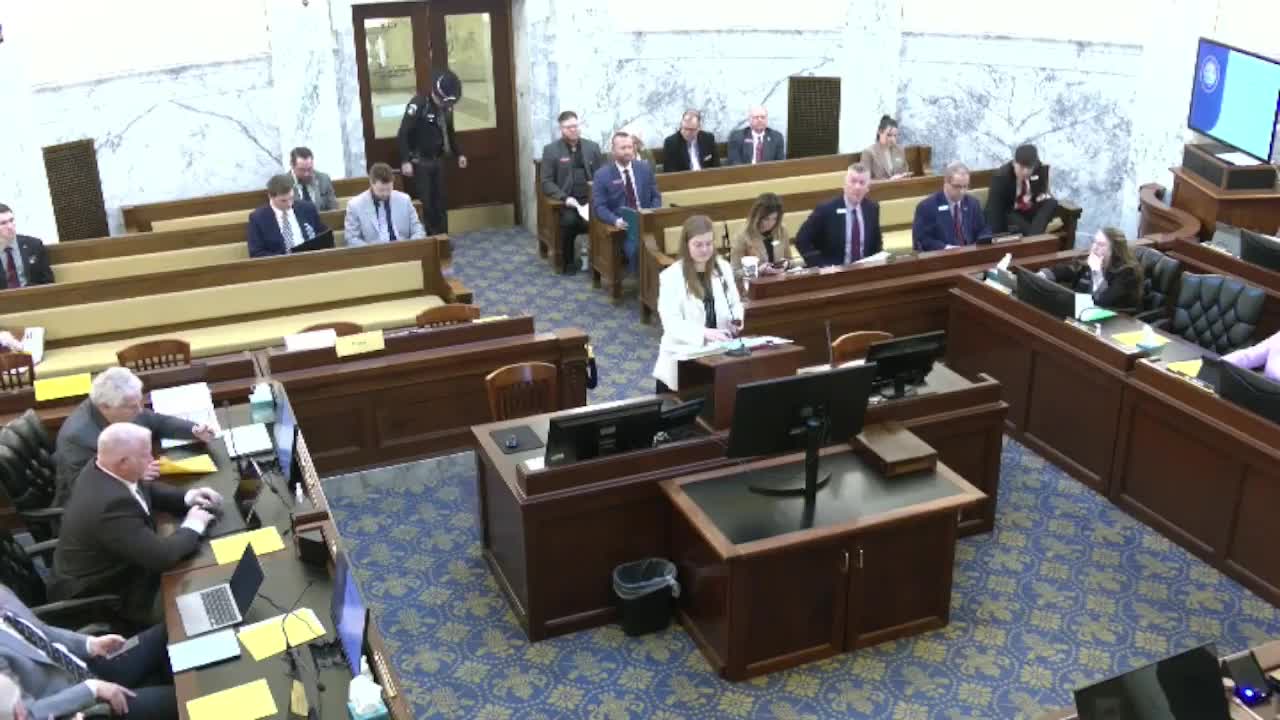
The Idaho Department of Commerce told the Joint Finance-Appropriations Committee on Tuesday that state and federal broadband resources are being deployed across Idaho and that the agency is preparing to accept applications for the federal BEAD (Broadband Equity, Access, and Deployment) program.
Analyst Brooke Dupree summarized the department’s budgetary structure and noted the broadband office was established last legislative session. Dupree said the Idaho Broadband Fund (a $35 million general-fund transfer) has about $8.7 million remaining obligated and that a separate $120 million capital fund has been contracted across 18 projects connecting roughly 35,000 homes and businesses. She said a $100 million IIJA allocation was included earlier and that the FY2026 base includes federal IIJA broadband infrastructure figures as part of ongoing funding.
Director Tom Keeley and Ramon Sanchez, head of the Idaho Office of Broadband (housed in Commerce), described a multi-step BEAD timeline: prequalification of applicants in Q1 of the calendar year, an application window for project proposals expected in Q2, grading and evaluation through the summer, and a final package to the federal government likely in fall or early winter. Sanchez said Idaho’s BEAD preparation has included mapping, planning and coordination, and that Idaho is unusual in using planning funds to grant local jurisdictions for project planning — 15 localities received planning grants.
Sanchez said about 26.5 of the state’s $35 million Idaho Broadband Fund is already obligated. He outlined three major program buckets: the Idaho Broadband Fund (state general funds), the capital projects fund (federally funded, fully obligated across projects), and the IIJA/BEAD program (approximately $583 million for Idaho). The broadband office is working with about 90 internet service providers statewide and emphasized collaboration and regional planning to align public and private investment.
Committee members asked how the state interacts with private ISPs and whether newer technologies — including low-earth-orbit satellites such as Starlink — will be considered. Sanchez said BEAD prioritizes fiber first, then licensed fixed wireless, and allows alternative technologies where appropriate; the office is technology-agnostic and will consider low-earth-orbit satellites and other alternatives where they are the right technical and financial fit. He said guidance from federal partners on executive orders is being monitored but had not altered Idaho’s schedule at the time of the hearing.
Keeley said Commerce is also focused on workforce, housing and childcare as part of economic development, and that broadband deployment is linked to those other priorities. The department requested one additional FTP to manage distribution and oversight of broadband funds and said the governor recommended the agency’s requested reappropriations and transfers for FY2026.