Get Full Government Meeting Transcripts, Videos, & Alerts Forever!
Get email alerts on the University Budget Research Partnerships topic
No spam. Unsubscribe anytime.
University of Idaho outlines recovery measures, INL partnerships and pending Phoenix transaction
Summary
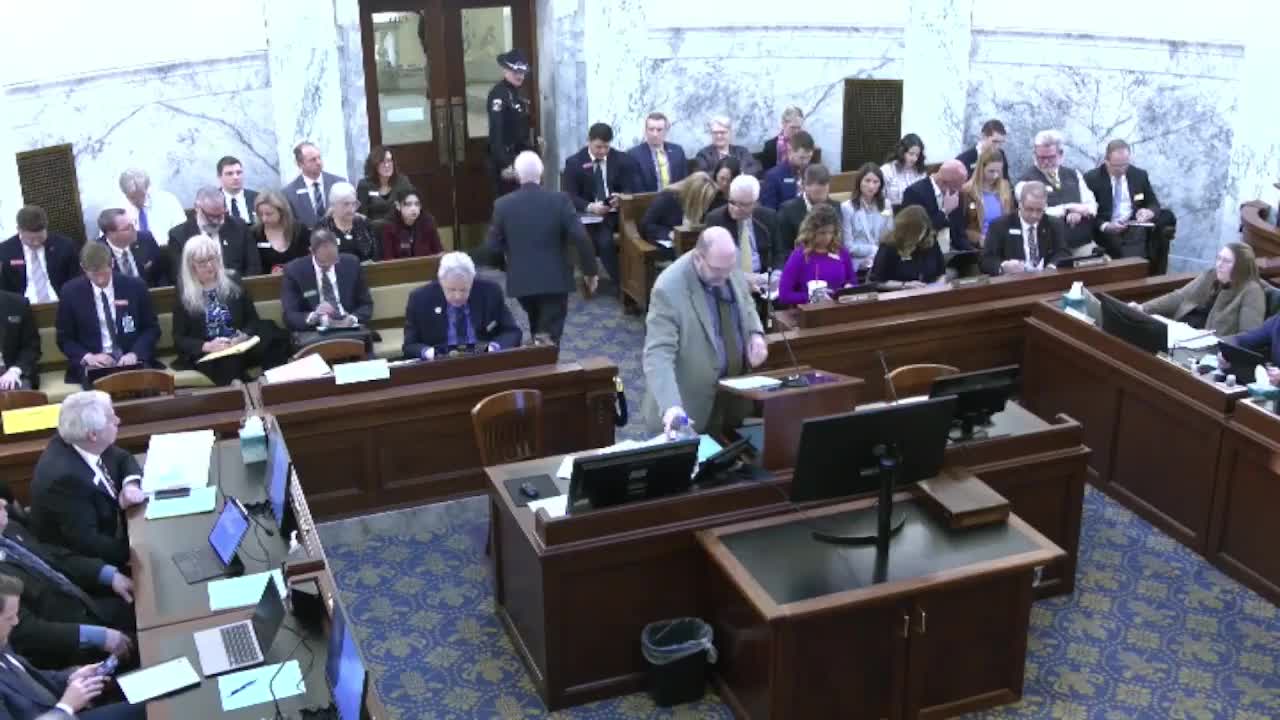
At a Jan. 27 Joint Finance‑Appropriations Committee hearing, Kevin Campbell of the Legislative Services Office presented the University of Idaho’s budget overview and President C. Scott Green answered committee questions about financial recovery, national‑lab partnerships, the status of a possible affiliation with the University of Phoenix and recent reorganization of diversity‑related offices.
At a Jan. 27 Joint Finance‑Appropriations Committee hearing, Kevin Campbell of the Legislative Services Office presented the University of Idaho’s budget overview and President C. Scott Green answered committee questions about financial recovery, national‑lab partnerships, the status of a possible affiliation with the University of Phoenix and recent reorganization of diversity‑related offices.
“We took a $26,000,000 reduction to our budget,” President C. Scott Green said, describing actions the university took to align expenses with revenues after earlier structural shortfalls. He told the committee the university has been working to stabilize finances and enrollment, and said recent steps produced stronger cash reserves and operating results even as certain accounting and legacy liabilities affect unrestricted reserve ratios.
Why it matters: the University of Idaho is the state's land‑grant research university. Its budget and partnerships affect statewide research capacity, workforce pipelines (including health professions), and collaborations with Idaho National Laboratory (INL). Decisions about affiliations, medical‑education models, and capital requests could influence state workforce and research investments.
Key takeaways
- Financial posture: President Green said the university took a $26 million base reduction in FY 2021 to align expenses and that it has since stabilized. He described an accounting/obligation legacy tied to retiree benefits (OPEB) that affects reserve classifications; the president said the university has a negative unrestricted net position but a larger restricted net position so that “our total net position is positive.” Committee members asked for follow‑up documentation and clarifications of ratios reported in the State Board of Education materials.
- University of Phoenix talks: Green said the university entered a non‑exclusive agreement with the Phoenix sellers after the close of the last session that extended the deadline for a potential transaction and included a breakup fee. “We would offset the rest of those expenses and there is the possibility if we get the full $20,000,000 that we might have $2 or $3,000,000 that we could deploy,” he said, describing how breakup or transaction proceeds would be applied to institutional priorities (Green also said an initial $5 million payment had been received to offset expenses). He cautioned that any affiliation would require legislative and State Board review and approval.
- DEI offices and State Board resolution: President Green said the university began reorganizing units covered by a State Board of Education decision on DEI policy. “We shut down our offices … the Office of Equity and Diversity, the Office of Multicultural Affairs, the Black African American Cultural Center, the LGBTQA Office, and the Women's Center,” he said, and added that affected positions were reassigned to other units (for example, the chief diversity officer role was eliminated and that person will serve as executive director of tribal relations). He said services for students are being consolidated into Vandal Success and a first‑generation student support unit.
- WWAMI and medical education: Green confirmed discussions about alternative partnerships to maintain and expand Idaho’s MD training pipeline. He reiterated that the existing WWAMI arrangement (a partnership producing Idaho‑trained physicians) remains in place while the university explores future arrangements.
- INL and research: Green highlighted a signed or forthcoming agreement reinforcing collaboration with Idaho National Laboratory on energy, nuclear and cyber‑physical systems research, and cited ongoing projects including 3‑D printing for reactor components, nuclear waste reduction work, and cyber resilience for power systems.
Follow up and committee requests
Committee members asked for additional financial schedules, documentation on federal pass‑through grants and subrecipient lists, job descriptions for positions reassigned after the DEI office changes, and clearer reporting on reserve ratios and OPEB accounting. The president said the university would provide follow‑up materials and the committee postponed the remainder of the systemwide colleges and university hearing to permit additional questions.
Ending
No formal appropriations decisions were taken at the Jan. 27 session. President Green closed by restating the university’s land‑grant mission and by urging continued legislative partnership to support research, workforce training and student success.