Get Full Government Meeting Transcripts, Videos, & Alerts Forever!
Get email alerts on the Judicial Budget Court Technology topic
No spam. Unsubscribe anytime.
Judiciary asks for judges, court technology maintenance and cybersecurity investments
Summary
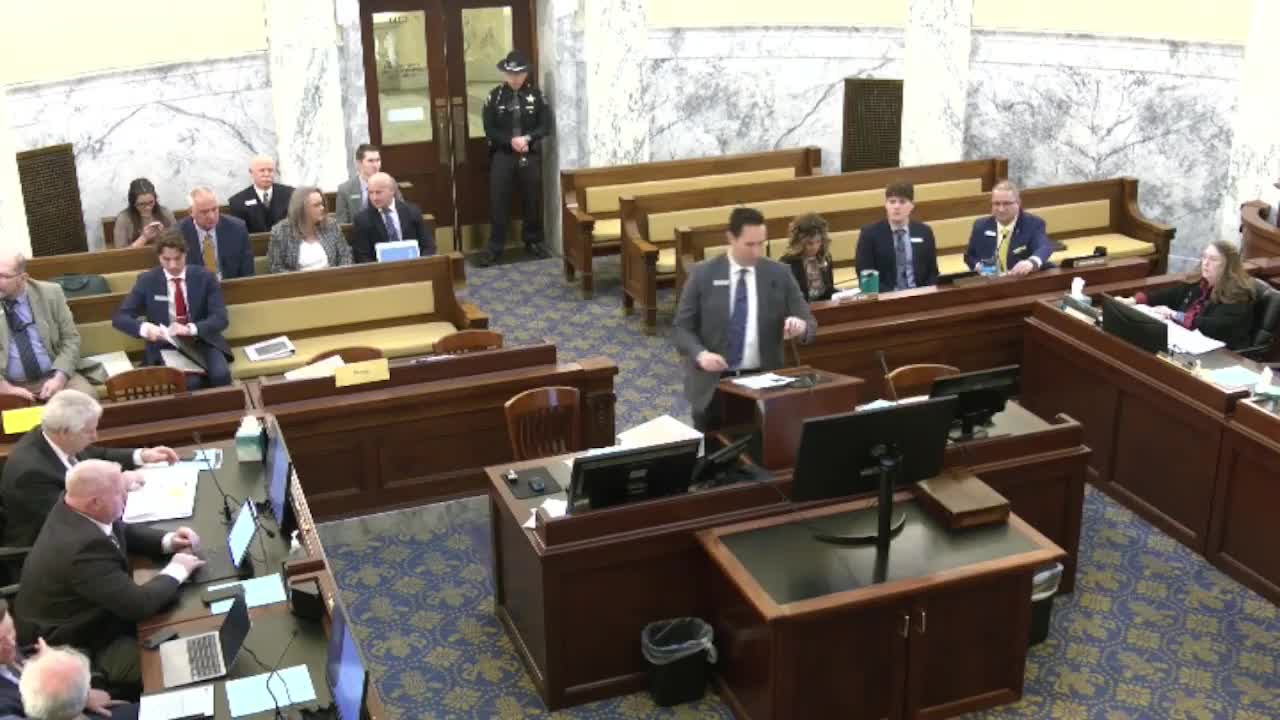
Keith Bybee, Division Manager of Budget and Policy Analysis, and Sarah Omundson, Administrative Director of Courts, briefed the Joint Finance Preparation Committee on Jan. 23 on the Judicial Branch’s court operations budget, judgeship requests and court-technology upgrades.
Keith Bybee, Division Manager of Budget and Policy Analysis, and Sarah Omundson, Administrative Director of Courts, briefed the Joint Finance Preparation Committee on Jan. 23 on the Judicial Branch’s court operations budget and technology projects.
Bybee summarized the court operations structure and funding, noting the Judicial Branch is a unified court system administered by the Idaho Supreme Court and that court operations are budgeted across multiple programs including the Supreme Court, Court of Appeals, District Court and magistrate divisions. He said judgeship requests and judicial compensation require statutory changes and that the governor’s budget includes a 5% placeholder for judicial compensation while the judiciary has requested $10.2 million.
The Judicial Branch requested two district judges (1st and 7th judicial districts), two magistrate judges (Twin Falls, 5th district; and Idaho Falls/7th district) and two court reporters as part of a roughly $1.2 million build-out for positions. Bybee noted the legislature historically funds a court reporter with a new district judge and that legislative or policy committee action is required for judgeship or compensation statutes.
Administrative Director Sarah Omundson told the committee the branch has undertaken substantial court-technology upgrades because courts store large volumes of sensitive information and have been targeted in cyber incidents elsewhere. "We realized that our infrastructure was preventing us from adequately securing the information that we thought we needed to secure," Omundson said, and described planned and in-progress measures: multi-factor authentication, a state court network in each courthouse and Office 365 rollout. "Office 365 is about 80% rolled out," she told members.
Omundson said the Judicial Branch obligated all ARPA State Fiscal Recovery Fund dollars it was appropriated and still expects delivery and installation work to continue through the end of 2026. She acknowledged counties had mixed reactions to the state-managed changes because some clerks prefer county-managed desktops; the court is offering alternatives such as cloud-hosted desktops accessed from county devices to balance county preferences with statewide security standards.
Beeby and Omundson also discussed workload and judge staffing. Omundson provided workload figures used to justify magistrate positions: "There are 249 workdays in any given calendar year," she said, and then described average caseloads per magistrate in Twin Falls and Bonneville counties—about 1,773 and 1,539 case openings per magistrate respectively—and the resulting travel burdens when judges from other counties must hear local cases. She said Twin Falls has not received a new magistrate in 35 years and that adding a magistrate in Bonneville County would reduce lost judicial days from travel (about 67.5 days per year currently lost to travel in the 7th district).
Committee members asked about the case-management vendor landscape; Omundson said the Idaho Supreme Court will issue a request for information (RFI) to survey options and that the current Tyler system contract is in year two of a five-year cycle. She also described hiring challenges: some requested administrative and IT positions were filled at lower salary levels than requested and several IT positions remain vacant despite multiple recruitments.
The judiciary did not seek immediate committee votes on statutory items; members asked for cost estimates to close hiring gaps for critical IT positions and for additional details about ARPA-obligated contracts.
Ending: The committee asked the Judicial Branch to supply a written breakdown of ARPA-obligated contracts, estimates to recruit and retain critical IT and administrative staff, and updates on the RFI process for case-management options.