Get Full Government Meeting Transcripts, Videos, & Alerts Forever!
Get email alerts on the State Public Defender topic
No spam. Unsubscribe anytime.
New State Public Defender asks for supplements, ongoing funding as caseloads and costs exceed initial estimates
Summary
The newly formed Idaho State Public Defender office told the Joint Finance‑Appropriations Committee it needs supplemental and ongoing funding—including use of a $39 million cash transfer—citing higher caseloads, transcript costs and county transitions into the statewide system.
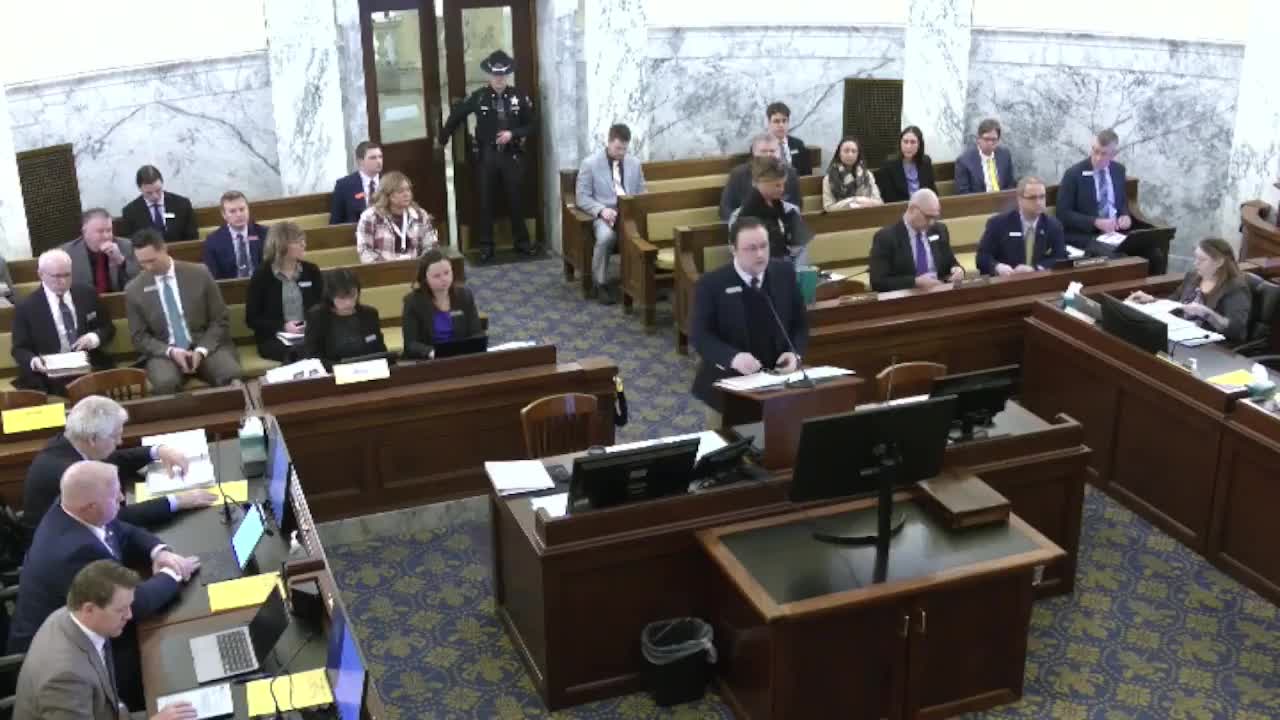
Christopher Lahoset, budget and policy analyst with the Legislative Services Office, presented the budget for the newly created State Public Defender and walked the committee through multiple requests: a one‑time supplemental to allow spending of a previously authorized cash transfer, additional transcript funding following a state Supreme Court ruling, and several ongoing operating and personnel enhancements.
Lahoset said the office was created under “Title 19, Chapter 60, Section 3 of Idaho Code,” that the agency had 360 authorized full‑time positions with 29 vacancies as of December 18, and that a primary dedicated funding source is a state public defense fund seeded by a $39 million transfer from the tax relief fund. He told the committee the agency is requesting a one‑time FY2025 supplemental of $2.5 million to fully utilize the $39 million cash transfer and additional one‑time and ongoing appropriations to cover transcripts, personnel and contract rate increases.
Eric Fredericksen, the State Public Defender, described the operational challenges since the agency began October 1. He said the transition brought “1,300 withdrawals and cases,” and that staff—including district defenders and management—had to handle cases directly during the start‑up period. Fredericksen told lawmakers the office lost contract attorneys and senior employees during the transition and that previously common flat‑fee contracts are constitutionally problematic, so the office is increasing contract rates to uniform standards across counties.
Fredericksen and Lahoset described transcript costs as a new obligation after a December Idaho Supreme Court ruling (State v. Blaszek) that shifted transcript responsibilities to the state; the governor recommended one‑time and ongoing funding to cover transcripts. Fredericksen also said the office is being asked to represent in many matters beyond core criminal defense—“private terminations,” custody matters and other appointments—that have stretched staff time and require legislative clarification of scope.
Other details presented: the FY2025 appropriation figures were shown in Lahoset’s slides (the analyst noted some formatting and calculation items in the budget book), the agency requested authorization for 17.96 additional FTP to onboard newly converted counties (Benewah, Elmore, Jerome and Shoshone were named), and the governor proposed a one‑time transfer of $16,867,400 from the general fund to the state public defense fund as recruiting and contract‑rate support. Committee members repeatedly asked for itemized lists for “experts” and “miscellaneous” line items; Fredericksen said some costs (psychosexual evaluations, district court funds previously paid by counties) were not previously disclosed to the Public Defense Commission and that the agency is working to identify and budget for those obligations.
Committee members pressed about county facilities and transitional arrangements; Fredericksen said counties must continue to provide facilities through 2029 under current law, though memoranda of understanding are being used instead of lease contracts in some places. Lawmakers also asked about phasing counties into the statewide system (Lahoset said 11 counties were in and four more were onboarding this year) and whether full absorption of all counties is planned (Fredericksen said some rural counties will continue to use contract attorneys and the state will not absorb every county). The hearing closed with committee members requesting additional breakdowns of the agency’s projected operating costs and program lists.