Get Full Government Meeting Transcripts, Videos, & Alerts Forever!
Get email alerts on the Department Of Insurance Budget topic
No spam. Unsubscribe anytime.
Insurance director warns of wildfire-driven market tightening, seeks staffing and mitigation pool; PBM implementation ongoing
Summary
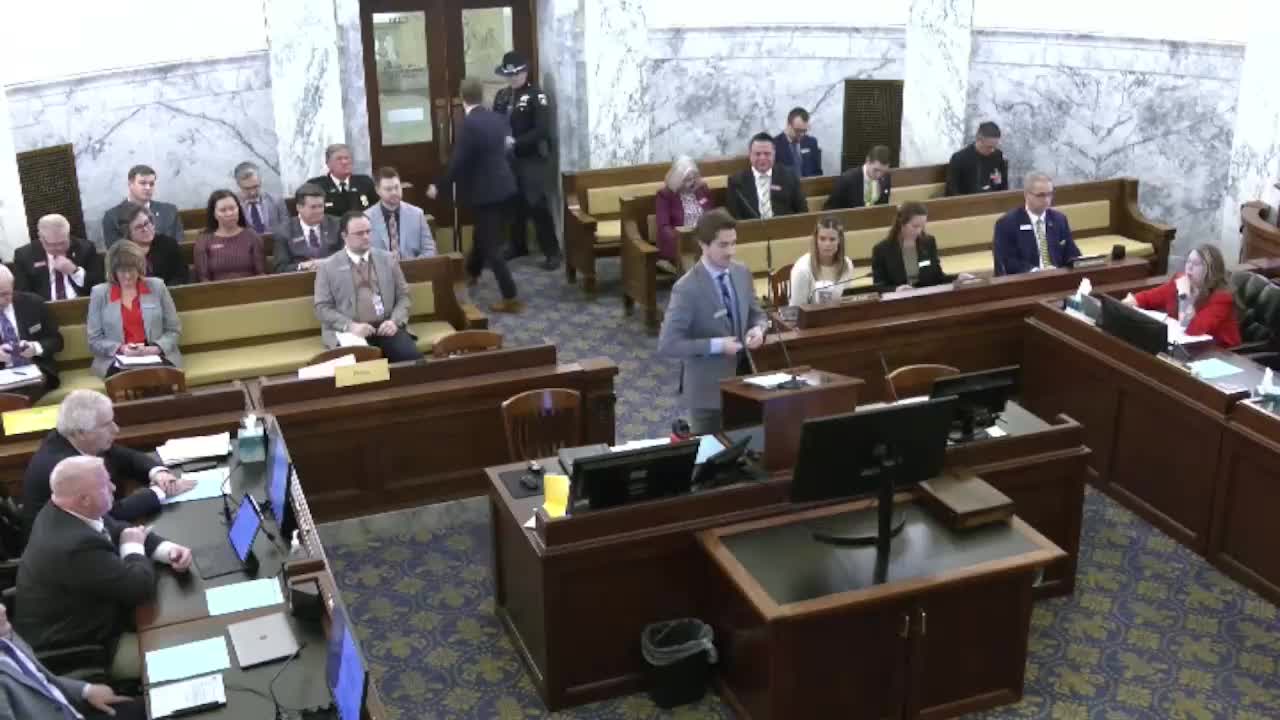
The Department of Insurance told the Joint Finance Appropriations Committee on Jan. 21 that wildfire losses, reinsurance cost increases and PBM reform workloads are stressing insurers and consumers and requested targeted staff and capital funding.
The Department of Insurance told the Joint Finance Appropriations Committee on Jan. 21 that wildfire losses, reinsurance cost increases and pharmacy benefit manager (PBM) reforms are putting pressure on insurers and consumers, and it requested targeted staffing and capital funds to respond.
Noah Peterson, budget and policy analyst with the Legislative Services Office, reviewed the Department of Insurance’s organization — two programs (Insurance Regulation Division and State Fire Marshal) and 75.5 approved full‑time positions — and summarized fund flows tied to premium taxes and the agency’s dedicated funds. The department received a trailer appropriation to implement House Bill 596, which amended Idaho Code section 41-349; that trailer included 1 FTE and $132,400.
Director Dean Cameron, director of the Department of Insurance, told the committee the department is monitoring two trends that are affecting market capacity: catastrophic wildfire activity that has tightened property-insurance markets and the ongoing implementation of PBM reform enacted last year.
On wildfires, Cameron said the state experienced heavy acreage loss and structural damage. “This last year we burned a million acres, just under a million acres,” he said, and the department recorded more than 140 structures lost, about 40 of which were residences. Cameron said reinsurance costs for insurers have risen and some carriers have reduced writing in higher‑risk areas; he warned that a growing share of homeowners are being placed in the surplus lines market, which carries fewer consumer protections.
On PBM implementation, Cameron said the agency hired an analyst to handle complaints and to collect PBM data. "She's receiving numerous complaints," Cameron said; he added that most PBMs have submitted the required data format but a few have not, and the department is working to secure compliance and to analyze dispensing‑fee and contract issues.
For FY2026 the department requested four enhancements: a staff actuary ($201,900 total request, about $198,900 ongoing for personnel), a regulatory compliance specialist (budgeted at $41.03 per hour in agency materials), a compensation increase for the State Fire Marshal's office ($48,100 ongoing to raise pay for the state fire marshal, chief deputy and deputies), and a one‑time capital package totaling $162,200 for replacement items including $10,000 for fire turnout gear, $16,200 for cameras and $136,000 for two medium‑duty pickup trucks with canopies and bed slides. Cameron said the department will contract actuarial work initially but expects bringing that role in‑house to save money over time.
Cameron also described proposed legislation to create a pool to assist homeowners in hardening homes against wildfires and to provide a mechanism that might help insurers remain in the Idaho market. "It creates a pool not too dissimilar from the health insurance high risk pool," he said. The pool would fund mitigation work (for example, clearing vegetation near homes and replacing vulnerable materials) and could be structured to share or spread risk to stabilize the market.
Committee members asked for additional detail on PBM complaint counts, insurer solvency trends and the department’s proposed pool mechanics. The department committed to provide a fuller breakdown of PBM complaints and the data collected from PBMs. No formal appropriation votes were recorded during the Jan. 21 presentation.